Disclosure: This post may contain affiliate links. If you click and make a purchase, I may earn a small commission at no extra cost to you.
Bank fishing for salmon is a highly effective way to catch fish in Pacific Northwest rivers, and it can be just as effective as fishing from a boat.
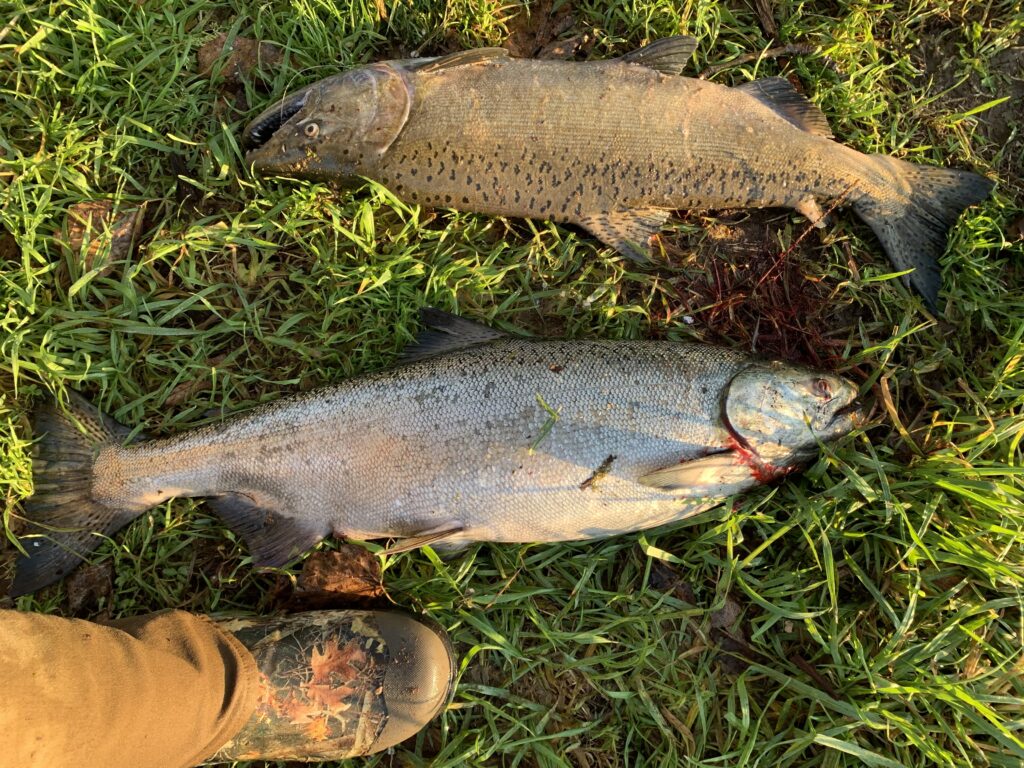
Some of my best days chasing Chinook have come standing on the bank, covering water, and dialing in a simple setup.
The difference comes down to positioning, understanding how fish move, and fishing your water the right way.
Once you understand how to read a river for salmon, the next step is knowing where to position yourself and how to fish that water effectively from the bank.
Most of what I’m talking about here applies to smaller to mid-sized rivers where you can actually reach fish from the bank. On big systems, a boat can make a big difference in how much water you can cover.
If you are still working on your setup, start with a proper salmon float rig setup so your gear is working with you instead of against you.
Table of Contents
Why Bank Fishing for Salmon Works in Rivers
Salmon move through rivers in predictable travel lanes, and a lot of those lanes run closer to shore than most people realize.
Fish use softer water along edges, seams, and transition zones to move upstream without burning energy. That puts them well within reach from the bank if you are standing in the right place.
Another advantage is pressure. A lot of anglers focus on obvious water or easy access points, but there are plenty of bank spots that get overlooked or fished inefficiently. If you take your time and cover water the right way, you can intercept fish moving through consistently.
When Bank Fishing Makes Sense (And When It Doesn’t)
Bank fishing works best on rivers where you can effectively reach travel lanes without needing to cover huge amounts of water.
Smaller to mid-sized rivers are ideal because fish are naturally pushed closer to shore, and you can control your presentation much easier.
Here in Oregon, bigger rivers like the Willamette River or Columbia River are wide, deep, and have a lot more water to cover.
In many cases, having a boat gives you access to better holding water and travel lanes that are difficult to reach from shore.
That does not mean you cannot catch fish from the bank on big rivers, but your options are more limited and positioning becomes even more important.
If you are just getting started, focusing on smaller rivers will give you a much better chance of learning quickly and staying consistent.
Bank Fishing for Salmon: Where to Stand and Why It Matters
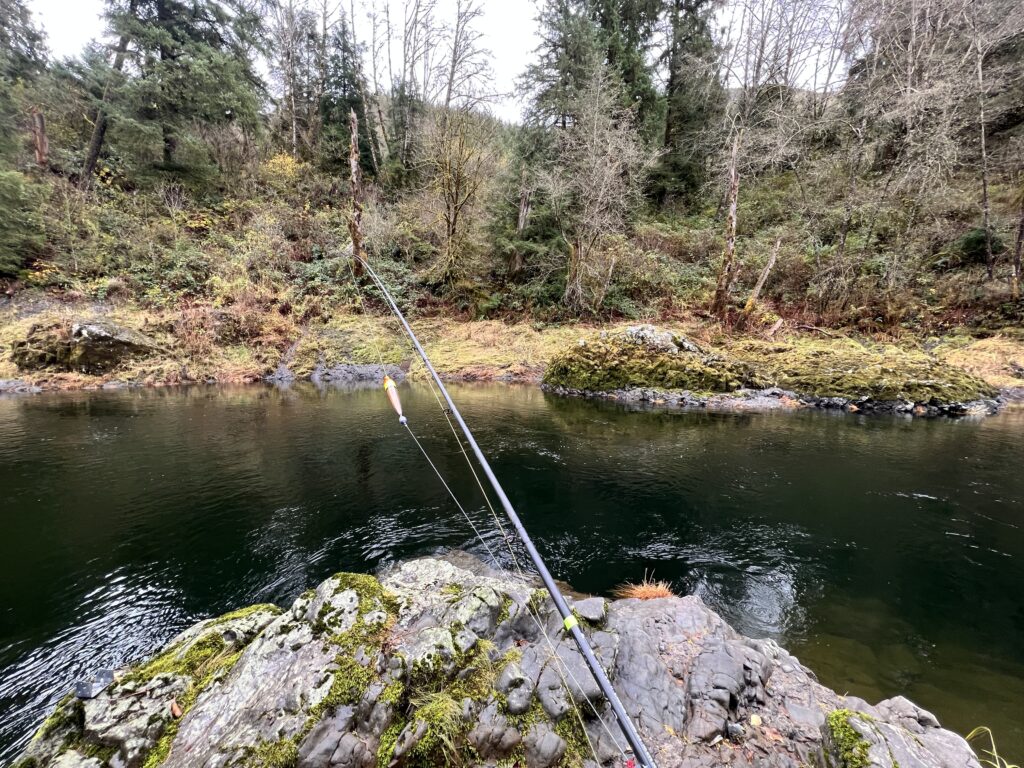
Where you stand matters just as much as what you are using.
I am always looking for spots where I can reach fish without needing a long cast. Most of the time, that means targeting water that naturally funnels fish closer to shore.
Look for:
- Inside bends where current slows down
- Tailouts where fish stack before pushing upstream
- Walking-speed water near the bank
- Edges where fast water meets slower current
If you are not sure how to identify these areas, it helps to understand how to read a river for salmon before worrying about where to cast.
One of the biggest mistakes I see is anglers standing in fast, straight current and casting as far as they can. Most of the time, the better water is closer than you think.
How to Cast From the Bank Without Wasting Water
When I step into a new spot, I am not trying to launch a cast as far as possible right away.
I start farther out and then work my way in, covering each lane methodically. Every cast should fish a slightly different piece of water.
A simple way to approach it:
- Start with a longer cast to reach the far seam
- Let your presentation drift naturally
- Move your next cast slightly closer
- Keep working inward until you have covered everything in front of you
This helps you find where fish are actually traveling instead of guessing and hoping.
If you are not getting any action, do not be afraid to move on to the next spot. There is no reason to waste time in water that is not producing.
If you still feel like fish should be there, try changing your presentation before leaving. For example, if you have been drifting eggs without success, switch it up and run a spinner through the same lanes before moving on.
Staying Stealthy in Clear Water
On bright, sunny days when the water is clear, being stealthy makes a big difference.
Fish can see more than people think, especially in shallow or slower water near the bank. If you are standing right on the edge, moving around a lot, or casting shadows over the water, it can push fish off the line you are trying to fish.
In these conditions, I try to:
- Stand back from the edge of the water
- Keep movements slow and minimal
- Avoid casting a shadow over the drift
- Wear more natural or darker colors when possible
A small adjustment like this can be the difference between fish ignoring your setup and actually committing to it.
Best Techniques for Bank Fishing Salmon
Float Fishing
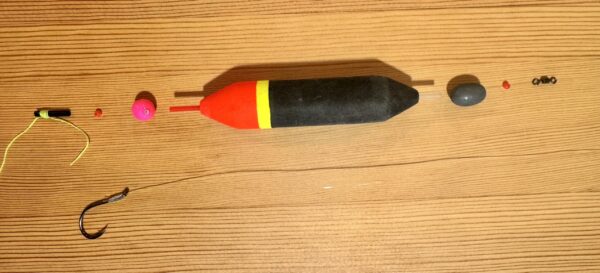
Float fishing is my go-to method from the bank because it lets you control depth and cover water efficiently.
You can keep your bait in the strike zone longer and make quick adjustments as conditions change. A properly built salmon float rig setup makes a big difference here.
Once your rig is set up, dialing in your depth is what really makes it effective. Small adjustments can be the difference between drifting over fish and getting bit.
Drift Fishing
Drift fishing works well in tighter slots or areas where float fishing is harder to manage.
It gives you more direct contact with your presentation and can be effective when fish are holding close to the bottom.
Your weight setup plays a big role here. Using the right amount and style of weight from your best salmon weights for river fishing setup helps you stay near the bottom without constantly snagging.
Plunking (When It Makes Sense)
Plunking is more of a stationary method, but it can work well in bigger water or when fish are moving through consistently.
It is not my primary approach, but it is worth mentioning if you are fishing wide rivers where covering water is harder.
Simple Bank Fishing Setup (What You Actually Need)
You do not need a complicated setup to catch salmon from the bank.
A simple, reliable system works best:
- Rod with enough backbone to handle bigger fish
- Reel that holds up under pressure
- Braided mainline for strength and control
- Fluorocarbon leader for a more natural presentation
- Strong, sharp hooks
- Proper weights for your technique
- A float setup if you are fishing under a bobber
If you are building your setup, it helps to match your gear with the same system used in your best braided fishing line for Chinook salmon, best leader line for Chinook salmon, and best hooks for salmon fishing guides so everything works together.
Best Bait for Bank Fishing Salmon

Bait is one of the biggest factors in getting bites, especially when you are fishing from the bank.
The most consistent options are:
- Cured salmon eggs
- Sand shrimp or shrimp combinations
- Tuna and egg mixes
- Soft beads in certain conditions
Scent can also make a big difference, especially when water conditions are not ideal.
If you want to go deeper into bait selection, check out best bait for Chinook salmon and how to rig salmon eggs so your presentation is set up correctly.
When Bank Fishing Is Most Effective
Timing plays a big role in success and becomes even more important once you understand the best times to fish for Chinook salmon in your area.
The most consistent windows tend to be:
- Early morning
- Late evening
- Overcast days
- Slightly colored water conditions
Fish are more comfortable moving and feeding during these times, which makes them more likely to commit to your presentation.
Common Bank Fishing Mistakes
A few small mistakes can make a big difference in results.
The most common ones I see:
- Standing in the wrong spot
- Casting too far every time
- Not adjusting depth
- Not covering water thoroughly
- Ignoring subtle water closer to shore
Fixing these alone will put you ahead of a lot of anglers.
How to Cover Water From One Spot
You do not need to constantly move to find fish if you are covering water properly.
When I stay in one spot, I focus on:
- Fishing multiple lanes from far to near
- Adjusting depth slightly between drifts
- Watching how my float or line moves through each section
- Paying attention to any follows, bumps, or changes
Once you find a productive lane, keep working it. Fish tend to travel the same paths.
Bank fishing for salmon doesn’t require a complicated setup, but it does require understanding how fish move and how to position yourself correctly. Once you start paying attention to those details, your success rate from the bank goes up fast.
FAQ
Can you catch salmon from the bank?
Yes, salmon are regularly caught from the bank, especially in smaller to mid-sized rivers where fish travel closer to shore and can be reached without needing a boat.
How far should you cast when bank fishing for salmon?
You don’t always need to cast far. Many fish travel closer to shore than expected. It’s more important to cover water methodically than to cast as far as possible every time.
What is the best bait for bank fishing salmon?
Cured salmon eggs are the most consistent option, often paired with shrimp or scent. Tuna combinations and soft beads can also work depending on water conditions and fish behavior.
What pound line should you use for salmon fishing?
Most anglers use braided mainline in the 40–65 lb range with a fluorocarbon leader around 20–30 lb. This gives you strength, sensitivity, and a more natural presentation.
Is float fishing effective from the bank for salmon?
Yes, float fishing is one of the most effective techniques from the bank. It allows you to control depth and keep your bait in the strike zone longer as it moves through travel lanes.
Where should you stand when bank fishing for salmon?
Focus on areas where fish naturally travel closer to shore, such as inside bends, tailouts, and seams between fast and slow water. Positioning is often more important than casting distance.