
This article may contain affiliate links. If you purchase through these links, I may earn a small commission at no additional cost to you.
Knowing how to rig salmon eggs properly is one of the most important skills for consistently catching salmon in Pacific Northwest rivers.
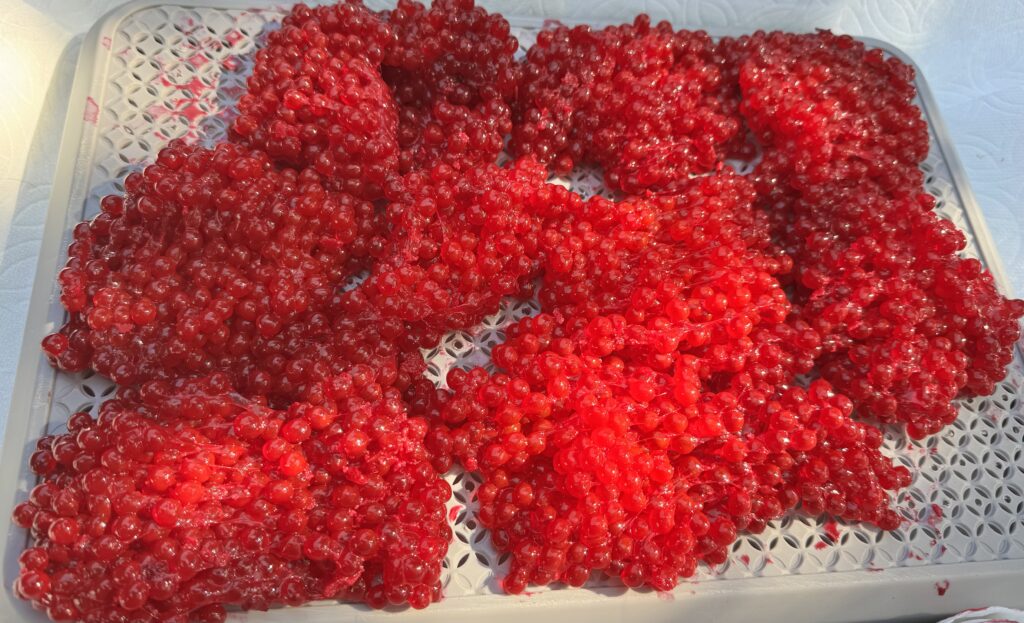
Cured salmon eggs are one of the most reliable baits for targeting salmon in the PNW. When rigged correctly under a float, eggs drift naturally through the current while releasing scent that salmon can easily track upstream.
This style of fishing is especially effective for Chinook salmon, but it also works extremely well for coho and steelhead. The key is keeping your bait drifting naturally while maintaining control of your presentation.
In this guide I’ll show you how to rig salmon eggs under a float so your bait stays secure and drifts naturally through the strike zone.
Below is the exact way I rig salmon eggs under a float, along with tips for bait size, hook placement, and leader length that help keep the bait looking natural in the water.
If you’re unfamiliar with the overall setup, this presentation uses the same system explained in my guide to Salmon Float Rig Setup.
Table of Contents
Why Salmon Eggs Work So Well
Salmon eggs are a natural food source that fish recognize immediately. Even when salmon are not aggressively feeding, the scent trail from cured eggs can trigger curiosity or territorial responses.
Eggs work particularly well in river systems because the current helps spread scent downstream. As your bait drifts naturally with the current, salmon holding in deeper runs or tailouts can detect the scent and move toward the presentation.
In many Pacific Northwest rivers, cured eggs paired with sand shrimp are one of the most productive bait combinations anglers can fish under a float.
Gear Needed for a Salmon Egg Float Rig
Fishing eggs under a float uses a simple rigging system that most salmon anglers already carry in their tackle box.
Typical components include:
• Float or bobber
• Sliding egg weight
• Swivel
• Leader line
• Octopus hook
• Bobber stop and beads
These components create a controlled drift that keeps your bait moving naturally through the strike zone while preventing tangles and line twist.
Most of this setup is part of a larger Terminal Tackle for Salmon Fishing system that anglers use throughout Pacific Northwest rivers.
For this setup, I usually run:
- 20–30 lb fluorocarbon leader
- Size 4/0 or 5/0 octopus hooks
- Inline slider float
Float I Prefer for Fishing Salmon Eggs
When fishing eggs under a float, I prefer using an inline slider float because it allows quick depth adjustments and casts well in river current.
The float I most commonly use is the Beau Mac Inline Slider Float, which strikes a great balance between durability and price. These floats are tough enough to last multiple seasons and adjust easily as river conditions change.
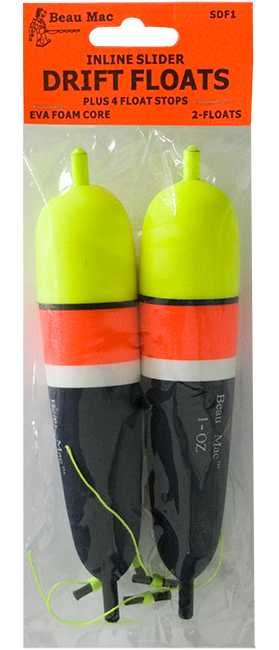
This is the float I rely on for consistent depth control and durability when fishing salmon under a float
Inline slider floats like this also make it easy to adjust your bait depth throughout the day as fish move within the water column.
If you’re trying to choose the right float size or style, I go into more detail in my guide to Best Salmon Floats for River Fishing.
How to Rig Salmon Eggs Step by Step
The basic setup for fishing eggs under a float follows the same rigging order used in most salmon float fishing systems.
Step 1 – Tie Your Leader
Start by tying your leader line to the swivel at the end of your mainline.
For most float setups, I prefer a leader around three feet long, although this can change depending on water clarity and current speed. In clear water I’ll sometimes extend the leader slightly to make the presentation look more natural.
A strong fluorocarbon or monofilament leader works well because it provides durability while still allowing the bait to move naturally in the current.
If you’re unsure what material works best, I break it down in my guide to Best Leader Line for Chinook Salmon.
Step 2 – Tie on an Octopus Hook
For bait fishing, octopus-style hooks are the most common choice because the wide gap allows bait to sit on the hook shank while keeping the hook point exposed.
When tying the hook, I prefer to use a bait loop knot. This knot creates a small loop of line behind the hook that can be wrapped around the bait to help hold it securely in place.
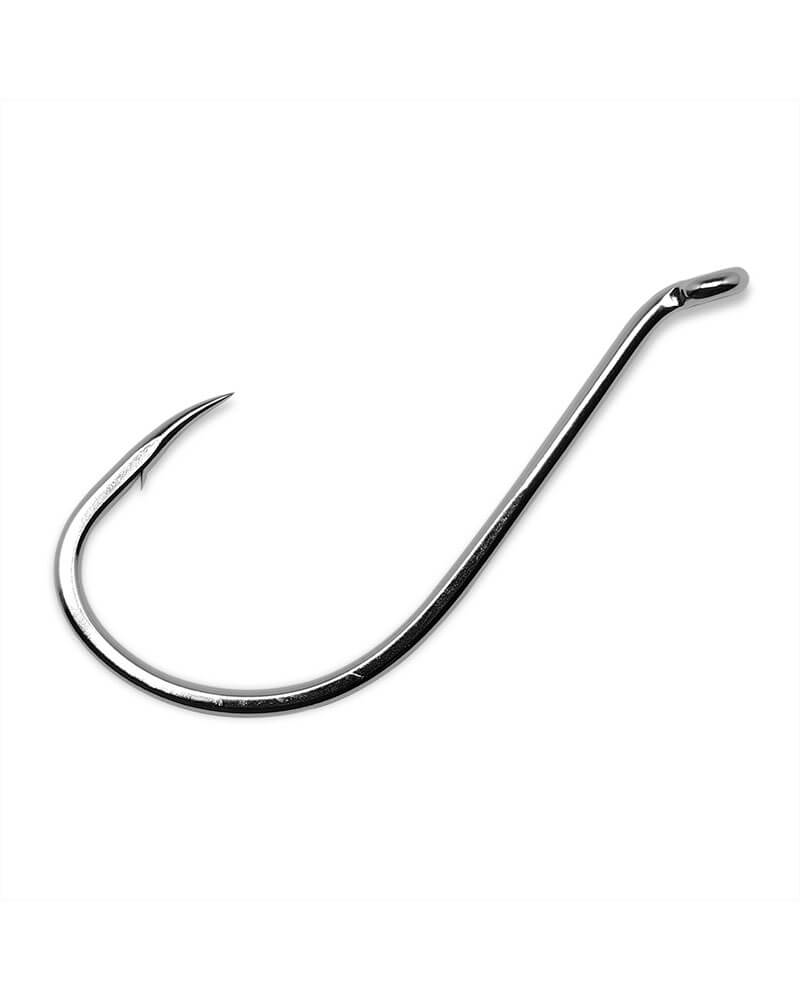
These are what I use for most Chinook setups
Once the eggs are on the hook, wrap the bait loop around the egg cluster and gently tighten it down. If the eggs are very soft and have a higher chance of breaking apart or falling off, I will sometimes make two wraps around the cluster to help keep everything secured.
For Chinook salmon I typically fish:
• 5/0 hooks in most situations
• 4/0 hooks when fishing smaller bait clusters or clearer water
• 3/0 hooks when targeting coho
A strong, sharp hook is important when targeting salmon because large fish can easily bend weaker hooks during the fight.
Step 3 – Add the Egg Cluster
Once the hook is tied on, thread your cured egg cluster onto the hook.
I usually run an egg cluster about the size of a golf ball. This creates a strong scent profile while still drifting naturally with the current.
When rigging eggs, I like to thread the hook through the skein of the eggs as many times as possible without compromising the cluster. The skein is what holds the eggs together, so threading the hook through that membrane helps keep the bait secure.
The goal is to anchor the cluster firmly while still leaving the hook point exposed so it can penetrate when a salmon bites.
How to Keep Salmon Eggs From Falling Off the Hook
One of the most common problems when fishing eggs is keeping the bait secured to the hook during long drifts.
The key is making sure the hook passes through the skein of the eggs as many times as possible without breaking the cluster apart. The skein is the membrane that holds the eggs together, so threading the hook through that material helps anchor the bait in place.
After the eggs are threaded onto the hook, the bait loop knot can be wrapped around the cluster and gently tightened. This helps hold the eggs against the hook shank so they stay compact while drifting through the current.
If the eggs are very soft or loosely cured, I’ll sometimes make two wraps with the bait loop around the cluster to keep everything secured.
A properly rigged egg cluster should stay on the hook for multiple drifts while still leaving the hook point exposed for solid hooksets.
Leader Length for Fishing Salmon Eggs
Leader length can make a noticeable difference in how natural your bait drifts through the current.
Most anglers run leaders between 2 and 3 feet when fishing eggs under a float.
General guidelines:
• Clear water – slightly longer leader
• Faster current – shorter leader
• Heavy fishing pressure – longer leader
Adjusting leader length occasionally throughout the day can help dial in a more natural presentation.
Tips for Fishing Eggs Under a Float
Rigging eggs correctly is only part of the equation. Presentation plays a huge role in getting bites.
One of the most important factors when fishing eggs under a float is depth control.
I usually start by setting my bait about a foot off the bottom. This keeps the bait drifting naturally just above the riverbed where salmon are most likely to see it.
However, in deeper holes salmon can be holding anywhere in the water column, so I’m constantly adjusting my float depth throughout the day. If you’re new to this setup, I break down the full system step-by-step in my salmon float rig guide.
If you’re set too deep, your bait may drift underneath the fish. If you’re set too shallow, your bait may pass above them. The goal is to dial in the depth so your bait drifts right at the level where the fish are holding.
Personally, I’ll constantly adjust depth throughout the day, sometimes every few drifts until I start getting bites.
A few other things that help improve success:
• Keep the bait drifting naturally with the current
• Adjust float depth frequently as water depth changes
• Use fresh bait whenever possible
• Watch your float closely for subtle bites
Often salmon will take eggs gently before committing to the bait, so paying attention to small float movements can make a big difference.
Common Mistakes When Rigging Salmon Eggs
A few simple mistakes can reduce how effective egg fishing can be.
Using Too Much Bait
Large egg clusters can hide the hook point and reduce hook-up ratios.
Covering the Hook Point
Always leave the hook point exposed so it can penetrate quickly when a fish bites.
Leader Too Short
Short leaders can make the presentation look unnatural, especially in clear water.
Fishing the Wrong Depth
If your bait is drifting too high in the water column, salmon may ignore it completely.
When Salmon Eggs Work Best
Egg fishing tends to work best when salmon are freshly entering the river or moving upstream through holding water.
Productive situations often include:
• fresh salmon runs
• slightly colored water after rain
• cooler fall temperatures
• deeper runs and tailouts
In these conditions, eggs can be one of the most consistent bait options available.
If you want a full breakdown of the best bait options for different river conditions, I cover that in my guide to the best bait for Chinook salmon.
Final Thoughts
Fishing salmon eggs under a float is one of the most reliable techniques for targeting salmon in Pacific Northwest rivers. When rigged properly, eggs create a natural drifting presentation that spreads scent through the current and attracts fish from a distance.
With the right leader length, hook size, and bait presentation, this simple setup can consistently produce salmon throughout the season.
FAQ
How do you rig salmon eggs for salmon fishing?
Salmon eggs are typically rigged on an octopus hook tied with a bait loop knot. The hook is threaded through the skein of the egg cluster several times to help secure the bait, and the bait loop is wrapped around the cluster to hold it tightly against the hook shank. When fishing under a float, the egg cluster drifts naturally with the current while releasing scent that salmon can track upstream.
What size hook is best for salmon eggs?
Most anglers use octopus hooks between 3/0 and 5/0 when fishing salmon eggs. A 5/0 hook is commonly used for Chinook salmon, while 4/0 hooks work well for smaller bait clusters or clearer water. When targeting coho, many anglers drop down to a 3/0 hook.
How many salmon eggs should you put on a hook?
Most anglers fish an egg cluster roughly the size of a golf ball. This provides a strong scent trail while still allowing the bait to drift naturally in the current. The hook should be threaded through the skein of the eggs to help keep the cluster secure.
How do you keep salmon eggs from falling off the hook?
To keep salmon eggs from falling off, thread the hook through the skein of the eggs several times so the cluster is anchored securely. A bait loop knot can then be wrapped around the egg cluster to hold it tightly against the hook shank. If the eggs are soft, anglers sometimes wrap the bait loop twice around the cluster for extra security.
How long should a leader be when fishing salmon eggs?
When fishing salmon eggs under a float, most anglers use a leader between 2 and 3 feet long. In clear water conditions a slightly longer leader may help the bait drift more naturally, while shorter leaders can work better in faster current.