
Affiliate Disclosure: As an Amazon Associate, I earn from qualifying purchases. Some links on this page are affiliate links, meaning I may earn a small commission if you purchase through them at no additional cost to you.
Why Your Salmon Float Rig Keeps Tangling
Float fishing is one of the most effective ways to target salmon in rivers, especially for Chinook. When everything is set up correctly, a float rig allows your bait to drift naturally through the strike zone while keeping it suspended at the right depth.
But if you’ve spent much time float fishing for salmon, you’ve probably experienced one of the most frustrating problems anglers run into:
Your float rig keeps tangling.
Tangles can happen during the cast, during the drift, or when the rig lands in the water. Fortunately, most float rig tangles are caused by a few simple rigging mistakes that are easy to fix.
In this guide, we’ll go through the most common reasons salmon float rigs tangle and how to prevent them so your presentation stays clean and effective.
If you’re still building your setup, you may also want to check out my guide on salmon float rig setups, where I break down the full rig step-by-step.
Table of Contents
Common Reasons Salmon Float Rigs Tangle
Several small issues can cause float rigs to tangle. Most of the time, fixing the problem only requires a simple adjustment to your setup.
Your Leader Is Too Long
One of the most common causes of float rig tangles is using a leader that is too long.
Long leaders can easily wrap around the float, mainline, or weight during the cast.
While longer leaders can sometimes help create a more natural bait presentation, they also increase the chances of the rig twisting and tangling.
For most salmon float rigs, a leader around 3 feet long is a good starting point.
Many anglers prefer to tie and store pre-tied leaders so they can quickly swap them out if they become damaged or tangled.
If you’re choosing leader material, take a look at my guide on leader line for salmon fishing.
Your Float Is Too Small for the Weight
Another common cause of tangles is using a float that is too small for the amount of weight in the rig.
If the float doesn’t have enough buoyancy to support the weight, the rig can behave unpredictably in the water and twist around the line.
When float fishing for salmon, the float should always match the amount of weight being used.
Typical salmon float fishing weight sizes look like this:
3/4 oz — light current or shallow water
1 oz — most common setup
1.5 oz — deeper runs or faster current
2 oz — strong current
Your float should always be able to properly support the weight you’re running.
I cover this in more detail in my guide on the best salmon floats for river fishing.
(Internal link → Best Salmon Floats post)
Your Weight Placement Is Incorrect
Where the weight sits in your float rig can also cause tangles.
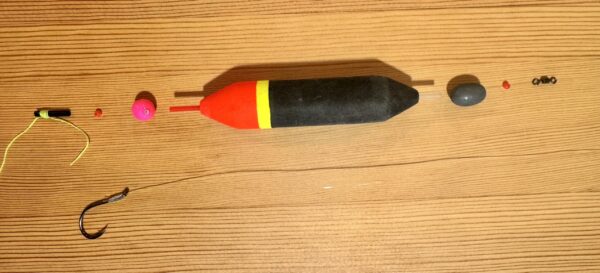
In most salmon float rigs, the setup should follow this order:
Bobber stop
Bead
Corky
Float
Sliding egg weight
Bead
Swivel
Leader
Hook
The weight should sit above the swivel and below the float. This helps keep the rig balanced and allows the bait to drift naturally.
If the weight is placed incorrectly, the leader can wrap around the float during the cast.
For a complete breakdown of how all of these components fit together, see my terminal tackle guide for salmon fishing.
Casting Too Hard
Many float rig tangles happen during the cast.
When anglers snap the rod forward too aggressively, the weight and leader can swing ahead of the float and wrap around the main line before the rig lands in the water.
Instead, try making smooth and controlled casts.
A smoother casting motion allows the rig to extend naturally in the air, which greatly reduces the chances of tangling.
Your Corky Is Showing That the Rig Is Tangled
Some salmon float setups include a corky above the float. In addition to adding visibility, the corky can also act as a tangle indicator.
When the rig is drifting correctly, the corky should sit close to the float.
If you notice the corky floating off to the side or separated from the float, it usually means something in the rig has tangled somewhere along the line.
When this happens, it’s best to reel in and reset the rig before continuing the drift.
Fishing with a tangled setup almost always results in poor bait presentation.
How to Rig a Tangle-Free Salmon Float Setup
A properly rigged float setup greatly reduces the chances of tangling.
A typical Chinook float rig looks like this:
Mainline
Bobber stop
Bead
Corky
Float
Sliding egg weight
Bead
Swivel
Leader
Hook
Sliding egg weights are commonly used because they allow the rig to move naturally while helping the bait reach the strike zone.
If you want to see the different weight options anglers use for salmon fishing, take a look at my guide on salmon weights for river fishing.
Tips to Prevent Salmon Float Rig Tangles
A few simple habits can help prevent tangles while float fishing for salmon.
Use Smooth Casting Motions
Avoid aggressive casts that cause the rig to spin in the air.
Match Your Float to Your Weight
Make sure your float has enough buoyancy for the amount of weight in the rig.
Keep Leader Length Reasonable
Around three feet is a good starting point for most salmon float rigs.
Check Your Rig Often
If something looks off while drifting, reel in and reset your rig.
Common Float Fishing Questions
Why does my salmon float rig keep tangling?
Float rigs often tangle when the leader is too long, the float is too small for the amount of weight being used, or the rig is cast too aggressively. Keeping your leader around three feet, matching the float size to the weight, and using smooth casting motions can greatly reduce tangles.
How do you stop a float rig from tangling?
To prevent float rig tangles, make sure your leader length is reasonable, your float can support the weight in the rig, and your casting motion is smooth and controlled. Proper weight placement and a balanced rig also help prevent the leader from wrapping around the float.
What leader length is best for salmon float fishing?
Most salmon float rigs work well with leaders around three feet long. This length allows the bait to move naturally while still reducing the chances of tangling during the cast.
Why does my bobber rig twist in the current?
Bobber rigs can twist when the weight placement is incorrect, the float is undersized, or the leader is excessively long. Adjusting the rig to keep everything balanced usually solves the problem.
Final Thoughts
Float fishing for salmon is one of the most productive techniques for targeting Chinook in rivers.
But like any fishing setup, small rigging mistakes can lead to frustrating tangles.
By keeping your leader length reasonable, matching your float to the weight you’re using, and casting smoothly, you can dramatically reduce tangles and keep your presentation drifting naturally through the water.
Frequently Asked Questions
Why does my salmon float rig keep tangling?
Float rigs often tangle because of long leaders, incorrect weight placement, or using a float that is too small for the amount of weight in the rig. Smooth casting and properly balancing the rig can prevent most tangles.
What leader length is best for salmon float fishing?
Many anglers use leaders around three feet long when float fishing for salmon. This length helps provide natural bait movement while reducing the chances of tangling during the cast.
How much weight should you use for salmon float fishing?
Most salmon float rigs use between 3/4 ounce and 2 ounces of weight depending on water depth and current speed. Around 1 ounce is a common starting point in many river conditions.
What is the best float setup for salmon fishing?
A typical salmon float setup includes a bobber stop, bead, corky, float, sliding egg weight, bead, swivel, leader, and hook. This arrangement keeps the rig balanced and allows the bait to drift naturally.
Frequently Asked Questions
Why does my salmon float rig keep tangling?
Salmon float rigs usually tangle because of long leaders, incorrect weight placement, or using a float that is too small for the amount of weight in the rig. Smooth casting and properly balancing the float and weight will prevent most tangles.
What leader length is best for salmon float fishing?
Many anglers use leaders around 3 feet long when float fishing for salmon. This length helps create a natural bait presentation while reducing the chances of tangling during the cast.
What weight should I use for salmon float fishing?
Most salmon float rigs use between 3/4 ounce and 2 ounces of weight depending on water depth and current speed. Around 1 ounce is a common starting point for many river conditions.
Can a float that is too small cause tangles?
Yes. If the float is too small for the amount of weight in the rig, the setup can behave unpredictably in the water and twist the line. Matching the float size to the weight being used helps keep the rig balanced and reduces tangles.
How do you stop a float rig from tangling?
To prevent float rig tangles, keep your leader length reasonable, match the float size to the weight being used, and use smooth casting motions. Proper weight placement and balanced rig components also help prevent the leader from wrapping around the float.