
Affiliate Disclosure: As an Amazon Associate, I earn from qualifying purchases. Some links on this page are affiliate links, meaning I may earn a small commission if you purchase through them at no additional cost to you.
Table of Contents
Best Salmon Weights for River Fishing (Overview)
The best salmon weights for river fishing can make the difference between getting your bait into the strike zone and constantly missing fish. The right weight controls how quickly your bait sinks, how naturally it drifts, and whether your presentation stays where salmon are holding.
Different salmon fishing techniques use different types of weight. The three most common river methods are:
- Float fishing
- Drift fishing
- Plunking
Each method requires a slightly different style of weight to work effectively.
In this guide, I’ll walk through the best weights for salmon fishing in rivers, how much weight to use, and when each style works best.
If you’re new to building salmon rigs, I recommend also reading my guide on salmon terminal tackle setups, which covers how all of these pieces connect together.
If you’re fishing bait, pairing the right weight with properly cured eggs also makes a huge difference in getting consistent bites.
Salmon Fishing Weight Size Guide for Rivers
Float fishing
3/4 oz — light current
1 oz — most common
1.5 oz — deeper runs
2 oz — heavy current
Drift fishing
pencil lead adjusted to current- or
split shot stacked as needed
Plunking
1–3 oz — slow current
4–6 oz — moderate current
6–10 oz — strong current
How to Choose the Right Salmon Weight
Choosing the right salmon weight depends on a few key factors: water depth, current speed, and how you’re presenting your bait.
In deeper or faster water, heavier weights help get your bait down into the strike zone quickly. In slower or shallower water, lighter weights create a more natural drift and can lead to more bites.
Your weight should also match your setup. For example, float fishing typically uses lighter weights that allow your bait to move naturally with the current, while plunking requires heavier weights to hold your bait in place.
Dialing this in is one of the biggest factors in consistently catching salmon in rivers.
What Size Weight for Salmon Float Fishing
For most Chinook float fishing in rivers, the goal is to use enough weight to get your bait down quickly while still allowing the float to drift naturally with the current.
Most of the time I run about 1 ounce of weight for salmon float fishing.
However, this can change depending on the depth of the run and the speed of the current.
Your float size should match the amount of weight you’re using so the float can properly support the rig, which is all covered in my breakdown of the best floats for salmon fishing.
Typical salmon float weight sizes look like this:
3/4 oz — light current or shallow water
1 oz — most common setup
1.5 oz — deeper runs or faster current
2 oz — heavy current
Lighter water conditions sometimes allow you to get away with 3/4 ounce, which can create a slightly more natural presentation when the current is slower.
In deeper or faster water, stepping up to 1.5 or even 2 ounces helps the bait reach the strike zone faster.
If you want to see exactly how these weights fit into a complete setup, check out my salmon float rig setup guide, where I break down the full rig step-by-step.
Sliding Egg Weights (My Go-To for Float Fishing)
Best Sliding Egg Sinkers for Salmon Float Fishing
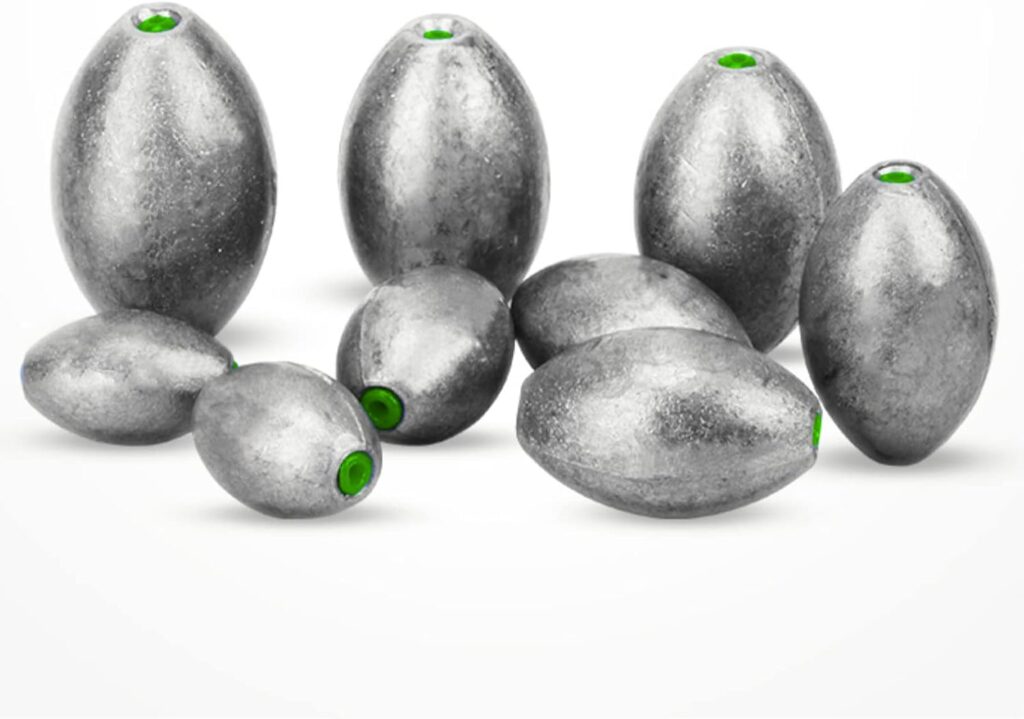
The weight I use most often for salmon float fishing is a sliding egg weight.
These weights are simple, inexpensive, and extremely reliable.
In a standard float rig, the egg weight slides freely on the main line above the swivel. This allows the float to control the depth while the weight helps get the bait down quickly.
Sliding egg weights also allow salmon to take the bait with less resistance before the hookset.
Why Egg Weights Work So Well
- Simple and easy to rig
- Inexpensive and widely available
- Slide freely on the mainline
- Work well with most float setups
For most salmon float rigs, it’s hard to beat the simplicity of an egg weight.
Pencil Weights (Common for Drift Fishing)
Pencil Lead Weights for Drift Fishing Salmon
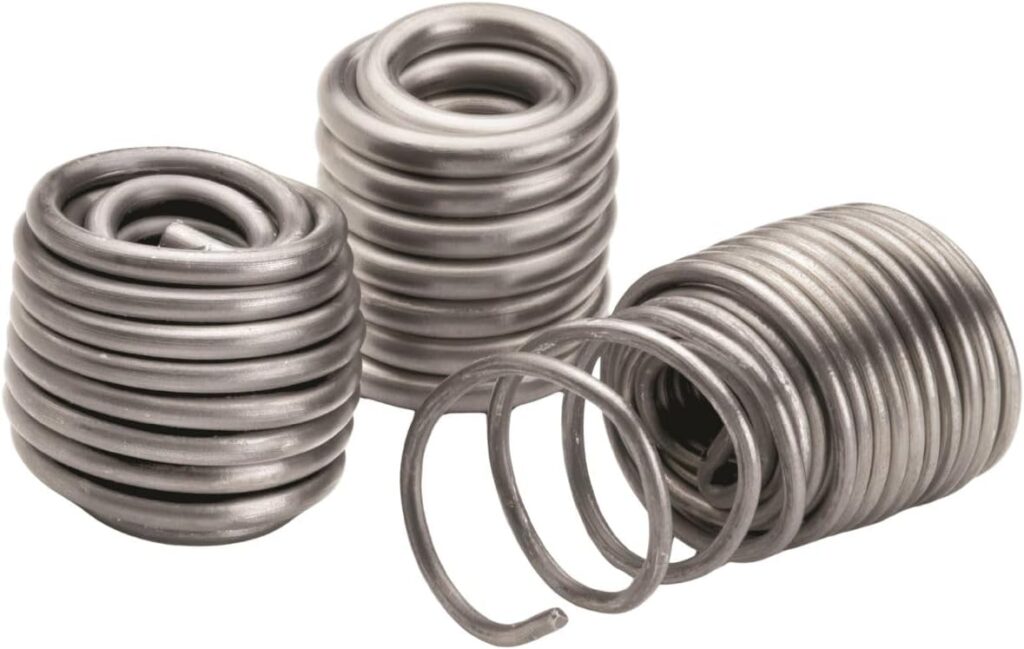
Pencil lead weights are commonly used for drift fishing salmon.
These weights usually come on a spool and can be cut to whatever length you need depending on the current speed.
Many anglers flatten one end of the lead with pliers and poke a small hole through it so it can be attached to a snap swivel.
The biggest advantage of pencil lead is that it allows you to quickly adjust the amount of weight when conditions change.
Why Drift Anglers Like Pencil Lead
- Easy to adjust weight quickly
- Great for maintaining bottom contact
- Simple to attach with snap swivels
While I primarily use pencil lead for drift fishing, some anglers will also attach it to float rigs using a three-way swivel setup.
Split Shot Weights
Split Shot Weights for Drift Fishing Salmon
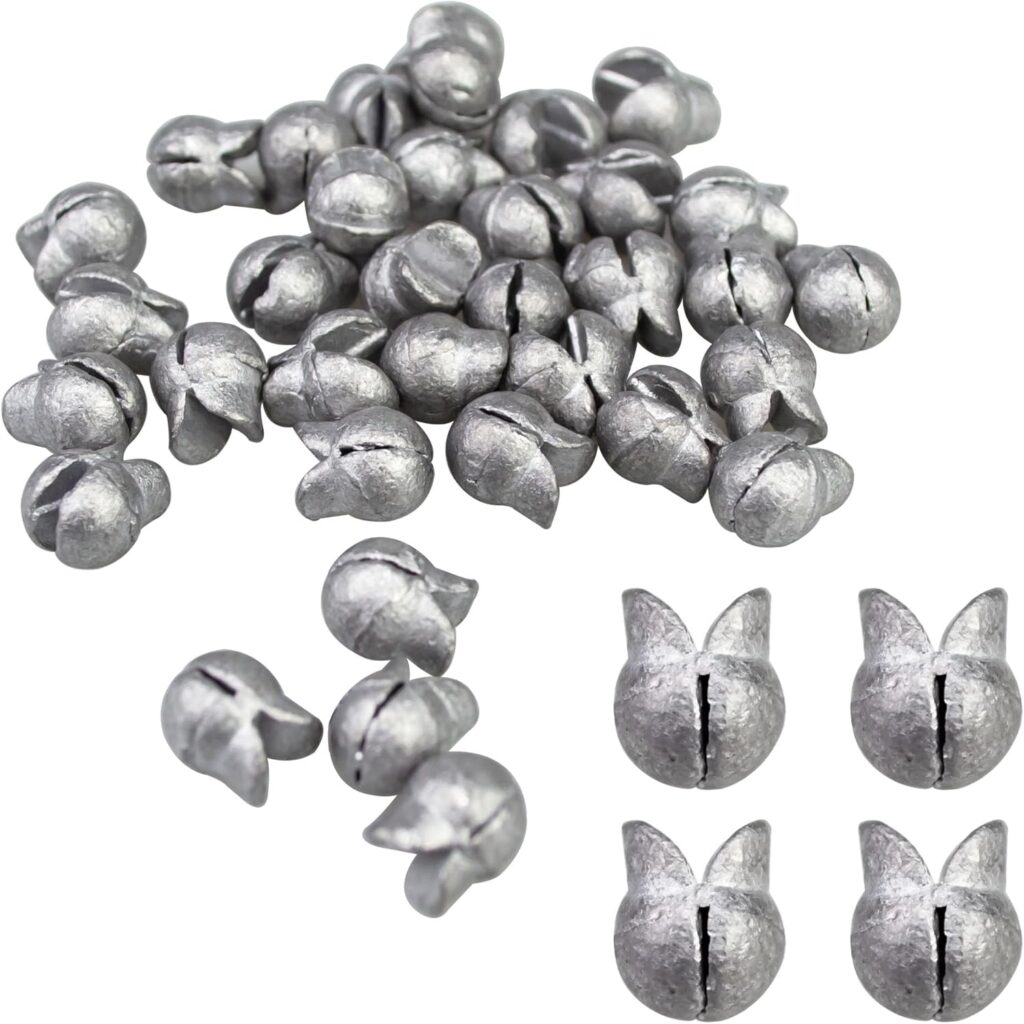
Another option for drift fishing is split shot weights.
These small round weights clamp directly onto the fishing line using pliers.
Anglers often stack several split shot together to create the amount of weight needed for the current.
Pros of Split Shot
- Easy to add or remove
- Inexpensive
- Widely available
Downsides
- Can damage line if clamped too hard
- Not as easy to adjust as pencil lead
For salmon drift fishing, most anglers eventually prefer pencil lead because it allows faster weight adjustments.
Plunking Weights for Salmon
Pyramid Sinkers for Plunking Salmon in Rivers
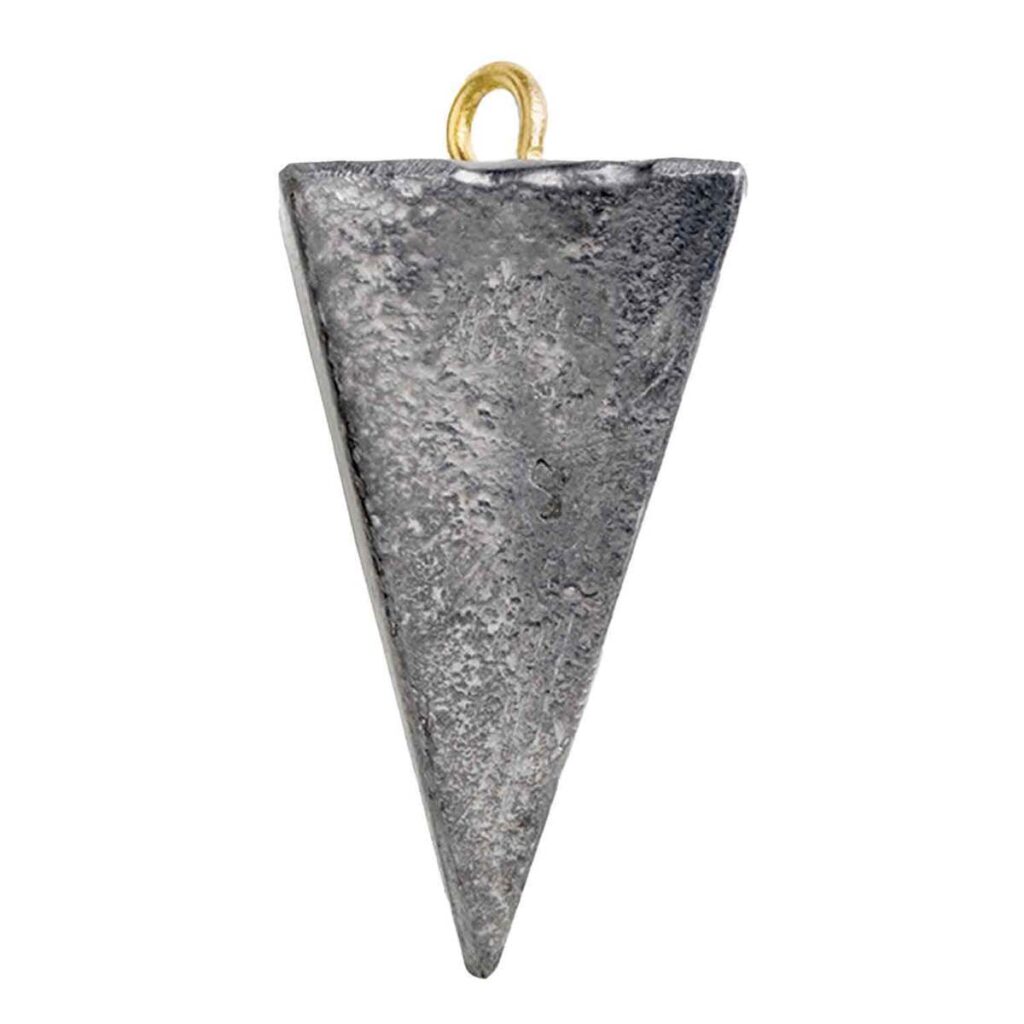
Plunking is another effective way to target salmon in rivers, especially from shore in areas with strong current.
Unlike float fishing or drift fishing, plunking requires heavier weights to hold your bait in one location.
The two most common plunking weights are:
- Pyramid weights
- Cannonball weights
The exact amount of weight needed depends heavily on the speed of the river.
In slower current you might only need 1–3 ounces, while stronger current may require 6–10 ounces to keep the rig in place.
The goal is to use enough weight to:
- Hold bottom
- Keep slack out of your line
- Allow bites to be detected easily
Plunking setups also benefit from strong scent presentation, especially when fish are moving through quickly.
Common Salmon Weight Mistakes
Using the wrong amount of weight can make a big difference in how your presentation behaves in the water.
Some common mistakes anglers make include:
Using Too Little Weight
If your weight is too light, the bait may never reach the strike zone where salmon are holding.
Using Too Much Weight
Too much weight can make the presentation look unnatural and cause your rig to drag excessively.
Not Adjusting for Current Speed
River conditions change constantly. Adjusting your weight based on water speed and depth can dramatically improve results.
Final Thoughts
Choosing the right salmon fishing weight doesn’t have to be complicated.
For most river anglers, these simple guidelines work well:
- Sliding egg weights for float fishing
- Pencil lead or split shot for drift fishing
- Pyramid or cannonball weights for plunking
Once you understand how weight affects your presentation, adjusting for river conditions becomes much easier.
If you’re building your salmon setup from scratch, make sure to also read my guides on:
These guides walk through the full system used for targeting salmon in rivers.
Frequently Asked Questions
What size weight should I use for salmon fishing?
The weight used for salmon fishing depends on the fishing method and river conditions. Float fishing typically uses weights between 3/4 ounce and 2 ounces, with 1 ounce being the most common setup. Drift fishing often uses adjustable weights like pencil lead or stacked split shot, while plunking setups may require anywhere from 1 ounce to 10 ounces depending on the strength of the current.
What weight is best for salmon float fishing?
Sliding egg weights are one of the best options for salmon float fishing because they slide freely on the main line and allow the float to control the depth of the bait. Most anglers use between 3/4 ounce and 2 ounces depending on water depth and current speed, with 1 ounce being a common choice in many river conditions.
What weights are used for drift fishing salmon?
Drift fishing for salmon commonly uses pencil lead or split shot weights. Pencil lead is popular because it can be easily adjusted by cutting different lengths depending on the current. Split shot weights can also be added or removed from the line to fine tune the amount of weight needed to maintain bottom contact.
What weights are used for plunking salmon?
Plunking for salmon typically uses heavier weights such as pyramid sinkers or cannonball weights. The goal is to use enough weight to hold the bait in place on the bottom while keeping tension in the line so bites are easy to detect. Depending on river current, plunking setups may use anywhere from 1 ounce to 10 ounces of weight.
Can you use split shot for salmon fishing?
Yes, split shot weights can be used for salmon fishing, especially when drift fishing in rivers. Anglers often stack several split shot weights on the line to create the right amount of weight for the current. However, many anglers prefer pencil lead because it allows faster adjustments when changing river conditions.
How much weight should I use for salmon fishing in fast current?
In fast current, most anglers increase weight to 1.5–2 ounces for float fishing or 6–10 ounces for plunking to keep the bait in the strike zone.