Affiliate Disclosure
This post may contain affiliate links. If you purchase through these links, I may earn a small commission at no additional cost to you. As an Amazon Associate, I earn from qualifying purchases.
Table of Contents
Best Hooks for Salmon Fishing (Overview)
The best hooks for salmon fishing can make a huge difference in your hookup rate, especially when fishing rivers for Chinook and coho. The right hook helps your bait stay natural, improves hook penetration, and increases the chances of landing fish once they’re hooked
Unlike many types of fishing where dozens of hook styles are commonly used, salmon fishing tends to rely on just a few proven hook designs.
After years of fishing for Chinook in Pacific Northwest rivers, I keep things simple. There are three hook styles that consistently perform well:
- Octopus hooks
- Circle hooks
- Big river bait hooks (sickle hooks)
These same hook styles are commonly used for both Chinook and coho salmon, although coho anglers often size down slightly.
Each one serves a slightly different purpose depending on your bait and fishing conditions.
Hooks are just one part of the overall setup. If you’re building a full salmon rig, it helps to understand how the rest of the gear fits together in a complete terminal tackle setup for salmon fishing.
If you’re fishing with a salmon float rig, the hook you choose becomes even more important for getting consistent hooksets.
Octopus Hooks (My Go-To for Float Fishing)
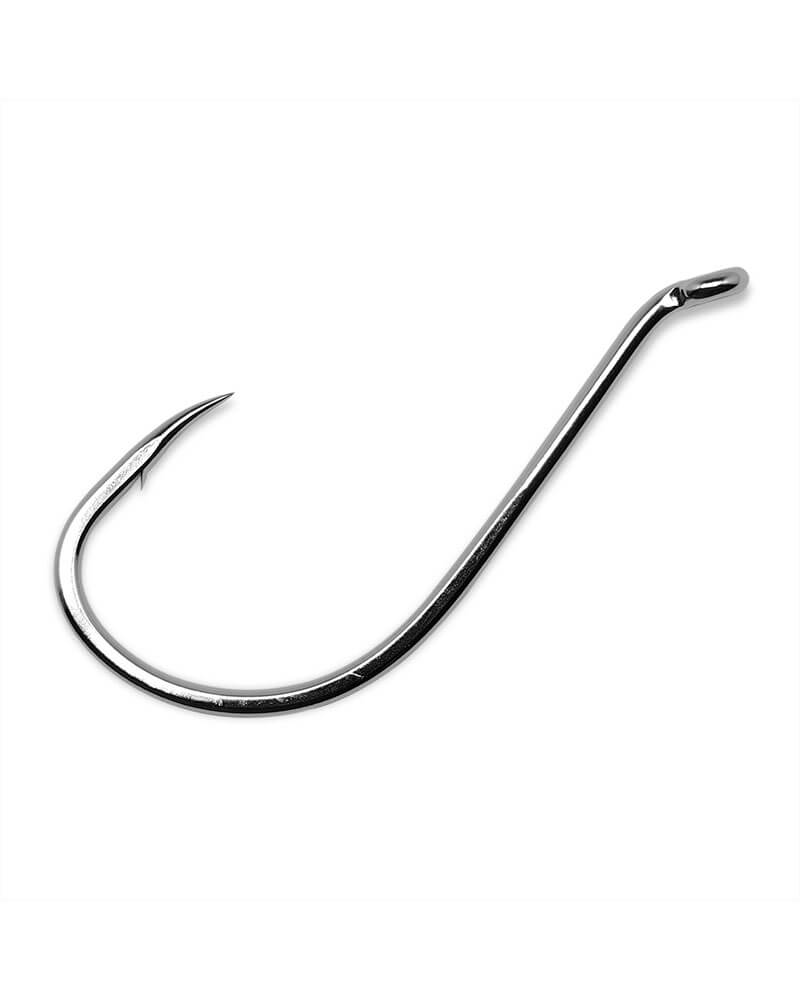
The Gamakatsu Octopus hook is one of the most reliable options for salmon fishing with bait.
If I’m using a salmon float rig setup, my go-to hook is a Gamakatsu octopus hook.
Octopus hooks work extremely well when fishing bait under a float.
For most Chinook fishing situations, I typically use:
5/0
or
4/0
When I’m fishing bait under a float for Chinook, a 5/0 Gamakatsu octopus hook is usually the first hook I reach for. It’s a simple setup that consistently hooks fish in the corner of the mouth, which helps keep them pinned during the fight.
That location holds fish well and reduces the chances of the hook pulling free during a fight.
There are a few design features that make octopus hooks so effective:
Wide hook gap
This allows the hook point to stay exposed even when fishing bait like cured salmon eggs or egg and shrimp combinations.
Short shank
The shorter shank reduces leverage, which helps prevent fish from twisting the hook loose.
Rotating hook shape
The curved shape helps the hook rotate into position as the fish moves away with the bait.
Because of this design, octopus hooks are extremely reliable for float fishing with bait.
The Difference Between an Octopus Hook and a Circle Hook
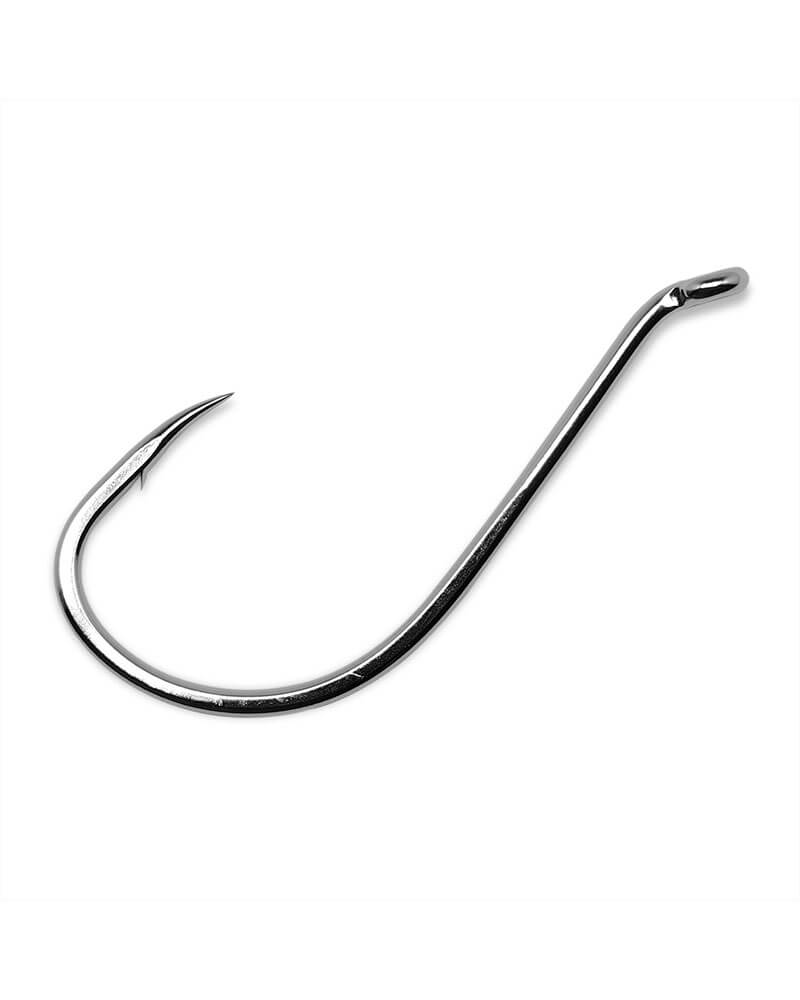
Hook point angled straighter
Traditional hook set
Common sizes: 5/0 – 3/0
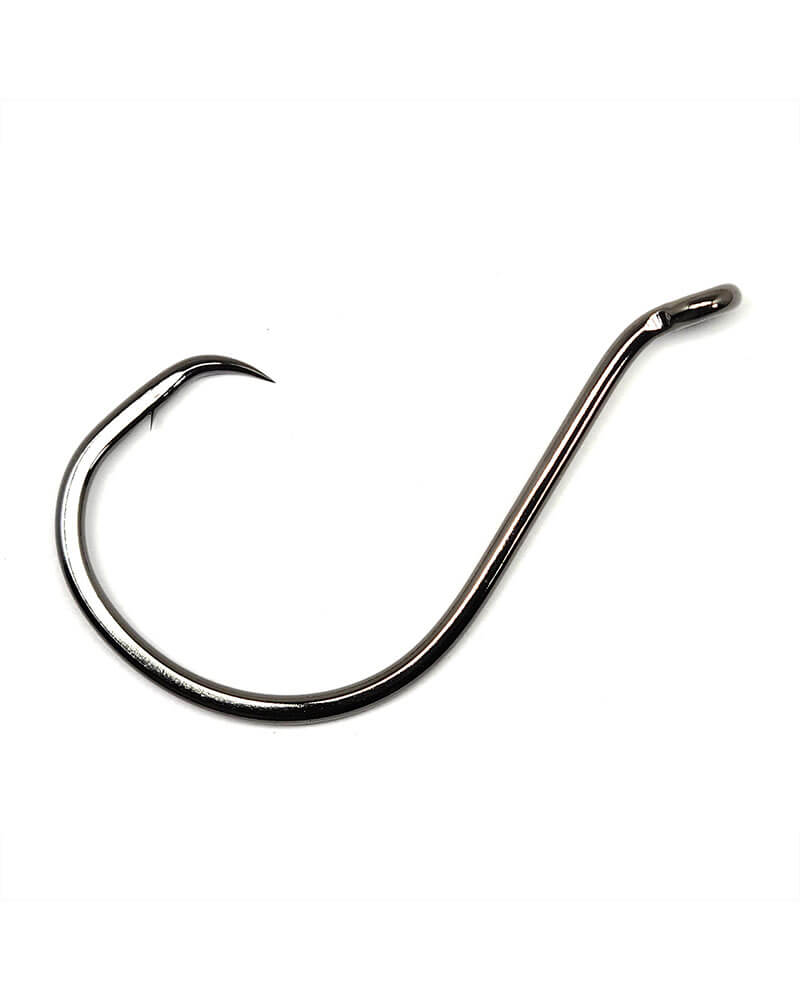
Hook point curls inward
Designed to self-set
Start reeling instead of setting the hook
Circle Hooks (Designed to Self-Set)
I’ve used circle hooks extensively for Chinook, and they’ve consistently been the most reliable option for fishing bait under a float when I don’t have an octopus hook on hand.
Circle hooks look similar to octopus hooks but have one important difference.
The point of the hook curves inward toward the shank.
This design changes how the hook sets.
Instead of setting the hook aggressively like you would with a traditional hook, circle hooks are designed to hook fish automatically.
When a fish grabs the bait and starts swimming away, the hook naturally rotates and catches in the corner of the fish’s mouth.
The correct method when using circle hooks is simple:
Start reeling instead of setting the hook.
As tension increases, the hook rotates and sets itself.
Circle hooks are commonly used when anglers want to reduce deep hooking or improve survival rates when fish are released.
Big River Bait Hooks (Sickle Hooks)
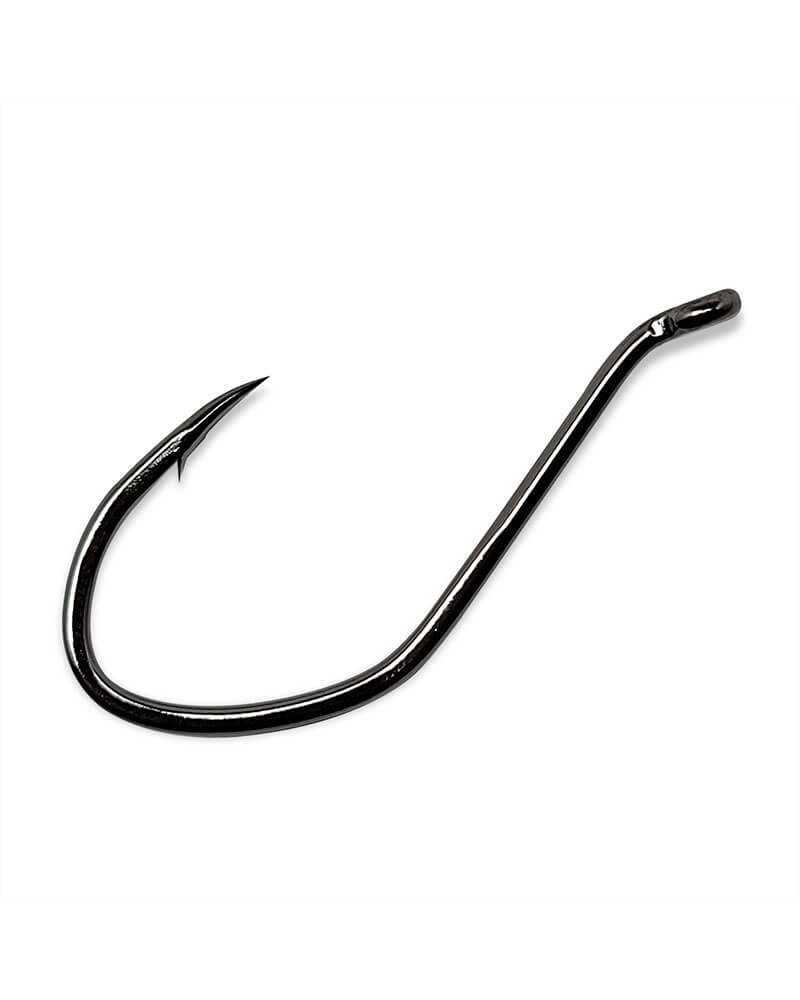
When you’re fishing larger bait presentations or dealing with tougher conditions, switching to a big river bait hook can give you a more aggressive profile and better hook penetration.
Another hook style used for salmon fishing is the Big River Bait Hook, often referred to as a sickle hook.
These hooks have a much more aggressive shape compared to octopus hooks.
They are designed to hold larger bait presentations, which can be useful in situations where visibility is low or when fishing bigger bait combinations.
Examples include:
- large egg clusters
- eggs with sand shrimp
- eggs with tuna belly
Because of their wider and more aggressive bend, these hooks provide strong penetration and can handle heavier bait setups.
When I’m fishing larger bait in murky water or trying to create a bigger profile, switching to a sickle hook can make sense.
Hook Size for Salmon Fishing
Hook size depends on the bait being used and the type of salmon you’re targeting.
Hook size should also match the bait and terminal setup you’re using. I cover how all the components work together in my terminal tackle guide for salmon fishing.
For most Chinook fishing situations, these sizes work well:
- 5/0 – standard Chinook size
- 4/0 – slightly smaller presentation
- 3/0 – smaller bait or pressured fish
When targeting coho salmon, anglers usually size down slightly because coho tend to prefer smaller bait presentations.
Typical coho hook sizes include:
- 3/0
- 2/0
- 1
The goal is to choose a hook large enough to hold bait securely while still leaving the point exposed for solid hook penetration.
Barbed vs Barbless Hooks
Some fisheries require barbless hooks, so it’s always important to check local regulations before fishing.
When regulations allow barbed hooks, many anglers prefer them because they help prevent fish from throwing the hook during long fights.
However, barbless hooks are often required in certain rivers to protect fish populations.
Always check the rules for the river you’re fishing.
Tips for Better Salmon Hookups
A few small details can make a big difference in landing salmon.
Keep the hook point exposed
If bait completely covers the hook point, penetration becomes much harder.
Use sharp hooks
Salmon have tough mouths, so a razor sharp hook is important.
Match hook size to bait
Large bait requires a larger hook to maintain proper exposure.
Should Salmon Hooks Be Razor Sharp?
One detail that many anglers overlook is hook sharpness. Salmon have tough mouths, especially Chinook, so a razor sharp hook is extremely important for solid hook penetration.
Many high-quality hooks like Gamakatsu come very sharp out of the package, but it’s still a good habit to check the point regularly while fishing. If a hook drags across rocks or becomes dull, replacing it or touching it up with a hook file can make a noticeable difference in hookup rates.
How to Choose the Best Hook for Salmon Fishing
Choosing the best hook for salmon fishing depends on three main factors: your bait, your fishing method, and water conditions.
- Float fishing with bait: Octopus hooks are the most reliable choice
- Drift fishing: Pencil lead setups often pair well with octopus or circle hooks
- Larger bait presentations: Big river (sickle) hooks can improve hookup rates
In most river situations targeting Chinook, a 5/0 octopus hook is the most versatile and consistent option.
Related Salmon Fishing Guides
Salmon Float Rig Setup
Best Salmon Floats for River Fishing
Best Salmon Weights for River Fishing
Terminal Tackle for Salmon Fishing
Best Leader Line for Chinook Salmon
Final Thoughts
While there are many hook styles available, salmon anglers typically rely on just a few proven designs.
Octopus hooks remain one of the most versatile and reliable options, especially when float fishing with bait.
Circle hooks offer a self-setting design that reduces the need for aggressive hooksets, while big river bait hooks provide an aggressive profile for larger bait presentations.
Keeping your hook sharp and properly matched to your bait will greatly improve your chances of landing salmon.
When choosing the best hooks for salmon fishing, most anglers rely on a few proven designs like octopus hooks, circle hooks, and big river bait hooks.
FAQ Section
What are the best hooks for salmon fishing?
The most common hooks used for salmon fishing are octopus hooks, circle hooks, and big river bait hooks. Octopus hooks are extremely popular for float fishing with bait, while circle hooks are designed to self-set as the fish swims away. Big river bait hooks are often used when fishing larger bait presentations.
What size hook should I use for Chinook salmon?
Many anglers use hook sizes between 5/0 and 3/0 when targeting Chinook salmon. A 5/0 hook is a common starting point for most bait setups, while 4/0 or 3/0 hooks can be used when fishing smaller bait or in clearer water conditions.
What size hook is best for coho salmon?
Coho salmon are typically targeted with slightly smaller hooks than Chinook. Many anglers use sizes between 3/0 and 1/0 depending on the bait being used. Smaller hooks help match the smaller bait presentations often used when fishing for coho.
Are circle hooks good for salmon fishing?
Yes, circle hooks can work well for salmon fishing because they are designed to hook fish in the corner of the mouth as the fish swims away with the bait. When using circle hooks, anglers should avoid setting the hook and instead begin reeling to allow the hook to rotate and set itself.
Why are octopus hooks commonly used for salmon fishing?
Octopus hooks are popular for salmon fishing because their curved shape allows them to rotate naturally in a fish’s mouth, often resulting in strong corner-of-the-mouth hookups. Their wide gap and short shank also help improve hook penetration and reduce the chances of the hook being thrown during the fight.