
Disclosure: This post may contain affiliate links. If you purchase through these links, I may earn a small commission at no extra cost to you. I only recommend gear I trust and actually use in my own fishing.
Knowing how to know when a salmon bites is one of the most important skills you can learn when fishing for Chinook in rivers.
You can have the right rod, the right bait, and a perfectly set up rig, but if you cannot recognize a bite, you are going to miss fish.
Salmon bites are not always aggressive. Sometimes they are subtle, sometimes they feel like nothing at all, and other times they are impossible to miss.
If you have ever questioned whether that was a bite or just your gear drifting, this guide will help you understand exactly what to look for.
How to Know When a Salmon Bites (Quick Answer)
- Watch for unnatural movement in your float or line
- A slow dip, hesitation, or stop is often a bite
- Sudden weight or loss of motion can signal a fish
- If something feels different, set the hook
Table of Contents
What a Salmon Bite Actually Looks and Feels Like
A lot of anglers expect every salmon bite to be aggressive. That is not always the case.
Sometimes a salmon bite is obvious. Your bobber disappears or your rod loads up hard.
Other times it is subtle. The float tilts slightly, the line pauses, or your presentation just does not look right.
In many situations, the best way to know when a salmon bites is recognizing when something changes. If your drift is natural and something interrupts it, there is a good chance it is a fish.
How to Detect a Salmon Bite While Float Fishing
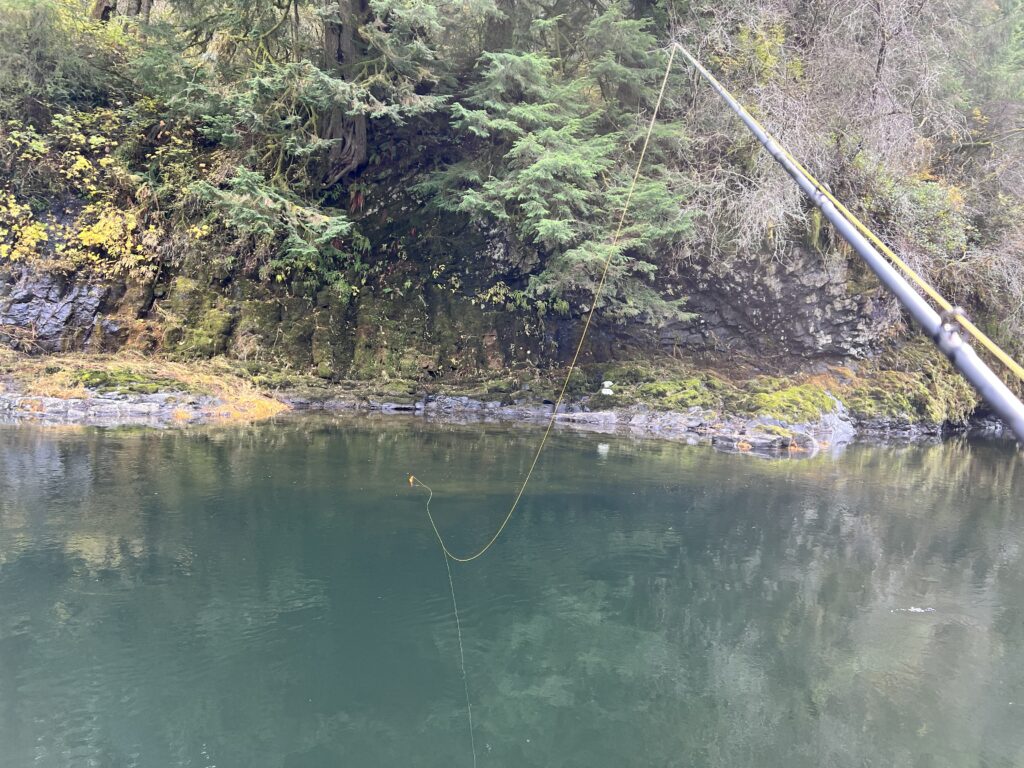
Float fishing is one of the easiest ways to detect a bite, but it is also where a lot of fish get missed.
The most obvious sign is a bobber going under. That is the easy one.
More often, bites look like this:
- The bobber slowly dips below the surface
- It tilts sideways instead of standing upright
- It stops drifting naturally with the current
If your float is not moving the way it should, something is happening below it.
A lot of missed bites come from fishing at the wrong depth. If your setup is not dialed in, you may never see those subtle movements.
If you are unsure about your setup, this salmon float rig setup will help make sure everything is positioned correctly.
Depth plays a huge role in bite detection. If you are too shallow or too deep, you will miss fish. This salmon float fishing depth guide breaks down how to get your presentation exactly where it needs to be.
How to Detect a Salmon Bite While Drift Fishing
Drift fishing requires more feel than float fishing.
Instead of watching a bobber, you are relying on what your line and rod are telling you.
Common signs of a bite while drift fishing include:
- Light tapping or a soft tick
- Your line suddenly stops drifting
- A slight but steady weight on the line
The tricky part is that this can feel similar to hitting bottom.
The difference is that a bite often feels softer or slightly delayed. If something feels different than the normal rhythm of your drift, it is worth setting the hook.
How to Detect a Salmon Bite When Fishing Spinners
When fishing spinners, your main indicator is vibration.
As your spinner moves through the water, you should feel a steady thumping through your rod.
When a salmon bites, that changes.
The main thing you will immediately feel here is a salmon all of a sudden righting back on the end of your line. At first that might feel like a thump, though it can also feel like an immediate fight.
A lot of bites on spinners are missed because anglers think they hit debris or lost the action of the lure. In reality, it is often a fish.
How to Detect a Salmon Bite When Twitching Jigs
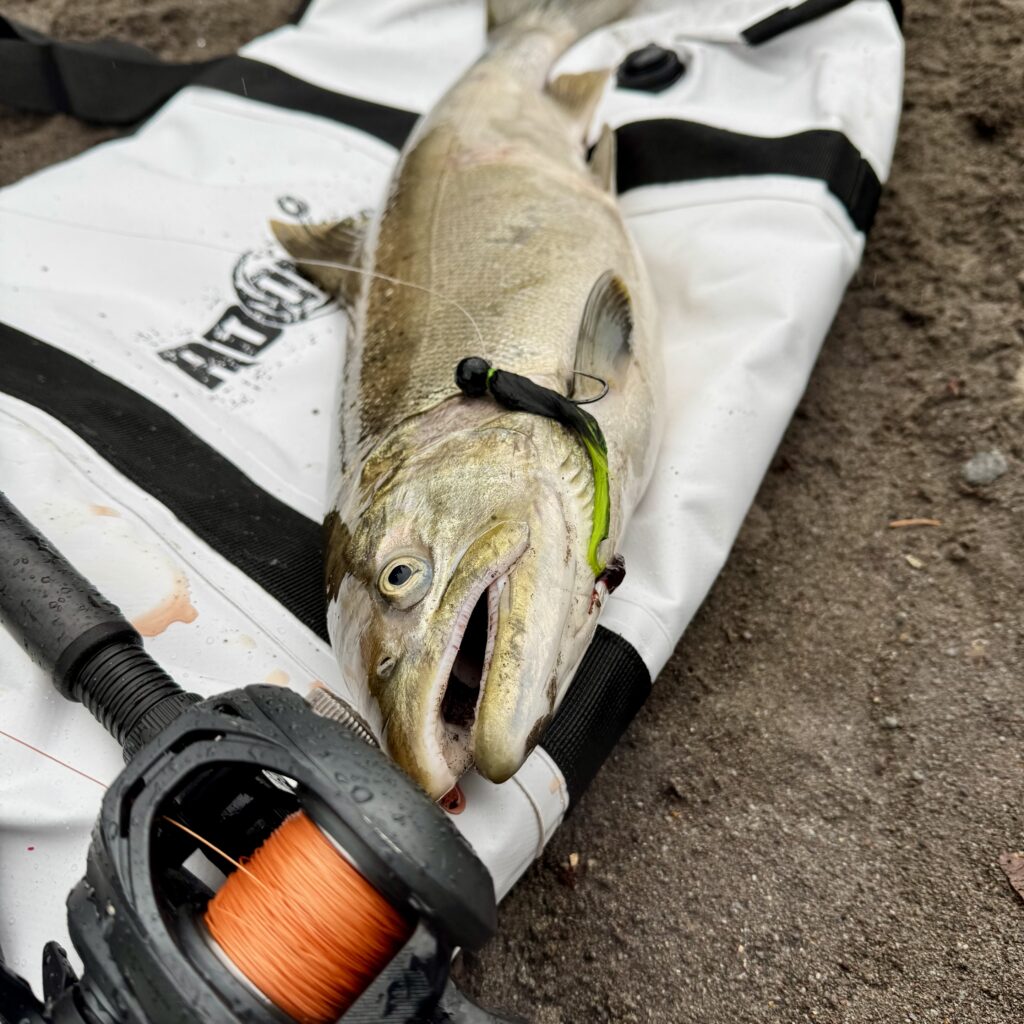
Twitching jigs is one of the most effective ways to target salmon, but many bites happen when anglers are not expecting them.
Most bites occur on the drop, not the lift.
Signs include:
- Your line jumps or twitches
- The jig does not fall naturally
- You feel sudden tension when lifting
If your jig does anything different than expected, there is a good chance a fish has it.
This is one of those techniques where paying attention to your line is just as important as feeling the bite.
Detecting a Bite When Bank Fishing
When bank fishing, you often have to rely on a combination of visual and feel-based signals.
Watch for:
- Changes in your line movement
- Your rod tip reacting unexpectedly
- Slack forming where there should not be any
Staying focused is a big part of this. A lot of bites are missed simply because anglers are not watching closely.
If you are fishing from shore, this bank fishing for salmon guide will help you understand positioning and presentation better.
Common Mistakes That Make You Miss Salmon Bites
A lot of missed fish come down to simple mistakes.
- Waiting too long to set the hook
- Ignoring small or subtle movements
- Fishing at the wrong depth
- Not paying attention during the drift
The biggest one is hesitation.
If you think it might be a bite, it there is a good chance it was.
Small details in your setup can affect how well you detect bites, especially when it comes to weight, swivels, and leader length. This terminal tackle system for salmon fishing explains how everything should be set up.
When to Set the Hook
This is where most anglers overthink things.
If something looks off or feels different, set the hook.
You are not going to hook every fish, but you will miss a lot more by waiting too long than by reacting too quickly.
As you spend more time on the water, you will start to recognize the difference between a normal drift and a bite.
Final Thoughts
Learning how to know when a salmon bites takes time, but it is one of the most important skills you can develop.
The more you fish, the more you start to recognize small differences in how your gear moves and feels.
Pay attention to those details, trust your instincts, and do not be afraid to set the hook when something does not feel right.
FAQ
How do you know when a salmon is biting?
You can tell when a salmon is biting by watching for unnatural movement in your float, line, or rod. A slow dip, hesitation, or sudden stop in your drift is often a bite. In many cases, it is not an aggressive hit, so paying attention to small changes is key.
What does a salmon bite feel like?
A salmon bite can feel like a light tap, a slow pull, or sudden weight on your line. Sometimes it feels similar to hitting bottom, but slightly different. The more time you spend on the water, the easier it becomes to recognize those subtle differences.
When should you set the hook for salmon?
You should set the hook as soon as something feels or looks different. Waiting too long is one of the main reasons anglers miss fish. If your float, line, or lure is not behaving naturally, it is better to react quickly.
Why am I missing salmon bites?
Most missed bites come from fishing at the wrong depth, not recognizing subtle movements, or hesitating to set the hook. If your presentation is not in the strike zone, fish may be interacting with your bait without fully committing. Getting your setup dialed in with a proper salmon float rig setup can make a big difference. Getting your setup dialed in with a proper salmon float rig setup can make a big difference.
Does the type of bait affect how a salmon bite feels?
Fishing at the correct depth is one of the biggest factors in detecting bites. If you are too shallow or too deep, you may miss subtle signals completely. Dialing in your depth with a proper salmon float fishing depth guide helps keep your bait in the strike zone where bites are easier to recognize. Using the right presentation, like those covered in this best bait for Chinook salmon guide, can make bites easier to detect.
Why do I feel bites but not hook salmon?
This usually happens when fish are mouthing the bait without fully committing or when there is a delay in setting the hook. It can also be caused by poor hook placement or presentation. Making sure your setup is correct, including your terminal tackle for salmon fishing, can help turn more of those missed bites into hooked fish. Making sure your gear is set up correctly with the right terminal tackle for salmon fishing can help turn more of those missed bites into hooked fish.