
Disclosure: This post may contain affiliate links. If you purchase through them, I may earn a small commission at no extra cost to you.
Salmon Float Fishing Depth Guide
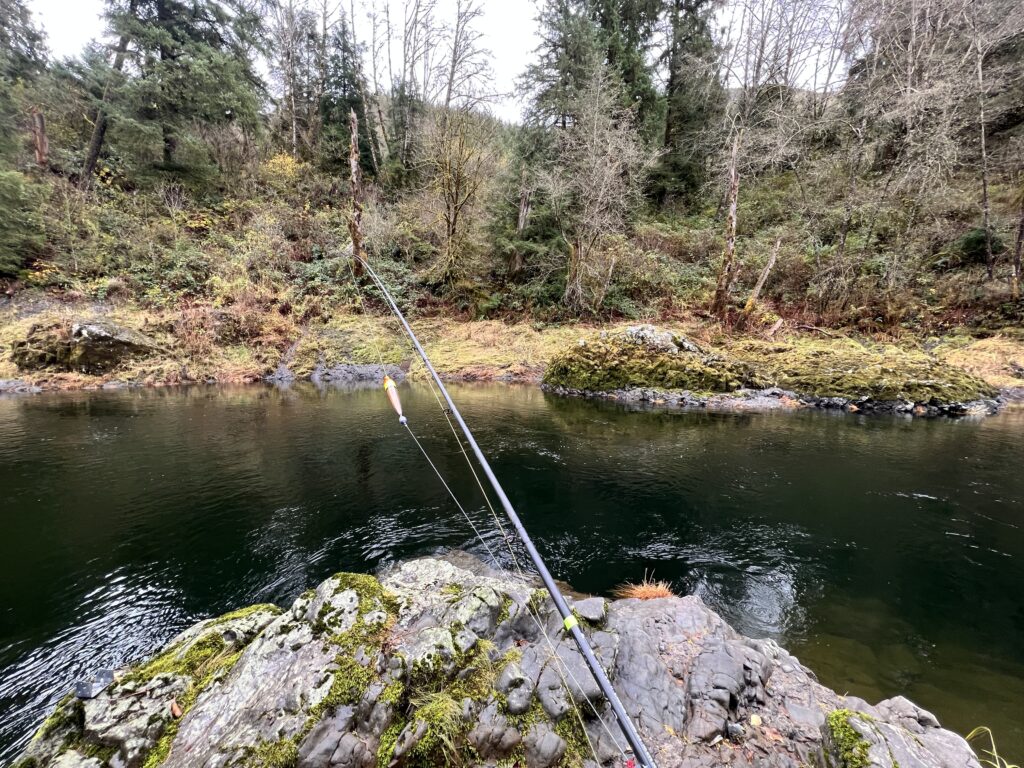
When you’re float fishing for salmon, getting your depth right is one of the most important parts of your setup.
If you’re not in the right part of the water column, it doesn’t matter how good your bait is—you’re not going to get bit.
The good news is, once you understand how to set your depth and read your float, it becomes pretty straightforward to dial in.
This salmon float fishing depth guide will help you set your bobber at the right depth so your bait stays in the strike zone.
Table of Contents
Quick Answer: How Deep Should Your Bobber Be?
Start with your bait about 6–12 inches off the bottom
Then adjust based on:
- Bottom contact
- How your float drifts
- Where fish are holding
That’s your baseline.
Pairing the right depth with the best bait for Chinook salmon makes a big difference, especially when fish are being picky.
How I Set My Depth (Step-by-Step)
I don’t guess depth—I find it.
Here’s exactly what I do:
What to do:
Turn each numbered step into this format:
1. Start deeper than you think
Set your bobber stop so your bait is likely ticking bottom.
2. Watch your float
Your float will tell you everything.
If it:
- tips over
- stalls
- drags sideways
You are too deep and hitting bottom.
3. Adjust shallower
Slide your bobber stop up a few inches at a time.
What you want:
A clean, natural drift.
4. Dial it in
The goal is to be just barely off bottom.
If you are never ticking bottom, you are probably too shallow.
If you are constantly snagging, you are too deep.
A lot of this comes down to how your terminal tackle system is set up, since your weight, swivel, and leader all affect how your bait actually sits in the water.
How to Read Your Bobber (This is the key)
Your bobber will tell you if your depth is right—you just have to pay attention to it.
This is even easier to see when you’re running braided line, since the visibility and floatability helps you track your drift and detect subtle changes in your float.
What you want:
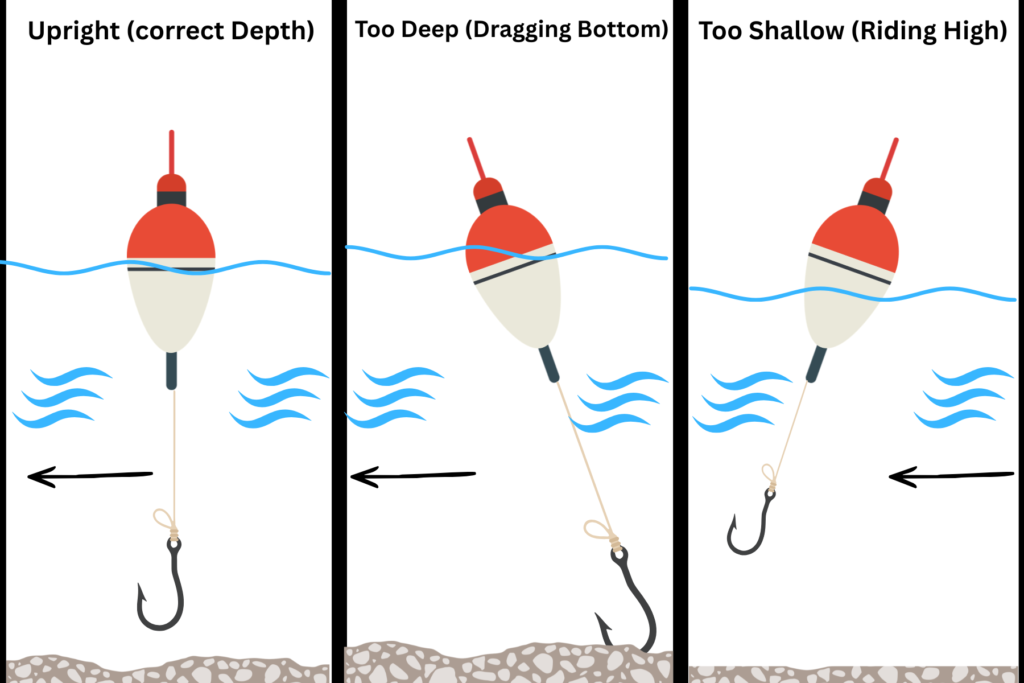
Bobber straight up and down
That usually means:
- your bait is drifting naturally
- you are in the right zone
If your bobber tilts downstream:
You are too deep.
What is happening:
- your weight is dragging bottom
- the current is pulling your float forward
Fix:
Slide your bobber stop up to make it shallower.
If your bobber tilts upstream:
You are too shallow.
What is happening:
- your bait is riding too high in faster current
- it is moving faster than your float
Fix:
Slide your bobber stop down to go deeper.
Simple rule:
- upright = good
- downstream tilt = too deep
- upstream tilt = too shallow
Your float is your best depth indicator
When to Fish Near the Bottom
Most of the time, salmon are holding close to the bottom—especially in:
- Even runs
- Travel lanes
- Slower, consistent current
In these situations:
Keep your bait just off bottom
That’s where fish expect to see it
When NOT to Fish the Bottom (Rock Walls, Ledges, and Structure)
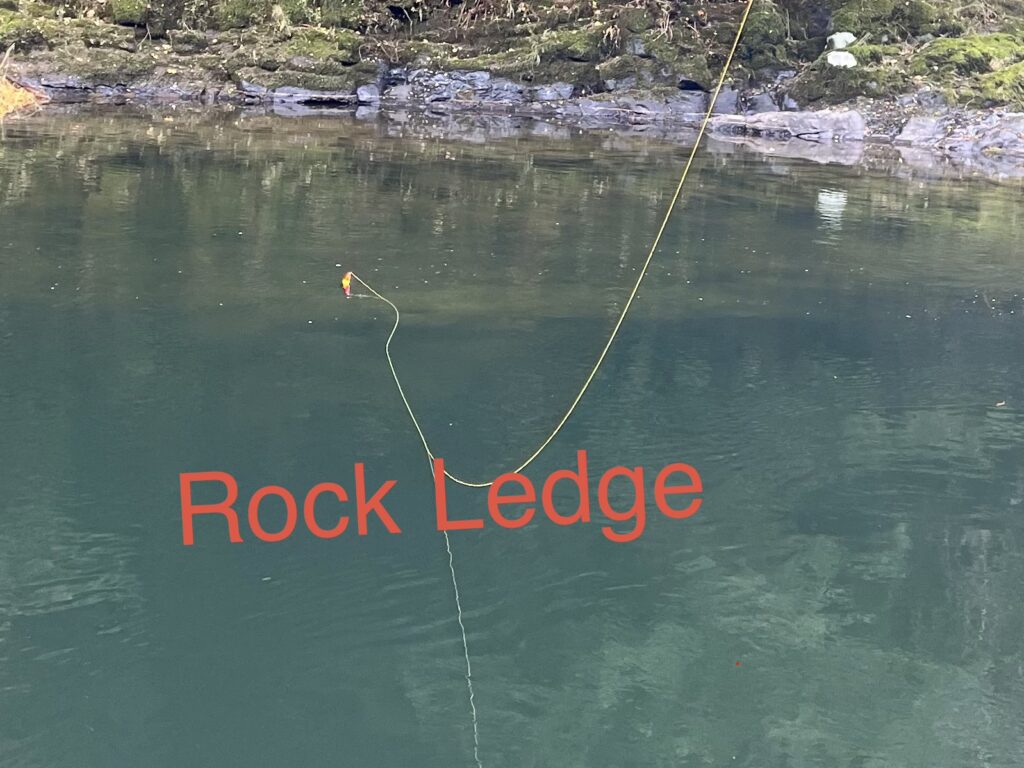
One of the biggest mistakes I see is anglers assuming salmon are always on the bottom.
That’s not always true, especially when you’re fishing around structure.
When you’re working areas like:
- Rock walls
- Ledges
- Cut banks
- Drop-offs
- Current seams
Salmon will often hold off the bottom and sit higher in the water column.
Why Salmon Move Up Off the Bottom
In these areas, the bottom isn’t always the best place for fish to sit.
What matters more is:
- Current speed
- Comfort
- Energy conservation
Structure creates softer water lanes, and salmon will slide into those zones instead of sitting in heavy current.
For example:
- Bottom = fast and turbulent
- Mid-column = softer seam
That’s where fish will hold
How I Fish These Spots
When I’m fishing along a rock wall or ledge, I don’t automatically go to the bottom.
If the water is around 6 feet deep, I’ll usually:
- Start mid-depth (3–4 feet)
- Watch the drift
- Adjust deeper or shallower
If I’m not getting bites, I’ll work:
- Mid-column
- Slightly deeper
- Then near bottom
Until I find where fish are actually sitting
The Biggest Mistake
Most anglers fish too deep in these spots.
That leads to:
- Constant snags
- Poor drift
- Missed fish
Your bait ends up below the fish instead of in front of them
Simple Rule
- Open water → fish near bottom
- Structure → fish the water column
Adjusting Depth Based on Conditions
Depth isn’t static—you should be adjusting constantly.
Fast water
Go slightly deeper
Your gear lifts in current, so you need extra depth to stay in the zone
Slow or deep water
Stay closer to bottom
Fish tend to sit lower
Clear water
Sometimes fish slightly higher
They can be more cautious
Dirty water
Get it right in their face
Closer to bottom usually works better
Gear That Helps You Control Depth
Having the right setup makes adjusting depth much easier.
A clean salmon float rig setup is key here, especially when you’re dialing in your presentation.
Your weight, float size, and line all affect how your bait sits in the water.
If you’re unsure about your setup, check out:
- Salmon Float Rig Setup
- Best Salmon Floats
- Best Salmon Weights for River Fishing
Final Thoughts
Getting your depth right is one of the biggest factors in catching salmon on a float.
You don’t need to overcomplicate it.
👉 Start deep
👉 Find bottom
👉 Come up slightly
And always watch your float.
Your bobber will tell you everything you need to know if you pay attention to it.
Related Fishing Guides
- Salmon Float Rig Setup
- Best Salmon Floats
- Best Salmon Weights for River Fishing
- Best Braided Fishing Line for Chinook Salmon
- Terminal Tackle for Salmon Fishing
FAQ
How deep should I fish eggs under a bobber for salmon?
Salmon are most often found near the bottom, but not always directly on it. In many situations, the ideal depth is just off bottom so your bait drifts naturally in the strike zone without dragging.
How do you know if your salmon float is set at the right depth?
Your bobber should float straight up and down. If it tilts downstream, you’re too deep and dragging bottom. If it tilts upstream, you’re too shallow and your bait is riding too high in the water column.
Do salmon always stay on the bottom in rivers?
No. While salmon often travel near the bottom, they will hold at different depths depending on current, structure, and conditions. Around rock ledges and seams, they can suspend higher in the water column.
What pound line should you use for salmon fishing?
Most anglers use 40–65 lb braided line paired with a 20–30 lb leader when fishing for salmon in rivers. This setup provides strength, sensitivity, and better control of your drift.
What is the best setup for float fishing salmon?
A typical salmon float setup includes a bobber stop, bead, float, sliding weight, swivel, and leader. This setup allows you to control depth precisely and keep your bait in the strike zone.
How do you adjust depth while float fishing for salmon?
Start deeper than you think you need, then gradually shorten your depth until your bait drifts naturally without dragging. Small adjustments make a big difference.
Why am I not getting bites while float fishing for salmon?
The most common reason is incorrect depth. If your bait isn’t in the right part of the water column, salmon won’t see it or react to it.