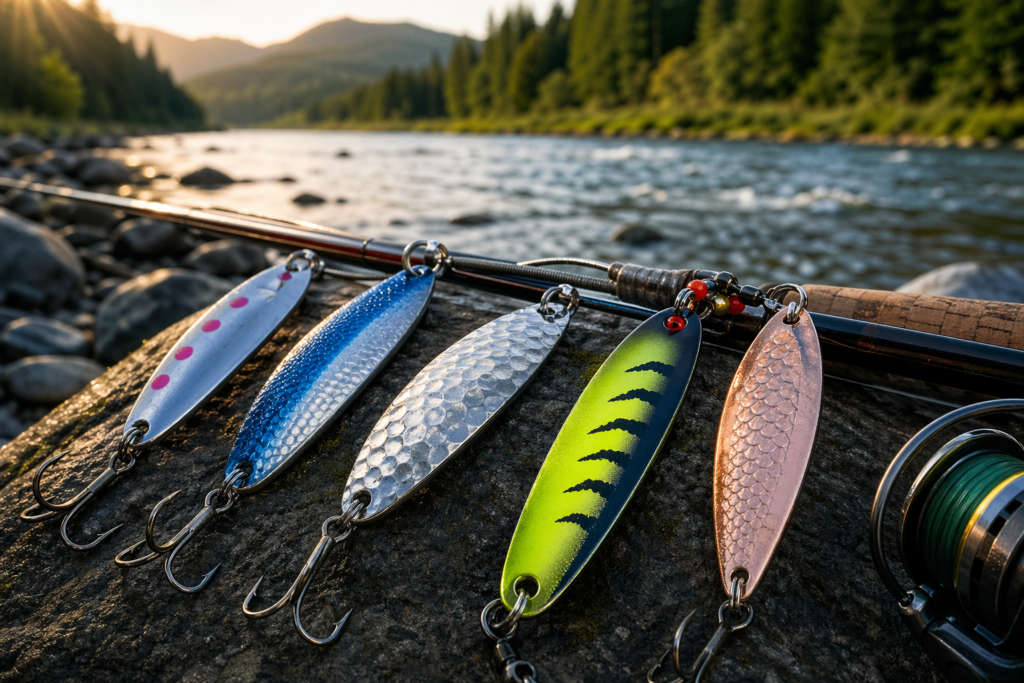
If you are looking for the best spoons for salmon fishing, the biggest thing that matters is picking a spoon that stays in the strike zone, throws enough flash to get noticed, and has the kind of wobble that makes a salmon react.
I like spoons for salmon fishing in rivers when I want to cover water, fish deeper runs, or show fish something with a little more flash than bait. A good spoon does a convincing job of imitating an injured baitfish, and when Chinook or coho are holding in the right water, that wobble and flash are often all you need to trigger a bite.
A spoon setup also works a lot better when the rest of your system is balanced, especially your main line, which is why I put a lot of thought into the best braided fishing line for Chinook salmon fishing.
Not every spoon fishes the same. Some have a wider wobble. Some are better in faster current. Some are just better color options for the conditions you are fishing that day. In this guide, I’ll go over the spoons I’d actually start with, what sizes make the most sense, and how I like to fish them for Chinook and coho.
Table of Contents
Best Spoons for Salmon Fishing: Quick Picks
If you want the short version, these are the spoons I’d start with for river salmon:
- Best Overall: Acme Little Cleo
- Best for Fast Water: Crocodile Spoon 1 oz
- Best Compact Heavy Spoon: Acme Kastmaster
- Best Bright Visibility Option: Dardevle Brass Back 1 oz
- Best Hammered Silver Option: Dardevle Nickel Back 1 oz
My Top Picks for the Best Spoons for Salmon Fishing
Acme Little Cleo
If someone asked me where to start with salmon spoons, this is the first thing I would point them to. The Little Cleo has been catching fish for decades, and there is a reason it never really goes out of style. That wobble is just right, and salmon respond to it.
Getting the kit gives you multiple color options without having to guess which single spoon to buy first. For river salmon, the wider wobble and flash work really naturally in softer seams, tailouts, and moderate current where a spoon can do its thing without fighting the water.
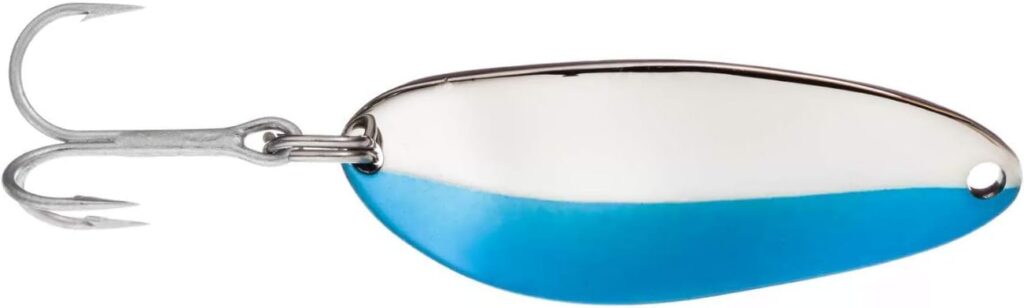
If you want one easy starting point for river salmon spoons, this is the one I’d start with.
Crocodile Spoon 1 oz
When current is moving hard and you need to keep your spoon down in the zone, this is where something heavier earns its spot. One of the most common mistakes I see with salmon spoons is fishing a lure that looks great in your hand but rides too high the second it hits real current. A heavier spoon solves that.
The silver chrome finish is exactly what I want for salmon: plenty of flash, clean baitfish look, and nothing overcomplicated. It comes with treble hooks stock, but depending on your local regulations and how you want the lure to fish, swapping to a strong single siwash is worth considering.
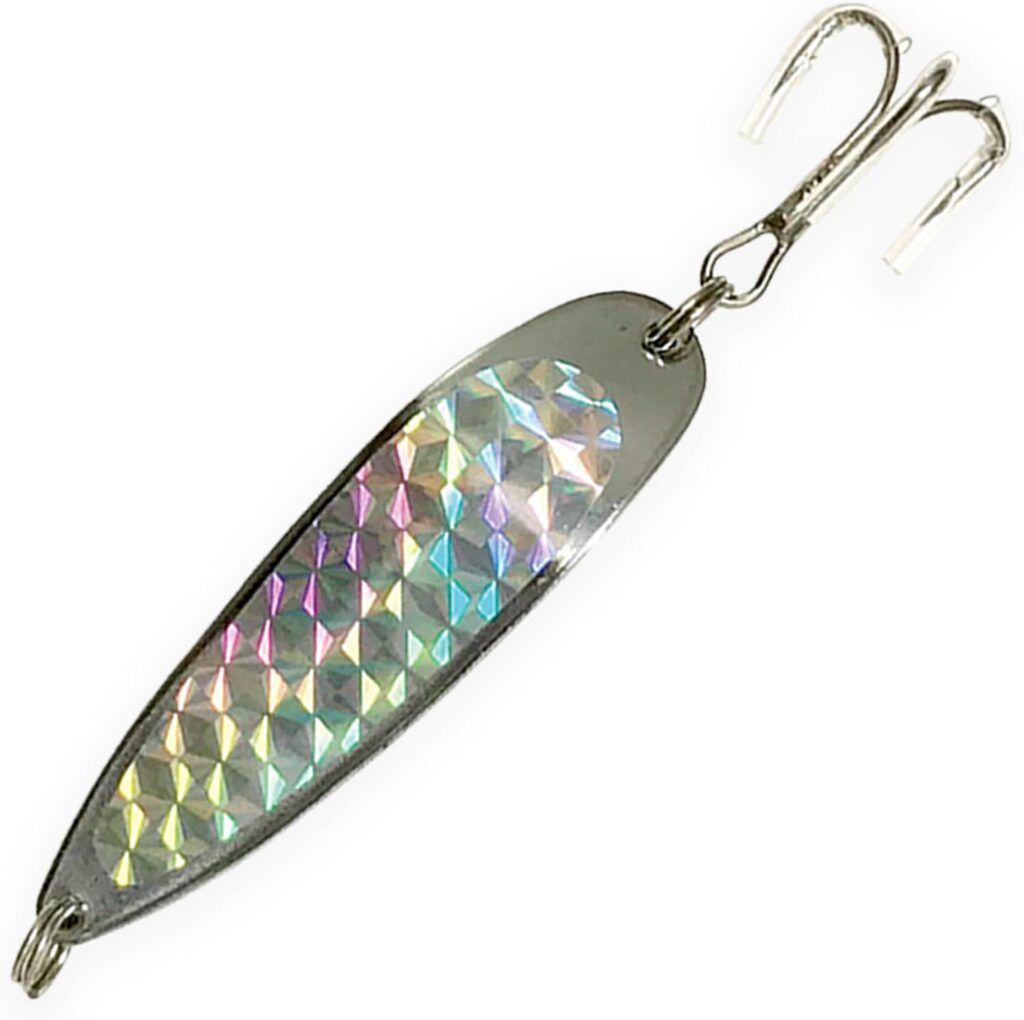
This is the spoon I’d lean on when the water has speed and I need to stay in the strike zone longer.
Acme Kastmaster
The Kastmaster has a different profile than your classic wide-wobble spoon, but it earns a spot in any serious salmon spoon lineup. It is compact, casts a long way, and carries enough weight to fish well in current. On windy days or when you need to reach water across a wide run, that casting advantage is real.
The finish variety in this kit, brass, silver, and blue-silver, gives you a solid range without going overboard. It is a good option when you want a tighter, more controlled action than a traditional wobble spoon and need something that cuts through wind and covers water efficiently.
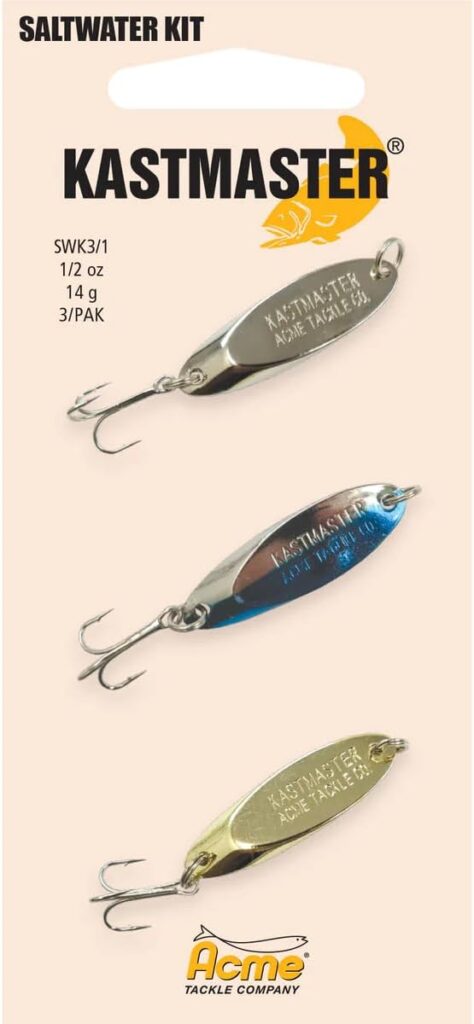
If I wanted a heavier spoon that casts a mile and gives me a few useful finish options, this would be a smart pick.
Dardevle Brass Back 1 oz
This is the one I reach for when standard silver and chrome patterns are not getting much attention. Chartreuse and black give fish a completely different look, with more contrast, more visibility, and something that stands out instead of blending into the usual flash lineup.
It is not the first spoon color I would tell someone to buy, but it is a smart add once you have the core silvers covered. When fish have seen a lot of the same presentation, a color change like this can be exactly what breaks things open.
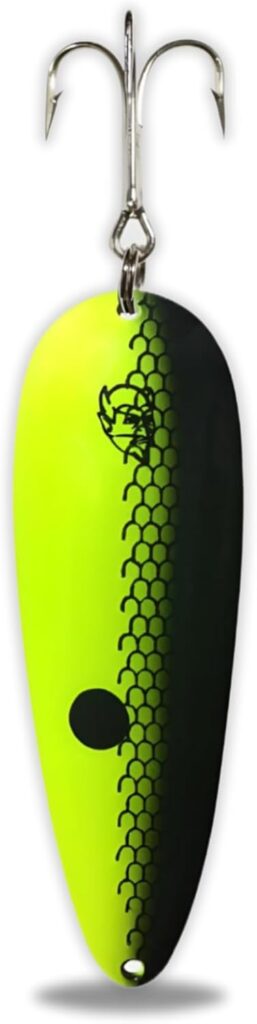
This is the spoon I’d want in the box for days when the usual silver look is not getting it done.
Dardevle Nickel Back 1 oz
Hammered silver is one of my favorite spoon finishes for river salmon. It throws flash well, keeps that natural baitfish look, and the hammered texture gives it a little extra life in the water compared to a plain polished finish. It hits all the right notes without trying too hard.
If I were trimming down to a short list of go-to colors, hammered silver would absolutely make the cut every time.
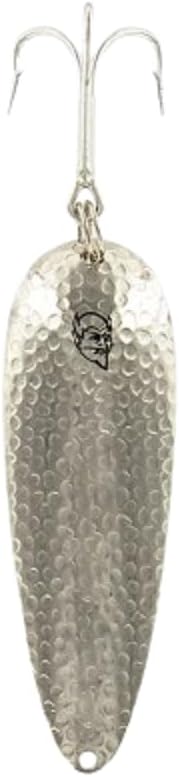
If you want a classic silver spoon finish that just flat-out works, this is a really solid one to keep on hand.
What Makes the Best Spoons for Salmon Fishing?
The best spoons for salmon fishing do three things well. They throw enough flash to get noticed in moving water. They have a wobble that looks natural instead of spinning out or blowing up in current. And they carry enough weight to stay in the strike zone long enough to actually matter.
That last point is something a lot of anglers underestimate early on. A spoon can look great in the package and fish terribly if it lifts out of the zone too fast. For river salmon, I want a spoon that gets down, holds there, and still has enough action to look alive while it is doing it.
The spoon is one piece of the puzzle, but your rod, reel, line, and terminal setup still have to work together for the presentation to feel right in current. If you are still putting your overall system together, check out my Complete Salmon Fishing Setup for Rivers if you want to see how I build a full river setup around these kinds of presentations.
Best Spoon Sizes and Weights for Salmon Fishing in Rivers
Weight matters more than size range when it comes to river salmon spoons. In slower or shallower water, lighter spoons can work fine. But once current picks up, a spoon that is too light starts riding high and leaves the strike zone before fish even have a chance to commit.
As a general rule, I fish:
- 3/8 oz to 1/2 oz in lighter current or shallower water
- 3/4 oz to 1 oz in deeper runs or faster current
That is why the heavier 1 oz spoons in this post make sense for a lot of river situations. If I am fishing water with real speed and depth, I would much rather throw something heavy enough to stay in front of fish than fight a lighter spoon that is constantly washing out of the zone.
The same principle applies across salmon presentations. Matching your weight to the water you are actually fishing makes a bigger difference than most gear decisions. It is one of the reasons I always think about my terminal tackle for salmon fishing as a system and not just the lure on the end of the line.
Best Spoon Colors for Salmon Fishing
You do not need twenty spoon colors to catch salmon. A few solid ones cover most situations.
The colors I would start with:
- Silver
- Hammered silver
- Chrome and blue
- Chartreuse
- Brass or brass-backed finishes
Silver and chrome are the natural starting point because they do the best job matching the baitfish look. Hammered silver is my personal favorite because it throws great flash while still staying in that natural lane. Chartreuse earns its spot as a change-up when you want more visibility or contrast in the water.
A smaller lineup of proven colors in the right weights will always outfish a giant pile of spoons that all do roughly the same thing.
How to Fish Spoons for Salmon in Rivers
The basic presentation is simple, but small adjustments in your retrieve can make a real difference.
Most of the time I cast across current or slightly downstream, let the spoon settle, and let it swing naturally through the run. From there I will work in a slow retrieve to keep the spoon moving and finish the presentation cleanly.
A slow, steady retrieve gives you that classic wobble. A twitch-and-pause can pull a reaction strike out of fish that have already seen a lot of standard presentations. The main thing is keeping the spoon moving naturally, not ripping it back too fast and not letting it wash out of the zone.
Spoons are great for covering water efficiently because you can work through a run and show fish a lot of flash without constantly rebaiting or resetting.
When Spoons Work Best for Salmon
Spoons shine when:
- salmon are holding in deeper runs
- fish are suspended mid-water
- you want to cover water quickly
- the current lets the spoon swing naturally
- fish seem more willing to react to flash than commit to bait
This is where spoons really separate themselves from other presentations. They are not the same as spinners, and I do not fish them the same way. Spinners give you vibration and thump. Spoons give you wobble, swing, and that baitfish-style flash. Both have their place, and both are worth having on the water.
If you are filling out your lure lineup, take a look at my Best Spinners for Salmon Fishing post too, because the two complement each other really well as a river salmon setup.
Single Hooks vs Treble Hooks for Salmon Spoons
The first thing I look at with any new spoon is the stock hook.
Most spoons come with trebles, but for river salmon I often prefer swapping to a strong single siwash hook. A sharp single usually fishes cleaner, penetrates well on the hookset, and makes more sense in a lot of river fisheries where regulations can be strict about gear.
Some rivers require barbless hooks or have other specific restrictions, so check your local regulations before you head out. I would rather take five minutes to swap to a hook I trust than leave a stock hook on just because it came that way from the factory.
Are Spoons Better Than Bait for Salmon?
It is not really a better-or-worse question. It depends on the water, the fish, and how I want to fish that day.
Bait is hard to beat when fish are willing to commit and you can get it right in front of them naturally. Spoons make more sense when I want to move, cover water, and trigger reaction bites with flash and wobble. They are just different tools, and both belong in your overall approach.
If you want to look at the bait side of the equation, my Best Bait for Chinook Salmon guide pairs well with this one.
Final Thoughts on the Best Spoons for Salmon Fishing
The best spoons for salmon fishing in rivers are the ones that match the current, stay in the strike zone, and give fish the kind of flash and wobble that makes them react.
For me, that means keeping it simple. A few proven spoons in the right weights, a couple of reliable finishes, and a setup I can fish confidently in real river conditions. A lineup built around the Little Cleo, Crocodile, Kastmaster, and Dardevle covers a lot of water and a lot of situations without overcomplicating things.
If you are starting from scratch, pick a few options in the colors and weights that match the water you actually fish and go from there. The rest sorts itself out on the water.
FAQ
What are the best spoons for salmon fishing?
The best spoons for salmon fishing are the ones that have strong flash, a natural wobble, and enough weight to stay in the strike zone. Good options include Little Cleo, Crocodile, Kastmaster, and Dardevle spoons.
What size spoon is best for salmon fishing in rivers?
For river salmon, 3/8 oz to 1/2 oz spoons can work in lighter current, while 3/4 oz to 1 oz spoons are usually better for deeper runs and faster water.
Do spoons work for Chinook salmon?
Yes, spoons can work very well for Chinook salmon, especially in deeper runs, tailouts, and places where fish are suspended and likely to react to flash and wobble.
What color spoon is best for salmon?
Silver, hammered silver, chrome and blue, and chartreuse are all good spoon colors for salmon. The best choice depends on water conditions and how much visibility or contrast you want.
How do you fish spoons for salmon in a river?
A common way to fish spoons for salmon is to cast across or slightly downstream, let the spoon settle, then let it swing naturally through the current while mixing in a slow retrieve.
Are spoons or spinners better for salmon fishing?
Spoons and spinners both work well for salmon, but they do different things. Spoons give off wobble and flash, while spinners create more vibration and thump. The better option depends on the water and how the fish are reacting that day.
Should I replace treble hooks on salmon spoons?
Many anglers replace treble hooks on salmon spoons with a single siwash hook for cleaner hooksets and to better match local regulations. Always check your local fish and wildlife rules before fishing.