Disclosure: This post may contain affiliate links. If you purchase through these links, I may earn a small commission at no extra cost to you. I only recommend gear I trust and actually use in my own fishing.
When it comes to Chinook salmon fishing, timing matters just as much as your setup. You can have the perfect rod, the right bait, and a dialed-in rig—but if you’re fishing at the wrong time or in poor conditions, you’re going to struggle.
If you’re trying to figure out the best time to fish for Chinook salmon in rivers, the truth is it’s not just about the calendar. It’s about understanding how time of day, river conditions, and seasonal patterns all come together.
From my experience fishing rivers here in the Pacific Northwest, the biggest difference between a slow day and a productive one almost always comes down to when you’re on the water.
Choosing the right bait during these windows can also make a big difference—especially when you’re using proven options for Chinook.
Best Time to Fish for Chinook Salmon (Quick Answer)
- Best time of day: Early morning (first light)
- Second best: Evening (low light)
- Best conditions: Slightly colored water with stable or dropping flows
- Best weather: Overcast or light rain
- Tough conditions: Bright sun, clear water, high pressure
Table of Contents
Best Time of Day to Fish for Chinook Salmon
Understanding the best time to fish for Chinook salmon in rivers comes down to a few key factors that consistently affect fish behavior.
If there’s one thing that consistently makes a difference, it’s fishing during low-light conditions.
Where Fish Hold During Different Times of Day
Where Chinook salmon hold in the river can change depending on light conditions and time of day.
In low-light conditions like early morning and evening, fish are often more willing to move into shallower water and travel lanes, which makes them easier to target.
As the day gets brighter, I’ve noticed fish tend to slide into deeper holding water, slower seams, or areas with more cover. That’s when getting your depth and presentation right becomes even more important.
Understanding where fish position themselves throughout the day can make a big difference, especially when the bite is slow.
Early Morning (Best Overall)
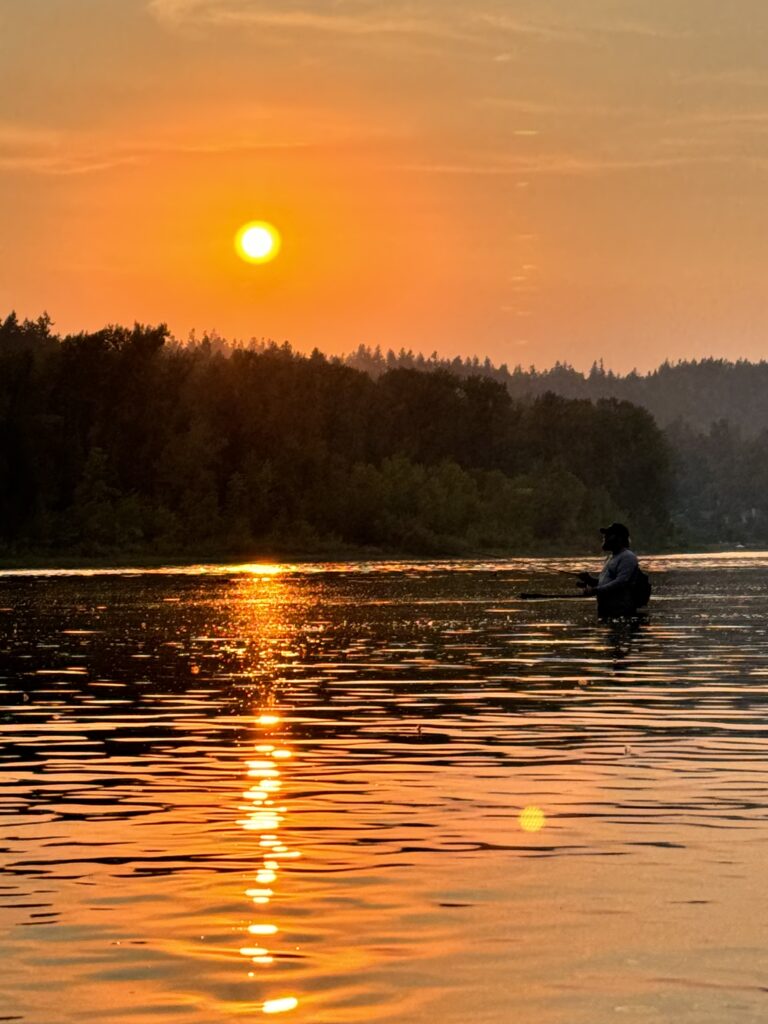
First light is hands down one of the most productive times to target Chinook.
Fish are:
- More active
- Less pressured
- More willing to bite
In my experience, that first couple hours after sunrise is when I’ve seen the most consistent bites—especially on pressured rivers.
If I had to pick one window to fish, it would always be early morning.
Evening Bite Window
Evenings can also produce, especially when the sun drops and light levels start to fade.
I’ve had plenty of evenings where the river felt dead all afternoon, and then suddenly fish started moving again as the light dropped.
This window gets overlooked, but it can be just as productive as mornings on the right day.
Midday (Slower but Not Impossible)
Midday is usually the toughest stretch.
That doesn’t mean fish won’t bite—but you’ll typically need:
- Better presentation
- More precise depth control
- A little more patience
Midday is where I notice mistakes show up the most. If your setup isn’t dialed, fish will ignore it.
That’s why having something like a properly set up salmon float rig becomes even more important when conditions aren’t ideal.
Best River Conditions for Chinook Salmon Fishing
Beyond time of day, river conditions are one of the biggest factors in whether fish are willing to bite.
Slightly Colored Water Is Ideal
Chinook tend to feel more comfortable in water that isn’t crystal clear.
A little color in the water:
- Reduces visibility
- Makes fish less cautious
- Often leads to more aggressive bites
I’ve consistently had better luck when the water has just a little bit of color to it—not muddy, but not clear enough to see bottom in deeper runs.
After Rain Can Be Excellent
Fishing after a rain can be some of the best timing you’ll get.
As long as the river isn’t blown out, slightly rising or dropping water often triggers movement and feeding behavior.
Some of my better days have come right as the river starts dropping after a bump in flow.
Stable or Dropping Flows
Fish tend to settle in and bite better when flows stabilize or start dropping after a rise.
When the river is changing too fast, fish often hold and become less aggressive.
Best Time of Year for Chinook Salmon (PNW)
Seasonal timing matters, especially in Pacific Northwest river systems.
Spring Chinook
Spring fish are typically:
- More pressured
- In colder water
- More selective
In my experience, spring fish will absolutely make you work for it. Everything has to be clean—your presentation, your depth, your bait.
That’s also when having quality bait like properly cured eggs really starts to matter.
Fall Chinook
Fall Chinook are generally:
- More aggressive
- More abundant
- Easier to target consistently
Fall is when things open up a bit. You’ll still have better success in low light, but fish are more willing to bite throughout the day.
How Weather Impacts Chinook Salmon Activity
Weather plays a bigger role than most people think.
Overcast Days
Cloud cover is one of your biggest advantages.
Lower light levels throughout the day can extend the bite window and make fish more comfortable moving.
Overcast days are some of my favorite conditions to fish in—you’re not limited to just early morning or evening.
Rain
Light rain can improve fishing dramatically.
It often:
- Breaks up visibility
- Encourages fish movement
- Makes fish less hesitant to bite
I’ve had days where the bite noticeably picked up once the rain started.
Bright Sun
Bright, clear conditions can make fish more cautious.
This is when:
- Early morning becomes critical
- Stealth and presentation matter more
Barometric Pressure Changes
Barometric pressure can have a major impact on Chinook salmon behavior, especially when conditions are changing quickly.
In my experience, falling pressure—like right before or during a storm—often triggers some of the most active bite windows. Fish tend to move more and become more willing to bite as conditions shift. In short, when that barometer makes a sudden drop, grab your gear and get out there.
Rising pressure after a storm can still produce, especially early on while the river still has some color and fish are adjusting. But as conditions stabilize and skies clear, the bite can slow down.
On high-pressure, clear-sky days, fish are usually more cautious. That’s when timing becomes even more important, and early morning or low-light conditions tend to be your best opportunity.
How Timing Affects Your Setup
The time you’re fishing should influence how you’re fishing.
Low Light = Ideal for Float Fishing
During early morning or evening, float fishing is one of the most effective ways to present bait naturally.
-If you’re not already using one, check out this salmon float rig setup to make sure your presentation is dialed in.
Bait Becomes More Effective in Prime Windows
During peak times, bait tends to outperform artificial presentations.
-In my experience, good bait makes a huge difference during these windows—especially when using properly prepared eggs. Here’s a breakdown of the best salmon egg cures for consistent results.
Hook Choice Still Matters
Even when timing is perfect, your hook setup can make or break your success.
-I’ve seen fish lost simply because of poor hook choice. If you’re unsure what to use, this guide on the best hooks for salmon fishing will help you choose the right size and style.
Common Timing Mistakes That Cost You Fish
A lot of anglers struggle not because of their gear—but because of timing mistakes.
Fishing Only Midday
If you’re only fishing between late morning and early afternoon, you’re missing the best windows.
Ignoring River Conditions
Fishing at the “right time” doesn’t matter if water conditions aren’t favorable.
Not Adjusting Your Approach
One of the biggest mistakes I see is people fishing the exact same way all day without adjusting to changing conditions.
Does This Apply to Coho Salmon?
Some of this carries over—but not all of it.
Coho salmon tend to be:
- More aggressive
- More willing to bite throughout the day
- More responsive to lures
In my experience, coho are generally more forgiving when it comes to timing compared to Chinook.
Quick Breakdown: Best Times to Fish Chinook in Rivers
If you want to keep things simple, here’s what consistently works:
- Best time of day: Early morning (first light)
- Second best: Evening (low light)
- Best conditions: Slightly colored water with stable or dropping flows
- Best weather: Overcast or light rain
- Toughest conditions: Bright sun, clear water, high pressure
If you can line up a few of these factors at the same time, your chances of success go up significantly.
Final Thoughts
If you’re trying to consistently catch more Chinook salmon, focusing on timing is one of the biggest improvements you can make.
Fishing during low-light windows, paying attention to river conditions, and adjusting your setup based on the situation will put you in a much better position to succeed.
You can have all the right gear—but if you’re not fishing at the right time, you’re making things a lot harder than it needs to be.
Question: What is the best time to fish for Chinook salmon in rivers?
The best time to fish for Chinook salmon in rivers is usually early morning during low-light conditions. This is when salmon are most active, less pressured, and more willing to bite.
Do salmon bite in the middle of the day?
Salmon can bite during the middle of the day, but fishing is usually slower. Midday success depends on good presentation, proper depth control, and favorable river conditions.
Is rain good for salmon fishing?
Yes, rain can improve salmon fishing. Slightly colored water helps salmon feel more comfortable and often triggers increased movement and feeding activity.
How does barometric pressure affect salmon fishing?
Falling barometric pressure, especially before a storm, often improves salmon fishing by triggering movement and feeding. High, stable pressure usually makes fish more cautious.
What is the best season for salmon fishing?
Both spring and fall Chinook seasons can be productive. Spring fish are often more cautious, while fall salmon are usually more aggressive and easier to target consistently.
What river conditions are best for Chinook salmon fishing?
Slightly colored water with stable or dropping flows is ideal. These conditions make fish feel more secure and increase the chances of getting bites.