Affiliate Disclosure: This post may contain affiliate links. If you buy through these links, I may earn a small commission at no extra cost to you. I only recommend gear that makes sense for real salmon fishing.
Good waders matter a lot when you’re salmon fishing from the bank, more than most people think about until they’re standing in cold current with wet legs at seven in the morning.
You’re not on a boat deck all day. You’re walking gravel bars, stepping over slick rocks, kneeling on wet banks, crossing shallow side channels, standing in cold current for hours, and fishing through rain that may or may not stop. If your waders leak, fit poorly, or wear out after one season, they can ruin a trip in a hurry.
For me, the best waders for salmon fishing aren’t just the most expensive pair or the easiest pair to link to. They need to stay dry, move well, handle rough riverbanks, and be comfortable enough to wear for long days without making you miserable. Salmon fishing is hard on gear, and waders take a lot of that abuse directly.
I’m also going to be upfront about something. My top pick isn’t on Amazon. I’m not going to rank a weaker pair above it because it has an easier affiliate link. If I’m talking about the waders I actually trust most for salmon fishing, my first pick is the pair I’ve personally worn hard for years, and that’s where this guide starts.
If you’re still putting your overall river setup together, this article pairs well with my complete salmon fishing setup for rivers. That guide covers the full system. This one is about staying dry and comfortable while you fish it.
Quick Picks: Best Waders for Salmon Fishing
- Best Overall Waders: DRYFT Primo Zip Waders
- Best Budget Waders: FROGG TOGGS Hellbender Breathable Waders
- Best Premium Brand-Name Alternative: Simms G3 Guide Stockingfoot Wader
- Best Beginner Bootfoot Waders: Orvis Clearwater Bootfoot Waders
Table of Contents
What Makes Good Waders for Salmon Fishing?
Salmon fishing puts waders through a lot, and it’s worth understanding why before you buy.
You might be walking over sharp river rock, sliding down muddy banks, pushing through streamside brush, kneeling on gravel to release a fish, or standing in cold water for hours at a stretch. A pair of waders that works fine for casual pond fishing or the occasional easy wade can feel completely outmatched when you start putting them through regular use on salmon rivers.
For bank salmon fishing specifically, I care about a few things: waterproofing that actually holds up over time, durable lower-leg material since that’s where most of the abuse happens, a comfortable fit for long days with enough room to layer underneath, good gravel guards, quality stockingfeet or built-in boots depending on the style, a reliable belt system, useful pockets, and enough mobility to walk, crouch, and climb without fighting the fabric.
Cheap waders can work, especially if you’re new to salmon fishing or only get out a handful of times per season. But once waders start leaking, the day gets uncomfortable fast. If you fish often, better waders are usually worth the investment because they keep you dry longer, move better, and hold up to repeated abuse around rocks, gravel, and rough bank conditions.
This matters even more for bank anglers who move between spots. I talk more about covering water effectively in my guide on how to catch Chinook salmon from the bank.
Best Overall Waders: DRYFT Primo Zip Waders
The DRYFT Primo Zip Waders are my top pick for salmon fishing, and the reason is straightforward: I’ve actually put them through the kind of abuse salmon waders get.
I’ve worn my DRYFT Primo Zip Waders on remote Alaska float trips for two weeks at a time, sometimes 14-plus hours a day. I’ve also used them all over the Pacific Northwest on salmon and steelhead trips across multiple seasons. After years of that kind of use, I still haven’t had to repair a leak.
That track record means more to me than any spec sheet.
These are not on Amazon, and they’re not cheap. But I’m not going to rank a weaker pair above them just because it’s easier to link. If I’m recommending the best waders for salmon fishing, the DRYFT Primo Zip is the honest answer.
I also like that DRYFT is a Pacific Northwest company based in Washington State. These waders feel designed by people who understand the specific conditions we deal with out here: cold water, wet weather, rocky banks, and long days. The fact that every sale plants a tree through their One Tree Planted partnership is a nice bonus too.
The zip-front design is one of those features that’s hard to give up once you’ve used it. Getting in and out of waders is easier, layering adjustments are faster, and streamside relief during a long day is significantly less miserable. Once you fish in zip-front waders regularly, going back to conventional entry feels like a step backward.
The construction backs up the performance: a waterproof TIZIP main zipper, reinforced four-layer lower, breathable upper, fully taped seams, reinforced neoprene gravel guards, 4.0mm neoprene stockingfeet, handwarmer pockets, inner drop-in pockets, a waterproof media pouch, adjustable shoulder straps, wading belts, a storage bag, and a basic repair kit.
The 20,000mm-plus waterproof fabric rating is also worth noting. Waterproofing ratings measure how much water pressure a fabric can resist before leaking, and 20,000mm is a strong rating for hard river use. Combined with fully taped seams, it helps explain why these waders have stayed dry for me under real fishing conditions.
Specs:
- Zip-front breathable chest waders
- Waterproof TIZIP main zipper
- Reinforced four-layer lower
- Breathable upper
- Fully taped seams
- 20,000mm-plus waterproof fabric rating
- PFAS-free DWR
- Reinforced neoprene gravel guards
- High-density 4.0mm neoprene stockingfeet
- Handwarmer pockets
- Inner drop-in pockets
- Waterproof media pouch
- Adjustable shoulder straps
- Wading belts included
- Storage bag included
- Basic repair kit included
- Washington-based PNW company
- One tree planted per sale
- Around $649
My take: These are the waders I trust most because I’ve worn them hard for years and they’ve held up. Remote Alaska, long days, PNW salmon rivers, cold rain, rocky banks, and still no leak repairs. They’re expensive, but they cost less than the Simms G3, have a zip front, and have already proven themselves to me in the field. That confidence is worth something.
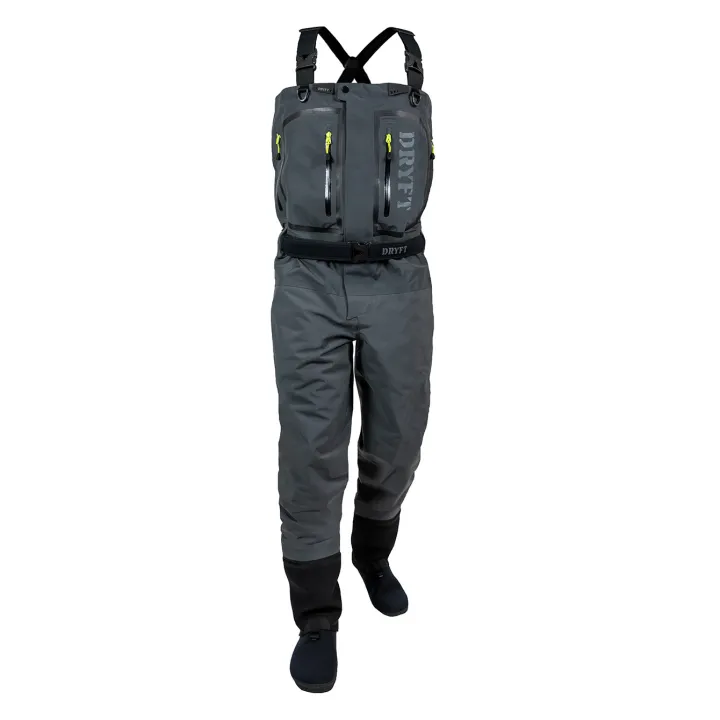
These are my top overall pick because they are the pair I personally trust most for serious salmon bank fishing.
One practical tip: if you’re not in a rush, sign up for the DRYFT newsletter before you buy. They occasionally send discount offers that help offset the price on a premium purchase like this.
Best Budget Waders: FROGG TOGGS Hellbender Breathable Waders
The FROGG TOGGS Hellbender Breathable Waders are the budget pick in this lineup, and they’re popular at that price point for good reason.
For around $100, you get breathable waders with reinforced knees, taped seams, gravel guards, neoprene booties, and useful pockets. That’s a solid starting point for someone new to salmon fishing or someone who only gets out a few times each season and doesn’t want to commit premium wader money yet.
I’m not going to pretend these are in the same class as the DRYFT or Simms waders. They’re not. Budget waders usually use thinner materials, lighter construction, and simpler seaming than premium options, and that shows over time with heavy use.
The waterproof breathable material FROGG TOGGS uses, their DRIPORE Gen 2 / Dri2Pore system, is functional at this price point, but I would not expect it to match the durability or long-term performance of premium multi-layer fabrics.
What they are is a reasonable entry point. Get on the water, learn what matters to you in a wader, and upgrade when you know you’re going to use them enough to justify spending more.
They’re available in stockingfoot and bootfoot versions, and in men’s, women’s, and youth sizing, which is more flexibility than some budget options offer.
Specs:
- Breathable waterproof chest waders
- 4-ply nylon upper
- DRIPORE Gen 2 / Dri2Pore waterproof breathable material
- Abrasion-resistant construction
- Fully taped seams
- Double-reinforced knees
- 4mm neoprene booties
- Attached gravel guards with lace hooks
- Oversized multifunctional chest pocket
- Zippered flip-out security pocket
- Zippered handwarmer pockets
- Available in stockingfoot and bootfoot versions
- Multiple men’s, women’s, and youth sizes
- Around $100
My take: These are not premium waders, and I wouldn’t recommend them to someone who fishes hard all season and expects them to last for years. But for a beginner, a casual angler, or someone who needs a backup pair without spending premium money, the Hellbenders get you into breathable waders at a price that doesn’t hurt. Just keep your expectations realistic and take care of them.
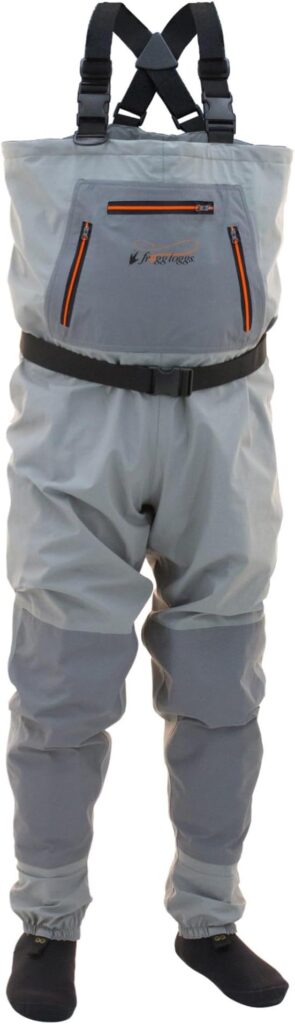
The biggest reason to choose these is price. They get you into breathable waders for a lot less money, which makes them a good starting point if you’re still figuring out how much time you’ll spend salmon fishing.
If you are still learning the basics, these pair well with the beginner approach I cover in my bank fishing for salmon guide.
Best Premium Brand-Name Alternative: Simms G3 Guide Stockingfoot Waders
The Simms G3 Guide Stockingfoot Waders are the premium brand-name alternative in this lineup, and they deserve their reputation.
Simms has been building serious waders for a long time, and the G3 Guide is one of the most recognized waders in the fishing world. These are a direct premium competitor to the DRYFT Primo Zip, and they’re excellent waders.
I just personally still prefer the DRYFT. They cost less, have the zip front, and I’ve already proven them to myself through years of hard use. But if you’re committed to a major brand name or already have a relationship with Simms gear, the G3 is the right choice at this level.
The construction is genuinely top-tier. The G3 uses a GORE-TEX 3-layer upper and GORE-TEX Pro 4-layer lower. The adjustable spacer air-mesh suspender system is a comfort-focused detail that makes a real difference on long days. The anatomically engineered neoprene stockingfeet are designed with a better shape than most standard booties.
Simms also backs the G3 with a 60-day leak replacement warranty and 365-day repair support, which is meaningful for a wader at this price point. That warranty structure gives you real recourse if something goes wrong early.
One thing worth noting clearly: Simms lists the G3 as manufactured using PFAS chemicals. The DRYFT Primo Zip Waders use PFAS-free DWR. That is a factor some anglers care about when choosing gear, and it’s worth knowing before you buy.
Specs:
- Premium stockingfoot chest waders
- GORE-TEX 3-layer upper
- GORE-TEX Pro 4-layer lower
- Adjustable spacer air-mesh suspender system
- Integrated webbing attach point for net carry
- Top-access zippered stretch pocket
- Zippered micro-fleece handwarmer chest pocket
- Removable Tippet-Tender pocket
- Interior flank pocket
- Low-profile back belt loops
- 2-inch stretch nylon belt included
- Built-in gravel guards
- Anatomically engineered neoprene stockingfeet
- Made in USA of imported materials
- 60-day leak replacement warranty
- 365-day repair support
- Around $750
My take: The Simms G3 Guide Waders are excellent, and I wouldn’t argue with anyone who swears by them. GORE-TEX Pro construction, strong warranty support, and a brand reputation built over decades of serious fishing all matter. I still put DRYFT first for my own fishing, but if you want the premium big-name option with Simms behind it, the G3 earns that spot.
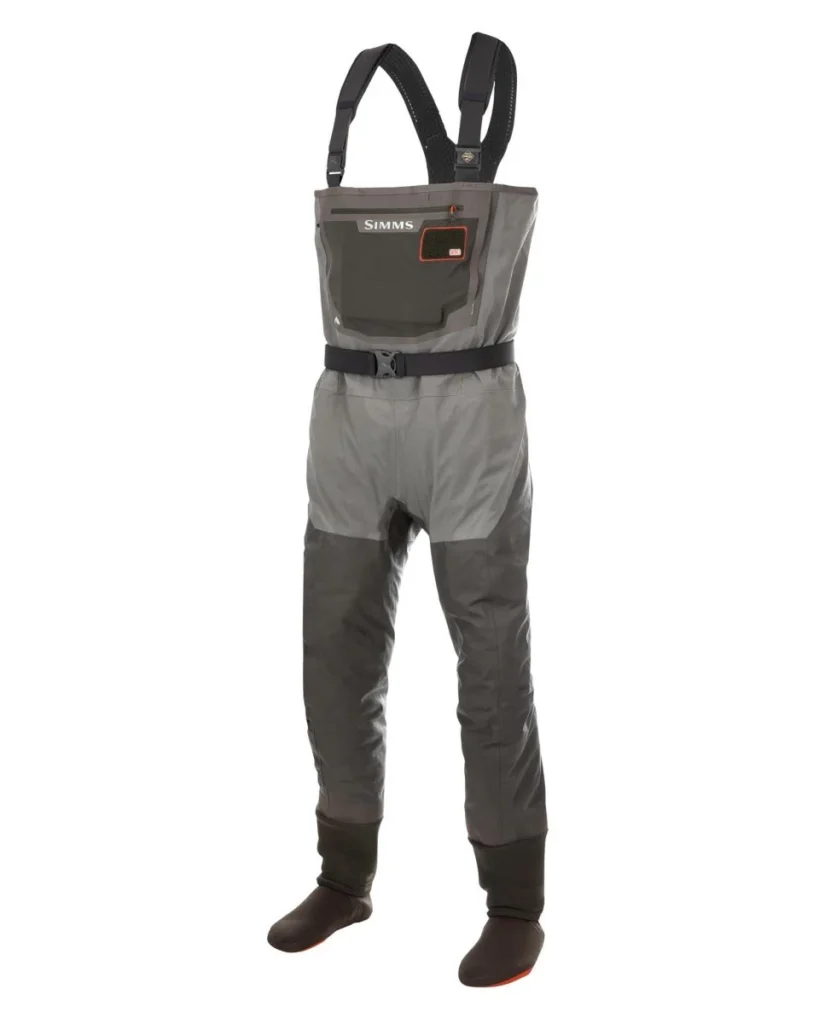
These are the premium big-name alternative. They cost more than the DRYFT waders, but Simms has a long-standing reputation and strong warranty support.
Best Beginner Bootfoot Waders: Orvis Clearwater Bootfoot Waders
The Orvis Clearwater Bootfoot Waders are the beginner bootfoot pick in this lineup, and they sit in a useful middle ground that doesn’t get enough attention.
At around $300, they’re not budget waders, but they’re also well below the $650 to $750 premium tier. For an angler who wants something more serious than a $100 starter pair but isn’t ready to commit premium wader money, that middle ground is exactly where the Clearwater Bootfoot lives.
The bootfoot design is the main reason I’d point a beginner toward these. With stockingfoot waders you still need to buy separate wading boots, which adds another purchase, another sizing decision, and another variable to figure out when you’re new. Bootfoot waders eliminate that step. The boots are built in, the setup is simpler, and you can focus on learning how to fish rather than sorting out gear.
The Orvis Clearwater Bootfoot uses a 4-layer waterproof fabric with a 30K/8K breathability rating. That is solid for a midrange bootfoot wader and better than what you usually see in very cheap options.
The side-release buckles that convert the wader from chest to waist height are a useful detail too. They give you flexibility to fish in warmer conditions without overheating in full chest waders.
One important thing to check before purchasing: the Clearwater Bootfoot comes with felt sole boots, and felt soles are regulated or prohibited on some waters due to invasive species concerns. Always check your local fish and wildlife regulations before fishing felt soles on any river.
Specs:
- Bootfoot chest waders
- Built-in vulcanized neoprene felt sole wading boots
- 4-layer waterproof fabric
- 30K/8K breathability rating
- Side-release buckles for chest-to-waist conversion
- Chest pocket
- Handwarmer pocket
- Modern fit
- Around $300
My take: These are the pair I’d recommend if you want a beginner-friendly all-in-one setup that’s more serious than a budget wader but still well below premium pricing. The built-in boots make the buying process simpler for a newer angler, and the 4-layer construction is a real step up from the cheapest options. Just verify felt sole regulations for your local rivers before you buy.
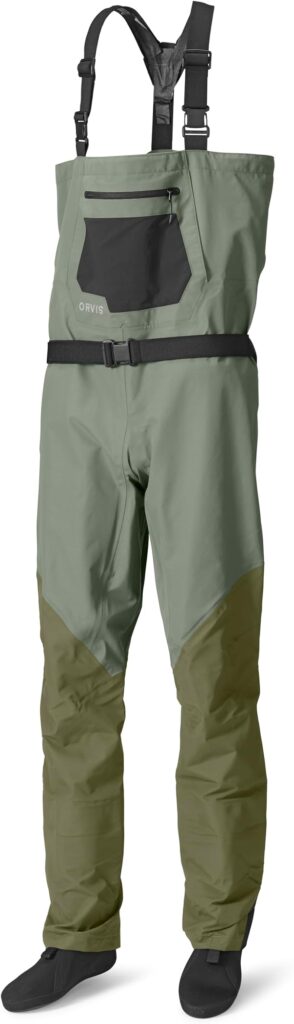
The big advantage is simplicity. You get waders and boots together, which can make the buying process easier for a newer angler. The tradeoff is that bootfoot waders are less customizable than stockingfoot waders with separate boots.
If you are just getting started, focus on safe bank access and basic gear before trying to wade too aggressively. I cover more about fishing from shore in my guide on where to cast for salmon in a river.
Stockingfoot vs Bootfoot Waders for Salmon Fishing
The two main wader styles are stockingfoot and bootfoot, and the difference matters more for salmon bank fishing than it does for easier fishing situations.
Stockingfoot waders have neoprene booties built into the lower leg, and you wear separate wading boots over them. This is the style I prefer for most serious salmon bank fishing. Separate boots give you control over fit, ankle support, traction, and replacement.
If your boots wear out before your waders do, which happens, you replace the boots without replacing the waders. You can also choose different boot sole types for different rivers.
Bootfoot waders have the boots built in as a single unit. The setup is simpler and more convenient, which makes them a good fit for beginners. The tradeoff is less customization. You can’t choose your sole type or get a perfect boot fit independently, and if either the wader or the boot fails, you’re dealing with the whole unit.
For ankle support specifically, separate wading boots are usually better than built-in bootfoot boots. Salmon bank fishing involves walking uneven gravel, climbing over rocks, and navigating rough bank access. Good ankle support in a proper wading boot is a real safety factor, not just a comfort one.
A simple way to think about it:
- Stockingfoot waders: better for serious use, better boot options, better ankle support
- Bootfoot waders: simpler for beginners and fewer separate purchases
- Felt soles: good grip on some slick rock, but check local regulations
- Rubber soles: easier to clean, more regulation-friendly, and still useful on most river bottoms
If you’re choosing wading boots for Pacific Northwest salmon rivers, rubber soles with studs can be a strong all-around choice and avoid some of the regulatory uncertainty that comes with felt.
Breathable vs Neoprene Waders for Salmon Fishing
For most salmon fishing situations, breathable waders are the better choice, and that’s what this guide focuses on.
Breathable waders use waterproof-breathable fabrics that keep water out while allowing moisture vapor from your body to escape outward. That combination keeps you dry from external water while reducing the sweaty, clammy feeling that comes from wearing a fully sealed non-breathable wader during active use.
For bank fishing where you’re walking, moving between spots, and potentially covering a lot of ground, that breathability matters.
Neoprene waders are warm, and they still have their place in very cold-water situations. Thick neoprene traps body heat effectively and can keep you comfortable in frigid late-fall or winter conditions. The tradeoff is that neoprene is heavy, bulky, and restrictive. It can feel like wearing a wetsuit on land, which gets uncomfortable fast if you’re walking any real distance.
For the majority of salmon fishing, breathable waders with appropriate layering underneath cover the conditions better than neoprene for most bank anglers. Neoprene makes more sense for anglers standing in one spot for long periods in extreme cold, or for winter steelhead fishing in very cold conditions where active walking isn’t part of the plan.
A separate guide specifically on winter salmon and steelhead waders would make sense later. For a general salmon wader guide, breathable waders are the right recommendation for most anglers and most conditions.
What Features Matter Most in Salmon Fishing Waders?
You don’t need every possible feature, but a few things make a meaningful difference when you’re actually on the river.
Durable Lower Legs
The lower half of your waders takes most of the abuse: rocks, gravel, brush, kneeling, and scrambling over bank obstacles.
Reinforced material from the knee down, strong seam construction, and good abrasion resistance in the lower leg are worth prioritizing. This is one of the main reasons I like the DRYFT Primo Zip design. The lower is reinforced for abuse, while the upper stays lighter and more breathable.
Comfortable Fit for Long Days
Salmon fishing can mean eight or ten hours in waders. A pair that feels fine for one hour can become genuinely miserable after five.
You want enough room to layer underneath in cold conditions without the waders feeling baggy and sloppy. You also want enough mobility to crouch, step up onto rocks, and walk comfortably without fighting the material.
Room for Layering
This deserves its own mention because it affects what waders you buy.
In cold fall and winter salmon fishing conditions, you need to layer underneath your waders. Moisture-wicking base layers, insulating mid-layers, and sometimes heavier fleece can make a big difference.
Waders that fit too tight with light layers become uncomfortable when you add proper cold-weather insulation underneath. Buy with layering room in mind.
Good Gravel Guards
Gravel guards keep rocks, sand, and river debris from working their way into your wading boots during walking.
On salmon rivers where you’re constantly moving over gravel bars and rocky banks, gravel inside your boot is more than just annoying. It can also accelerate bootie wear. Built-in gravel guards with proper attachment systems are worth having.
Reliable Stockingfeet or Boots
For stockingfoot waders, the neoprene booties should be comfortable, well-sealed, and durable. Thin or poorly constructed booties wear out faster and can develop leaks at the seams.
For bootfoot waders, boot fit and sole type are the main considerations.
Pockets That Actually Work
Pockets are useful, but they come with an important caveat: not all wader pockets are waterproof or submersion-rated.
A standard zippered chest pocket on waders may resist rain, but it may not protect your phone if you take a spill in the river. Anything important like a phone, wallet, or car keys should go in a fully waterproof pocket or a separate waterproof pouch inside the wader.
The DRYFT Primo Zip has a waterproof media pouch for this reason.
A Proper Belt System
A wading belt is not optional. It’s a safety device.
If you fall in a river, a snug wading belt helps limit how much water can enter your waders. Without a belt, waders can fill with water fast and become extremely difficult to move in.
Always wear your belt snug, especially in any water with real current.
Wading Safety Matters More Than the Brand
Good waders keep you dry, but they don’t make you invincible, and this is worth saying plainly.
Salmon rivers can be cold, pushy, slick, and unpredictable. Water that looks knee-deep from the bank can be deeper mid-channel. Current that looks mild can knock you off your feet on slick rock.
A few basic safety practices matter regardless of which waders you buy:
- Always wear your wading belt snug
- Move slowly on slick or uneven bottom
- Use a wading staff in rough or pushy water
- Do not wade deeper than you need to
- Do not cross heavy current alone
- Let someone know where you’re fishing
- Watch for drop-offs and soft edges
- Keep felt sole regulations in mind
- Back out if the water feels stronger than expected
A wading staff doesn’t need to be expensive. A simple collapsible staff that clips to your waders when not in use can make a real difference on slick or uneven bottom. For serious bank fishing on rough water, I’d call it close to essential.
A lot of the time, you do not need to wade as far as you think. Many salmon travel close enough to the bank that positioning and casting angle matter more than standing waist-deep in current.
I talk more about positioning and reading bank water in my guide on how to read a river for salmon.
My Recommendation
If I were buying one pair of waders for salmon fishing, I’d buy the DRYFT Primo Zip Waders.
That’s the honest answer. They’re the pair I personally trust most because I’ve used them hard for years and they’ve held up without a single leak repair. They cost less than the Simms G3, have a zip front, come from a Washington-based PNW company, and have already proven themselves to me across two weeks in Alaska and multiple seasons in the Pacific Northwest.
If you need a budget pair to get started, the FROGG TOGGS Hellbender Breathable Waders are the right starting point.
If you want the premium big-name alternative with GORE-TEX Pro construction and strong Simms warranty support, the Simms G3 Guide Stockingfoot Waders are excellent.
If you’re a beginner who wants a simpler all-in-one bootfoot setup without buying separate boots, the Orvis Clearwater Bootfoot Waders are the pair I’d look at. Just verify felt sole regulations for your local rivers first.
Pick based on how often you fish, how rough your rivers are, and what you can realistically spend. Don’t buy premium waders just because they look impressive, and don’t underestimate how badly a leaking pair can ruin a long day on a cold river.
Final Thoughts
The best waders for salmon fishing are the ones that keep you dry, fit well, and hold up to the way you actually fish.
If you’re serious about bank salmon fishing and spend long days on the river, breathable waders with good construction are worth spending real money on. You don’t need the most expensive pair on the market, but you do need a pair you can trust when you’re standing in cold water for hours in the rain.
For me, that’s the DRYFT Primo Zip.
For someone just starting out, a budget or midrange option makes more sense. Get on the water, learn what matters to you, and upgrade when you know you’re going to use them enough to justify it.
Either way, wear your belt, use a wading staff when the water is rough, check your footing before you commit your weight, and don’t let a good pair of waders give you false confidence in water that’s stronger than it looks.
Staying dry matters. Staying safe matters more.
FAQ:
What are the best waders for salmon fishing?
The best waders for salmon fishing are durable breathable waders that stay dry, fit comfortably with room for layering, have reinforced lower legs, good gravel guards, and a reliable belt system. My top pick is the DRYFT Primo Zip Waders because I’ve used them for years on Alaska and Pacific Northwest trips without needing a leak repair.
Are breathable waders good for salmon fishing?
Yes, breathable waders are the better choice for most salmon fishing situations because they’re more comfortable for walking, better suited to active bank fishing, and more versatile across fall and winter conditions than neoprene. Neoprene still has a place in very cold, stationary fishing situations, but breathable waders are the right starting point for most salmon anglers.
Are bootfoot or stockingfoot waders better for salmon fishing?
Stockingfoot waders are usually better for serious salmon bank fishing because separate wading boots give you better ankle support, more control over fit and traction, and the ability to replace boots independently when they wear out. Bootfoot waders are simpler for beginners who want a complete all-in-one setup without a separate boot purchase.
Are felt sole waders legal for salmon fishing?
Felt soles are legal in many places but restricted or prohibited on some waters because felt can hold aquatic invasive species and move them between waterways. Always check your local fish and wildlife regulations before using felt soles on any river. Rubber or studded rubber soles are a safer default choice for most Northwest salmon rivers.
Are FROGG TOGGS waders good for salmon fishing?
FROGG TOGGS waders can be a reasonable budget option for beginners or anglers who fish a few times per year. They’re not in the same construction class as premium waders, but the Hellbender Breathable Waders offer usable features at around $100. Keep expectations realistic and consider upgrading if you start fishing hard and often.
re Simms waders worth it for salmon fishing?
Simms waders are worth it for serious anglers who want GORE-TEX Pro construction, a major brand name, and strong warranty support. The G3 Guide Waders are excellent. I personally still prefer the DRYFT Primo Zip because they cost less, have a zip front, and I’ve proven them through years of hard use, but the G3 is a legitimate premium choice.
How much should I spend on salmon fishing waders?
For beginners or casual anglers, $100 to $300 is a reasonable starting range. For anglers who fish hard and often, investing $600 to $750 in premium waders can make sense because better waders usually offer better durability, comfort, waterproofing, and long-term performance.
Do I need waders for salmon bank fishing?
You don’t always need waders, but they help significantly. Waders let you wade shallow edges, stand comfortably in wet conditions, land fish more safely, and fish through rain or cold weather without getting soaked. Just remember that waders aren’t a reason to wade deeper than necessary. Many salmon are closer to the bank than people think.
Are zip-front waders worth it?
Yes, zip-front waders are worth the extra cost if you fish long days or want easier entry, exit, and bathroom breaks during cold weather. Once you get used to the convenience, going back to pulling waders on and off over boots feels unnecessarily difficult. The key is a high-quality waterproof zipper, which is why the TIZIP zipper on the DRYFT Primo Zip is one of the features I specifically value.
What should I wear under waders for salmon fishing?
In cold conditions, start with a moisture-wicking synthetic base layer against the skin. Avoid cotton because it absorbs moisture and gets cold fast. Add an insulating mid-layer of fleece or synthetic fill depending on the temperature. In very cold fall and winter conditions, heavier fleece pants under waders make a real difference. In mild weather, lightweight synthetic layers are usually enough.
Do I need a wading staff for salmon fishing?
A wading staff isn’t required, but it’s worth having for any river with slick bottom, strong current, or uneven terrain. A staff gives you a third point of contact and dramatically improves stability, especially when you’re wading in current. Collapsible wading staffs that clip to your waders when not in use are the most practical option for bank fishing.