How to read a river for salmon is one of the most important skills you can learn if you want to consistently find fish.
Knowing where to fish is one of the biggest differences between consistently catching salmon and spending the day guessing.
A river might look full of good water, but salmon do not use every part of it the same way. They follow specific travel lanes, hold in certain types of structure, and move depending on conditions.
Once you understand how to read the river, everything else such as your setup, depth, and presentation starts to make a lot more sense.
Table of Contents
What Salmon Look for in a River
Salmon are constantly moving upstream, but they are not doing it randomly.
They look for:
- Current breaks
- Depth
- Structure
- Areas where they can rest without fighting heavy current
Anywhere the current slows down slightly or changes direction can create a holding spot.
This is why understanding your full setup, including your salmon float rig setup and terminal tackle system, matters so much when you are trying to present bait naturally in these zones.
Your terminal tackle also plays a big role in how naturally your bait moves through the current.
Once you understand how to read a river for salmon, everything else like depth, bait, and presentation starts to make a lot more sense.
Best Water Types to Target
When you are scanning a river, these are the main types of water you should focus on.
Seams
Seams are where fast and slow water meet.
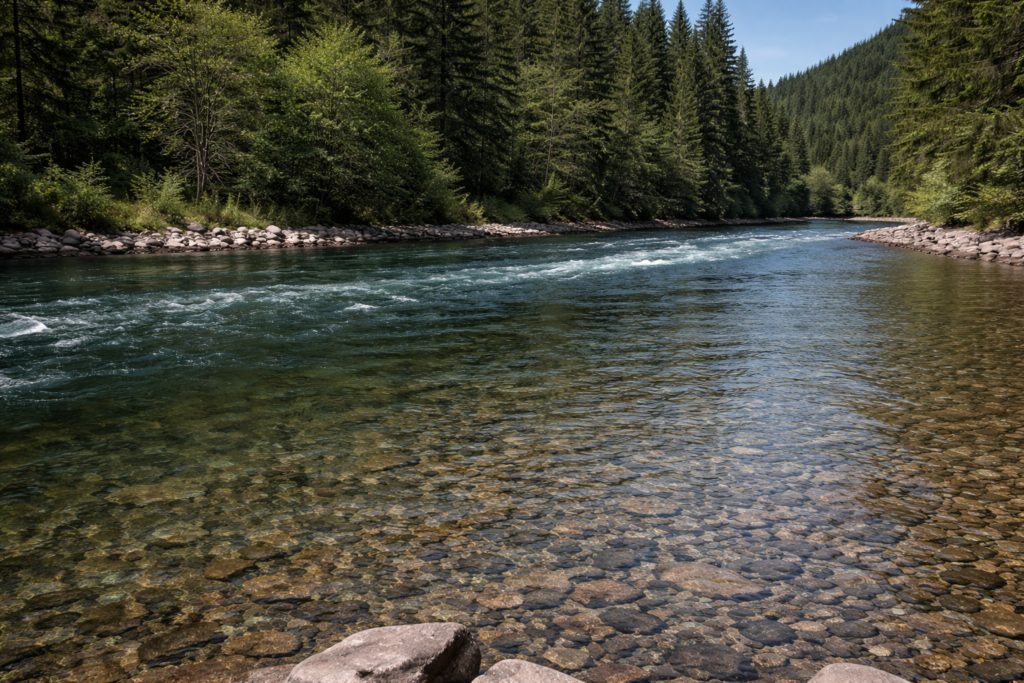
These are natural travel lanes for salmon because fish can move upstream while conserving energy.
Eddies
Eddies form when current breaks and starts to swirl back upstream.
These areas create softer water where fish can rest.
Tailouts
Tailouts are the slower water at the end of a run before it drops into the next section.
These are especially good for traveling fish.
Deep Runs
Deeper sections of the river give salmon security and are often where they hold during the day.
Understanding Salmon Travel Lanes (Where Fish Actually Move)
Not all salmon move through a river the same way.
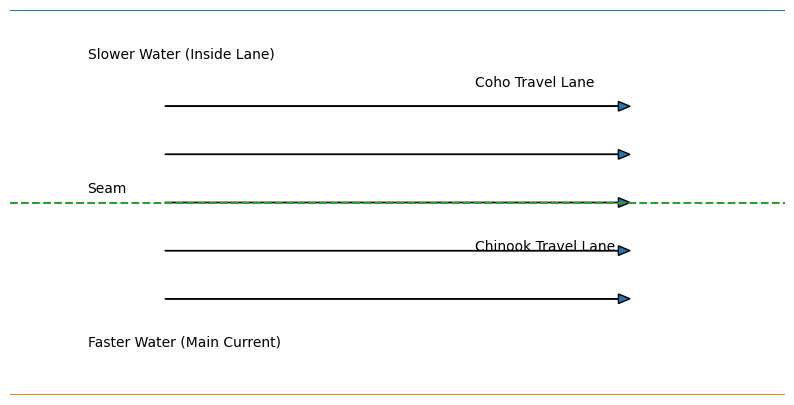
In a typical seam, coho will often push through the shallower inside lane, closer to softer water. They are more willing to travel through that easier current.
Chinook are different.
Most of the time, they will move through the deeper side of the seam, right where heavier current starts to push. That deeper lane provides security and better holding water.
But Chinook do not always follow the rules.
There are plenty of times where they will move straight up the heavy current itself, especially when they are pushing upriver with purpose. If you are only fishing the soft edge, you can completely miss those fish.
This is where a lot of people get it wrong.
They find a good-looking seam and only fish the slow side of it.
What works better is fishing both travel lanes:
- Start on the softer inside seam
- Then work into the deeper edge
- Then slightly into heavier current
That small adjustment can be the difference between fishing empty water and putting your bait right in front of fish.
Cover Water Until You Find Fish
Even when you understand travel lanes, you are never going to know exactly where fish are sitting.
Fish do not always follow the perfect line.
That is why you cannot get locked into one path.
If you are only running your float down a single line, you are missing fish.
Instead:
- Start on the far side of the seam
- Work each cast closer
- Cover the entire zone
Think of it like scanning the river, not guessing.
Once you find the line fish are using, you can repeat it.
Using the right float makes a big difference here, especially when it comes to controlling your drift and keeping your presentation consistent across different lines.
A lot of bites come on a line you did not expect, simply because you took the time to cover the water.
Watch the Water (Fish Will Tell You Where to Fish)
One of the most overlooked clues is the surface.
If you see a salmon roll, swirl, or break the surface, that is not random.
That is a fish showing you exactly where it is.
Take note of:
- The exact line it surfaced in
- The current speed
- The likely depth
Then run your float through that exact path.
Read the Water Before You Ever Make a Cast
Before you even fish, take time to observe the water.
Depending on water clarity and light conditions, especially with polarized glasses, you can often see what is below the surface.
Darker water usually means deeper water.
Look for:
- Gravel versus rock bottom
- Large rocks that create current breaks
Big rocks are important.
If there are rocks large enough for a salmon to sit behind, that is exactly what they will do. Those rocks break the current, and salmon will drop down to the bottom and hold behind them to rest.
If you cannot see into the water clearly, use the bank as a clue.
- Rocky banks often mean structure below
- Smooth or muddy banks usually mean less structure
Adjust Your Depth Around Structure
Once you identify structure, adjust your depth accordingly.
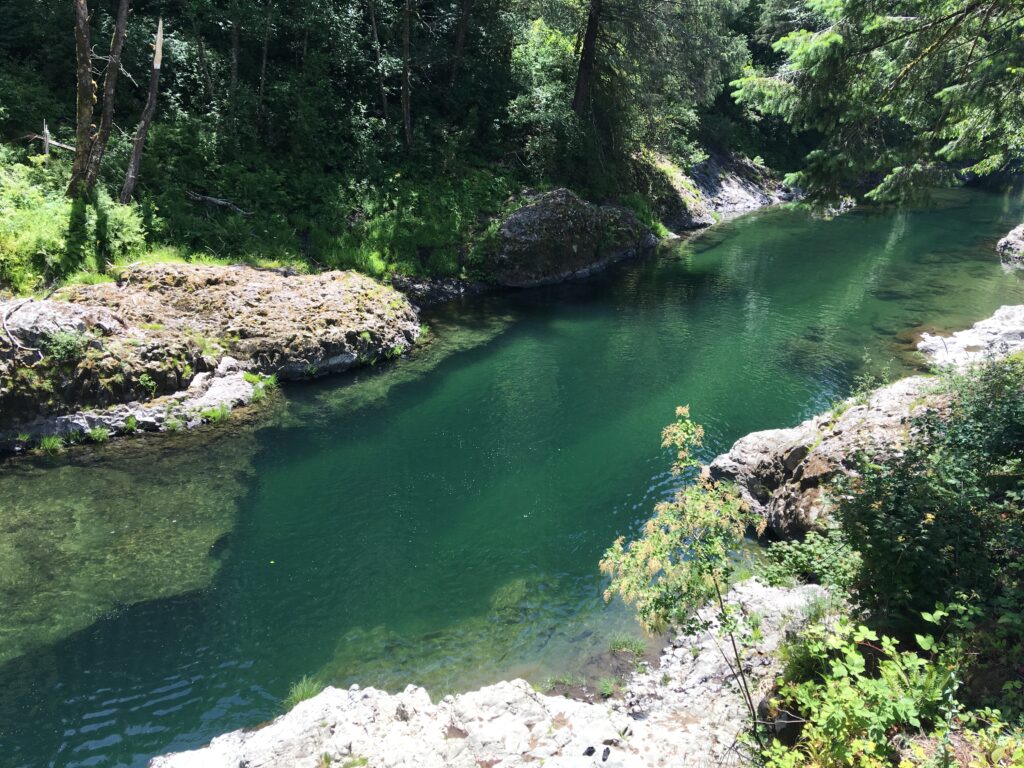
If there are large rocks in the line you are fishing, set your bait roughly 6 to 12 inches above the bottom structure.
This keeps your bait in the strike zone without constantly snagging.
If you are hitting rocks, you are too deep. Bring it up slightly and keep adjusting until you are running clean but still close to the bottom.
Choosing the right amount of weight also plays a big role here, since it helps your bait get down into the zone and stay in the zone with a clean presentation.
Dialing this in is critical and is covered in more detail in the salmon float fishing depth guide.
Where Coho and Chinook Hold in Different Water Types
Chinook typically prefer deeper lanes and heavier current edges.
Coho, on the other hand, will often use softer water.
Aside from tailouts, coho also love back eddies.
These are areas where the current breaks and rolls upstream, creating slower pockets.
Coho will often sit in these areas to rest.
These are great spots for:
- Jigs
- Spoons
- Spinners
Understanding How Rivers Naturally Break Down
Most rivers follow a pattern.
You will usually see:
- Faster, narrow water
- Feeding into a deeper, slower channel
- Followed by another fast section or chute
That deeper middle section is often the most consistent holding water.
Upper River and Boulder Water
Further upriver, things can change.
You will often find large boulders, heavy current, and faster water.
Fish will sit behind these boulders to rest before pushing through stronger current or rapids.
These spots can hold fish even when everything around them looks too fast.
Not All Good Looking Water Holds Fish
Just because water looks perfect does not mean fish are there.
Salmon are constantly moving upstream toward spawning areas.
That means you might be:
- Fishing water that fish have already moved through
- Or fishing too far upriver before fish have arrived
If you are not getting any action, do not spend your entire day in one spot.
Move and try a different section of river, especially further downstream where fish are still actively moving through.
if all else fails, follow the crowds. They’ll always te
Salmon Travel Lanes Diagram
Final Step: Put Your Bait in the Strike Zone
Once you find the right travel lane and the right line, the next step is making sure your bait is actually in the strike zone.
This is where dialing in your depth and presentation matters most, especially when using effective bait from this best bait for Chinook salmon guide.
FAQ
How do you read a river for salmon?
Reading a river for salmon means identifying where fish travel and hold. Focus on seams, current breaks, deeper runs, and structure like rocks. Learning how to read a river for salmon helps you consistently find fish instead of guessing.
Where is the best place to fish for salmon in a river?
The best places to fish for salmon are along seams, tailouts, deeper runs, and behind large rocks where fish can rest. Chinook often hold in deeper, heavier current, while coho are more likely to be found in softer inside water and back eddies.
What is a seam in a river for salmon fishing?
A seam is the line where fast water meets slower water. These areas create natural travel lanes for salmon, allowing them to move upstream while conserving energy.
How do you find salmon in a river?
You can find salmon by reading the water and watching for signs like rolling fish or surface disturbances. Covering multiple drift lines across seams and adjusting your presentation helps locate active fish.
How important is depth when fishing for salmon?
Depth is critical when fishing for salmon. Most fish travel and hold close to the bottom, so your bait needs to be in the strike zone. If your setup is too shallow or too deep, you can miss fish even if you are in the right location.
What setup is best for salmon fishing in rivers?
A float fishing setup is one of the most effective methods for river salmon. It allows you to control depth, cover water, and present bait naturally through travel lanes where fish are moving.