Affiliate Disclosure: Some of the links below may be affiliate links. As an Amazon Associate, I may earn from qualifying purchases at no extra cost to you. I only recommend gear that makes sense for this style of fishing and fits the way I would actually approach salmon fishing in Northwest rivers.
Knowing where to cast for salmon in a river is one of the biggest things that separates guys who consistently catch salmon from guys who don’t.
Walk up to most beginners on a river and you’ll see the same thing. They look across the water, pick the farthest-looking seam they can see, and bomb a cast as far as they possibly can. I understand the instinct. The far bank looks untouched. Long casts feel like you’re being thorough. The water right at your feet seems too obvious.
But salmon aren’t always sitting on the far side of the river.
A lot of fish are using soft inside lanes, current edges, seams, tailouts, and deeper slots that are much closer than people think. Some of the best water you’ll ever fish might be ten feet from your boots, and most anglers step right into it before they ever make a cast.
That’s what this guide is really about. Not just finding fishy-looking water, but knowing which lane to fish first, how to approach the bank without blowing up a run, how to cover water efficiently, and how to match your casting angle to the technique you’re using.
If you’re still working on identifying good salmon water in general, start with my guide on how to read a river for salmon. This article builds on that and gets into where to actually put your cast once you’re standing in front of a run.
Quick Answer: Where Should You Cast for Salmon in a River?
The best places to cast for salmon in a river are seams, current edges, deep slots, tailouts, inside bends, soft water beside faster current, and travel lanes close to the bank.
Start by fishing the close water before you step into it. Then work the middle lane, the main seam, and the far edge if you can reach it. Salmon use softer current paths to move upriver efficiently, and they hold where they can rest without fighting the heaviest water.
For float fishing, cast slightly upstream of the target lane so your bait has time to settle and drift naturally into the zone. For drift fishing, cast slightly upstream and let your weight tick through the slot or seam. For spinners and spoons, cast across or slightly downstream so the lure swings through the travel lane instead of ripping out too fast.
The main idea is simple: don’t just cast far. Cast where salmon are most likely to travel or hold.
Table of Contents
Why Casting Location Matters
Salmon fishing isn’t just about having the right bait, lure, rod, or rig.
Those things matter, but only if your presentation is actually passing through water that salmon are using.
A perfect bait in the wrong lane is still just a perfect bait drifting past nothing.
Salmon use current to save energy. They’re not out there fighting the heaviest water every second as they push upriver. Instead, they slide along seams, softer current edges, inside bends, and deeper lanes where they can travel efficiently. When they stop, they usually pick water that gives them depth, cover, current relief, or a comfortable resting spot near a travel lane.
That’s why casting location matters so much. You’re not trying to cover every inch of river. You’re trying to find the small lanes and holding spots where a salmon is most likely to see your bait or lure and stay in those spots long enough to get a reaction.
A good setup helps, but the setup has to be fished in the right water. If you’re still building your overall system, my complete salmon fishing setup for rivers breaks down the full rod, reel, line, and tackle approach.
Where Salmon Hold vs Where Salmon Travel
One of the things that helped me most when I was figuring out river salmon fishing was learning to separate holding water from travel water.
They can overlap, but they’re not always the same thing, and how you fish them is different.
Holding Water
Holding water is where salmon pause.
They might be resting, waiting on water conditions, adjusting to temperature changes, or just sitting in a comfortable spot before pushing farther upriver.
Good holding water often includes deep pools, deep slots, tailouts, soft current edges, boulders and current breaks, undercut banks, slow pockets beside faster water, and the heads of pools where current drops into depth.
When I’m fishing holding water, I want a slower, more controlled presentation. That usually means bait under a float, a drifted rig, a twitching jig, or a lure that stays in the zone long enough to irritate a fish into committing.
Travel Lanes
Travel lanes are the paths salmon use to move upriver.
These aren’t always the deepest parts of the river. A travel lane might be the softer side of a seam, the inside edge of a bend, the edge of a faster chute, or a narrow path between heavy current and soft water.
Good travel lanes often include seams, inside edges, current transitions, soft water beside faster water, edges of slots, bank-side lanes, and paths along natural structure.
If I’m fishing a travel lane, I want my bait, lure, or rig moving naturally through it at the right depth and matching the speed of the current in that lane as closely as possible.
If I’m fishing holding water, I want to slow down and keep the presentation in front of the fish longer.
That difference in approach matters more than most people realize.
Best Places to Cast for Salmon in a River
When I walk up to a salmon run, these are the spots I look at first.
1. Seams
A seam is where faster water and slower water meet, and it’s one of the first places I look on any run.
Seams give salmon an efficient travel path. They can use the softer side without fighting the full push of the river, which is exactly what they want when they’re moving upriver. Active fish often move right along that transition zone, and fish that stop to rest will frequently hold just inside the soft side of a seam.
When fishing a seam, you don’t want your presentation ripping sideways across it. You want your bait, float, lure, or drift rig traveling along the edge as naturally as possible. Moving with the seam, not cutting across it.
The best seams usually have some depth to them. A seam in six inches of water is less useful than a seam sitting over a deeper slot or defined lane.
2. Current Edges
Current edges are similar to seams but often broader and less defined.
A current edge is any place where heavy current fades into softer water. Salmon use these edges because they can keep moving without burning unnecessary energy. They’re also one of the most bankable spots for shore anglers because you can often reach them without casting all the way across the river.
Good current edges show up along the inside edge of a main flow, beside faster choppy water, below riffles, along gravel bars, next to deeper slots, and along the edge of a pool.
If you can see a defined line where the water changes speed, that transition is almost always worth a cast.
3. Deep Slots
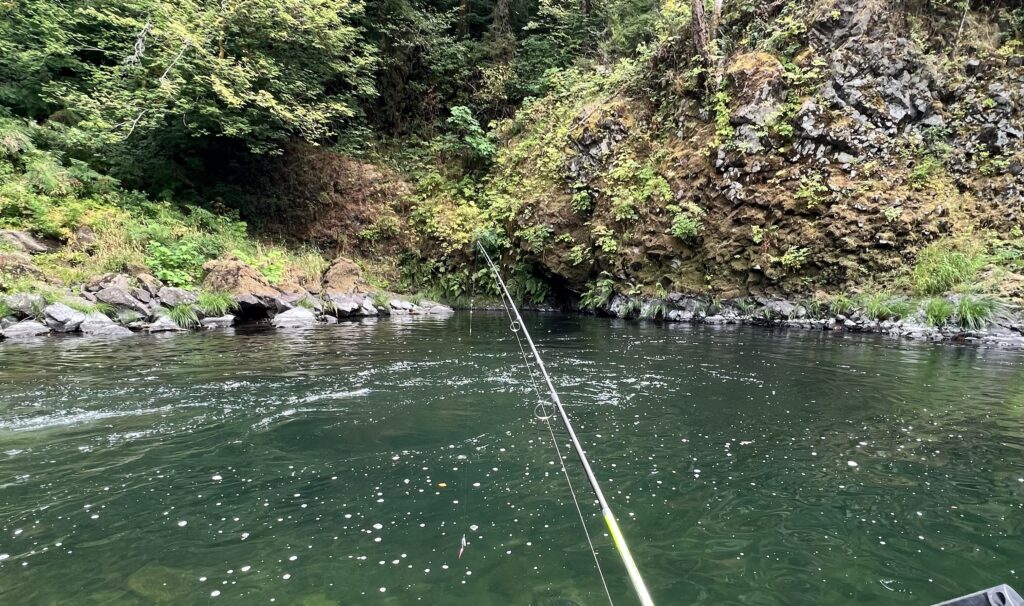
Deep slots are especially important for Chinook, and they’re where a lot of beginners struggle.
A slot is a deeper lane within a run. Sometimes it looks darker or has a smoother surface than the water around it. Sometimes you only find it by fishing through the run and noticing where your gear drops deeper or takes noticeably longer to come through.
The mistake I see most often is casting into a slot and immediately starting the retrieve or drift before the presentation has time to get down. If the fish are holding near the bottom and your bait or lure is riding above them, you’re not really fishing the slot. You’re just passing over it.
When casting to a deep slot, give your rig enough room upstream to reach depth before it gets to the best part of the lane. This applies whether you’re drifting bait, throwing spoons, or fishing a float rig.
For a deeper breakdown on how depth affects salmon presentations, my salmon float fishing depth guide covers that in detail.
4. Tailouts
A tailout is the downstream end of a pool or run where the water starts to shallow and pick up speed before moving into the next section.
Tailouts are easy to overlook because they don’t always look dramatic, but they can be excellent salmon water. Fish pause there before making their next push upstream, especially in low light or when they’ve been actively traveling. The natural narrowing of a tailout also creates a funnel. Salmon often pass through a relatively small lane, which makes positioning your presentation much easier.
The biggest mistake on a tailout is walking right into it before you’ve fished it. Treat it carefully, especially in clear or lower water. Stop short, fish the close edge first, and work your way out before you ever put a boot in.
5. Heads of Pools
The head of a pool is where faster water pours into deeper water, and it’s one of my favorite spots on any run.
Salmon get depth, oxygenated water, current, and cover all in one area. The head of a pool also tends to collect fish that are moving up through a run and stopping to rest before pushing farther. In rivers with heavy fishing pressure, fish will often stack at the head of a pool because they feel protected there.
When fishing the head of a pool, focus on the exact lane where the current drops into deeper water. That transition is usually the sweet spot. Not the flat, dead-looking water off to the side, and not directly in the fastest part of the chute.
If your bait or lure is blowing through that section too fast, change your angle. Small adjustments in where you cast can make the presentation ride the lane completely differently.
6. Inside Bends
Inside bends can be some of the most productive water for bank anglers, and they’re often underrated.
On a river bend, the outside current is heavier and deeper. The inside bend creates a softer path where salmon can move without fighting the strongest push. That doesn’t mean every inside bend is worth your time. A shallow inside bend with no lane, no depth, and no cover may not hold much. But an inside bend with a defined edge, a slot, or softer current alongside deeper water is absolutely worth working.
Inside bends are also often easier to fish from the bank because you don’t have to reach across the whole river to put your presentation in the lane.
7. Behind Boulders and Structure
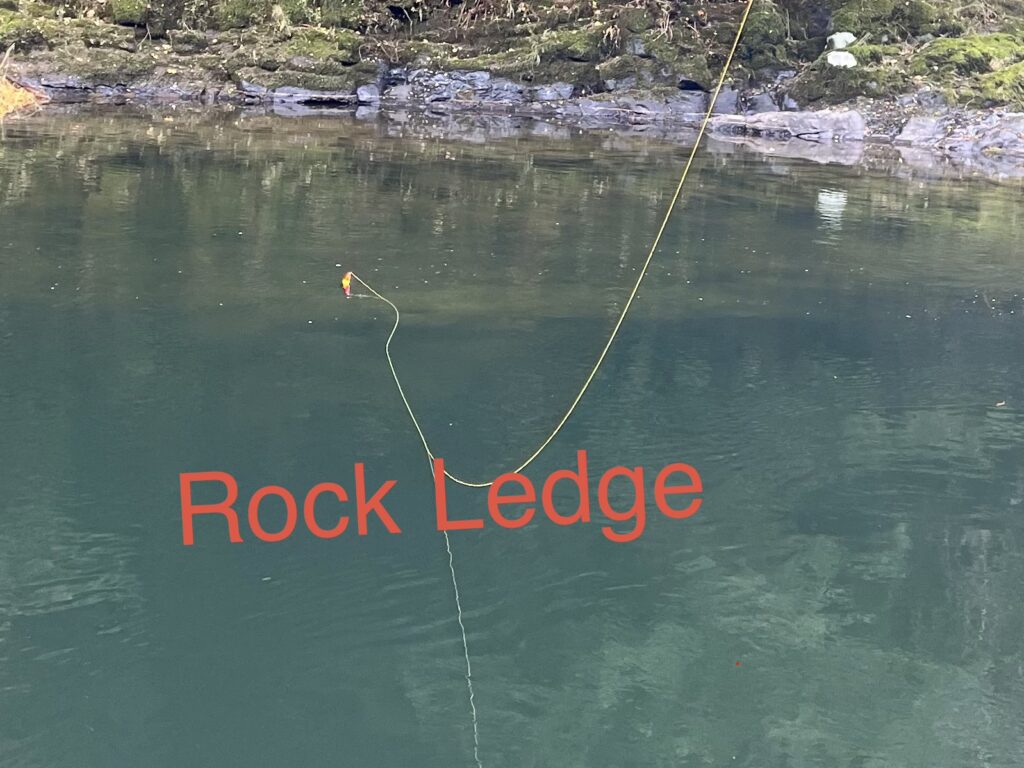
Boulders, logs, ledges, and other structure create current breaks. Salmon will sit in those breaks because the water is softer there.
The challenge is fishing structure without hanging up constantly. Accuracy matters here more than distance. You want to work the soft pocket or edge right beside the structure, not throw directly into the snag.
Float fishing and drift fishing can both be effective around structure if you control your depth carefully. Lures can work too if you can swing them through the soft pocket without burying the hooks. In general, I’ll err on the side of swinging past structure rather than trying to drop right on top of it. A lot of fish will come out of a pocket to eat something that passes nearby.
8. Close Water Near the Bank
This is the one beginners miss constantly, and it’s probably the most important point in this whole guide.
Not every salmon is across the river.
Some fish travel right along the bank, especially in softer inside edges, tailouts, and bank-side seams. If you stomp to the edge, crunch through gravel, or wade into the close lane without fishing it first, you may spook fish before you ever make your first real cast.
Some of the easiest fish to blow up are the ones you never even knew were sitting five feet from your boots.
When I approach new water, I fish close first. Then I work out from there. Short cast, middle cast, long cast.
That simple habit has put more fish on the bank for me than any other single adjustment.
How to Cast from the Bank Without Spooking Fish
Where you cast matters, but how you approach the water matters just as much.
If you’re loud, rushed, or standing in the lane before you’ve fished it, you can ruin a good run before your first real presentation. Salmon, especially in lower, clearer water, are more aware of bank pressure than a lot of people give them credit for.
Here’s how I approach new water:
Stop short of the edge and look at the close water before you do anything else. Make a few short casts before stepping any closer. Avoid stomping down gravel bars because that vibration travels through the water. Stay lower when you’re in shallow or clear conditions. Don’t stand in a lane you haven’t fished yet. Work the near water before you start bombing casts across the river.
In heavy, stained water you can get away with a little more movement and noise. But in clear conditions, especially on pressured rivers, the approach can be the difference between a fish and a spooked run.
If you fish mostly from shore, my full bank fishing for salmon guide goes deeper into positioning, approach, and how to work water from the bank.
Where to Cast a Float Rig for Salmon
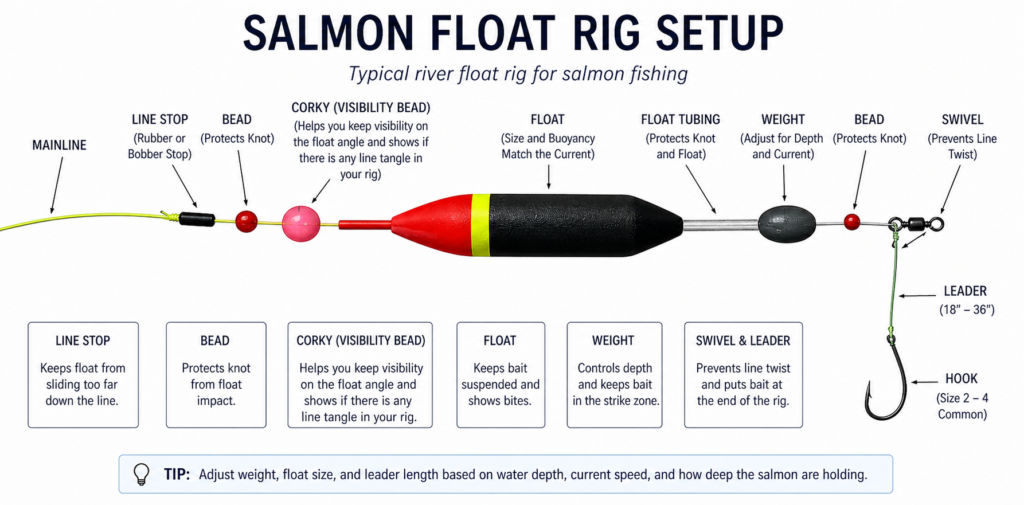
Float fishing is one of the most effective ways to cover salmon water from the bank, but the cast has to set up the drift correctly. That’s where a lot of beginners go wrong.
With a float rig, you’re not trying to land directly on the fish’s head. You’re trying to land far enough upstream that your bait reaches the correct depth before it enters the productive part of the lane.
If you cast directly at the seam or slot you’re targeting, your bait may still be sinking when it drifts through the best water. By the time it gets down to where the fish are sitting, it’s already past them.
How far upstream should you cast? That depends on your depth setting and current speed, but a general rule is to give yourself at least one and a half to two times the depth of the water in upstream distance. In ten feet of water with a moderate current, you want the float landing fifteen to twenty feet upstream of your target lane so the bait has time to reach the bottom before it arrives.
Managing the drift is just as important as where you cast. Once the float is in the water, you want it traveling at the same speed as the current in the lane. Not dragging behind, not getting pushed sideways, and not racing ahead. If your float is tilting hard or veering off course, the bait is likely being pulled unnaturally and fish will ignore it or refuse it.
Mending your line after the cast helps keep the float tracking correctly. A gentle upstream mend right after the cast settles can give the bait more time to sink and keep the float in the lane longer.
Good float casting targets include seams, soft current edges, deep slots, tailouts, inside travel lanes, and soft water running beside faster current.
If you need the full rig breakdown, start with my salmon float rig setup, then use the salmon float fishing depth guide to dial in how deep your bait should be running.
Where to Cast Lures for Salmon
When fishing lures, casting angle might matter more than anything else. More than color, more than lure size, and sometimes even more than the specific lure you’re using.
You’re not throwing a spinner into the river and reeling it straight back to you. The current should be helping the lure work through the lane, and the angle of your cast controls how the lure enters and tracks through the water.
Spinners: Cast slightly upstream or across the current and give the spinner a moment to sink before you start the retrieve. Retrieve just fast enough to feel the blade working through the rod. That thump is your signal. The goal is to swing the spinner through the travel lane without letting it ride too high. If you’re not occasionally ticking near the bottom, you’re probably above the fish.
One thing worth paying attention to: as the spinner comes around at the end of the swing and hangs directly downstream of you, slow your retrieve or let it pause for a moment. That change in speed and angle can trigger a strike from a fish that was following but hadn’t committed.
Spoons: A cross-current or slightly downstream cast usually works best. Let the spoon sink, then let the current help it wobble through the lane on a controlled swing. You want a clean wobble, not a spoon spinning out because you’re retrieving too fast. Similar to spinners, that moment when the spoon slows at the end of the swing is often when fish commit. Don’t just reel in and recast the second the swing stops.
Twitching jigs: Target deeper holding water, soft edges, and slower pools. Cast into the water where fish are likely holding, let the jig fall on a semi-slack line, pop the rod tip, and let it fall again. The depth of the cast matters here. You want the jig landing in the lane where fish are sitting, not beyond it or short of it. Cast angles that put the jig directly over the slot, rather than swinging through it, usually work better for this technique.
Good lure casting spots in general include seams, current edges, tailouts, deep slots, heads of pools, soft pockets beside faster water, and inside bends.
If you’re still working on which lures to carry, my guide to the best salmon lures for river fishing breaks down spinners, spoons, jigs, plugs, and soft beads.
Where to Cast When Drift Fishing for Salmon
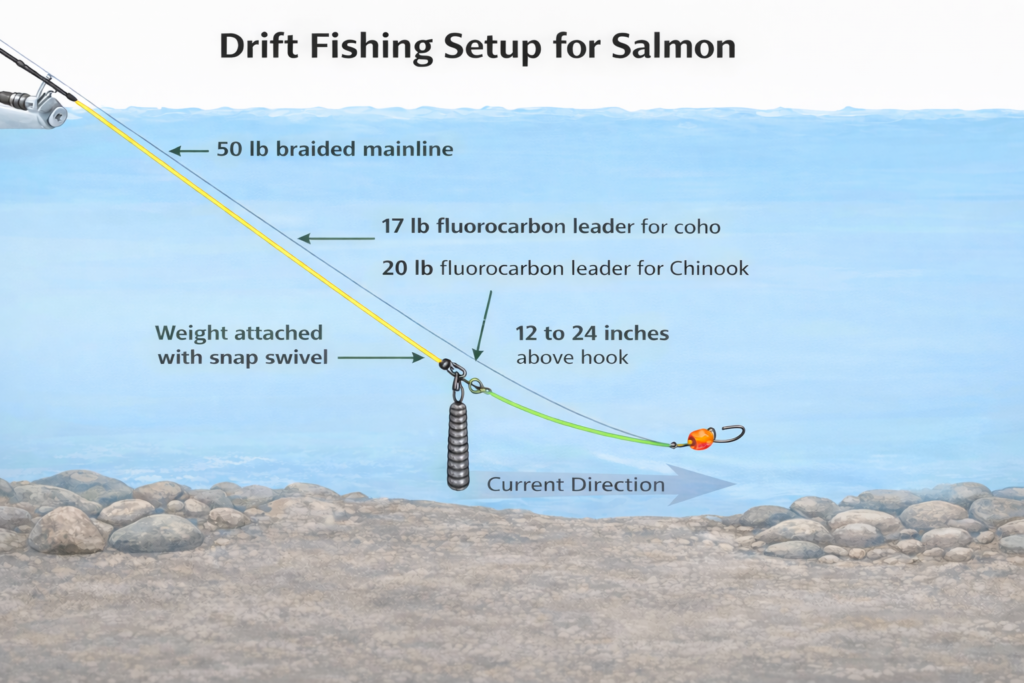
Drift fishing is less about bombing distance and more about getting the right drift through the right lane at the right depth.
The basic idea is to cast slightly upstream, let your weight find the bottom, and allow the rig to drift naturally through the slot, seam, or travel lane you’re targeting. You’re looking for controlled bottom contact. Not dragging hard, not floating too high, just enough ticking to know your rig is in the zone.
Casting angle is everything in drift fishing. If you cast too far upstream, your weight may drag unnaturally before it reaches the productive part of the lane. If you cast too directly across the current, the weight may skip along too quickly without giving the bait time to work naturally. A cast that lands slightly upstream and across, roughly a 45-degree angle in most situations, gives you the best combination of natural drift and depth control.
Line management after the cast is just as important as where the cast lands. Once your weight is ticking bottom, you want to follow the drift with your rod tip and keep just enough tension to feel the weight without dragging it. Too much pressure and you’re pulling the bait unnaturally. Too much slack and you’ll miss bites and lose feel for the bottom.
Reading the ticks takes some practice. A slow, steady tick as the weight moves through a slot is what you want. A sudden stop or a change in the rhythm of those ticks can be a fish. Don’t always assume it’s a snag before you set the hook.
Good places to cast when drift fishing include deep slots, seams, current edges, tailouts, soft lanes beside faster current, and heads of pools. In most cases, your cast needs to land upstream of the best-looking water so the weight has time to settle before the bait enters the lane.
For the full technique breakdown, read my guide on how to drift fish for salmon.
How to Cover a Run Without Wasting Casts
One of the most common things I see beginners do is cast randomly.
They stand in one spot, throw to the far bank over and over, then leave after ten minutes without ever really working the water. They covered a lot of distance on the map but none of the actual productive lanes.
I’d rather make 20 thoughtful casts through three good lanes than 50 random casts across water that only looks good from the far bank.
Here’s the system I use:
Stop short of the water and look before you cast. Fish the close lane first. Short presentations before big ones. Work the middle lane. Cast to the far seam if it’s reachable from where you’re standing without a sloppy presentation. Change your angle before you change your gear. Adjust your depth before you assume the fish aren’t there. Take a few steps downstream and repeat.
This approach keeps you from skipping productive water. It also keeps you from burning out a run before you’ve actually fished it.
And it teaches you something. If you work a run in lanes and pay attention to where the bites come from, you start to understand which parts of that water are actually holding fish. Random casting doesn’t give you that information.
Common Mistakes Beginners Make
Most casting mistakes come down to rushing, casting too far, or not thinking about what the presentation is doing after it lands.
Casting as Far as Possible Every Time
Long casts feel productive, but they’re not always better. Sometimes the best lane is close. Sometimes the far water is too fast, too shallow, or impossible to fish naturally from your angle. Fish the close and middle water first.
Casting Across Good Water Instead of Through It
If your cast makes the bait or lure rip sideways across the lane, it may only be in the strike zone for a second. Change your angle so the presentation travels with the lane instead of cutting across it.
Standing in the Lane Before Fishing It
Bank anglers do this constantly. They step into soft inside water to reach the far bank, not realizing salmon were using that exact lane. Fish before you wade.
Ignoring Depth
You can cast to the right lane and still miss fish if your presentation is too high. Salmon, especially Chinook, are often deeper than beginners expect. If your bait, drift rig, or lure is riding above them all day, you may never get a real look.
Moving Too Fast
Cover the close, middle, and far lanes. Adjust your angle and depth. Then move. Five casts across the far bank and leaving is not covering a run.
Fishing Dead Water Because It Looks Easy
Not all soft water is good water. Slow, flat water with no depth, no lane, no cover, and no connection to a travel path may not hold fish. Look for soft water that’s connected to something useful, like current, depth, structure, or a travel route.
Not Adjusting the Cast for the Technique
Float fishing, drift fishing, and lure fishing don’t all use the same casting angles. A float rig needs to land upstream of the lane. A drift rig needs enough angle to tick bottom naturally. A spoon or spinner needs to swing across the current. Match the cast to the method.
Final Thoughts
Learning where to cast for salmon in a river isn’t about finding one magic spot and parking there all day.
It’s about understanding how salmon use current and putting your presentation in their path.
Look for seams, current edges, deep slots, tailouts, inside bends, and close bank-side lanes. Start close before you cast far. Work the water in sections instead of throwing randomly. Give your bait, lure, or drift rig enough room upstream to reach the right depth before it hits the best part of the run.
The more you fish this way, the more the river starts making sense.
You stop asking, “how far can I cast?” and start asking, “where is the best lane, and how do I get my presentation through it naturally?” That’s a much better question to be chasing.
If you want to keep building this skill, my guide on how to read a river for salmon is the next logical step. And if you’re still building your gear system, my complete salmon fishing setup for rivers will help you match the right setup to the water you’re fishing.
FAQ
Where should I cast for salmon in a river?
Cast to seams, current edges, deep slots, tailouts, inside bends, and soft water beside faster current. These areas give salmon a travel lane or a comfortable resting spot without forcing them to fight the strongest current all day.
Do salmon stay close to shore in rivers?
Yes, salmon often travel close to shore, especially along soft inside edges, tailouts, and bank-side seams. Bank anglers make the mistake of wading into close water before they fish it. Always make a few short casts before stepping into the river.
Should I cast upstream or downstream for salmon?
It depends on the technique. Float rigs and drift fishing usually work best when cast slightly upstream of the target lane so the bait has time to reach depth. Spinners and spoons are often cast across or slightly downstream and swung through the current.
What water do salmon hold in?
Salmon often hold in deep pools, deep slots, tailouts, current breaks, soft edges, and behind structure like boulders. Chinook salmon especially tend to use deeper water where they can rest close to a travel lane without sitting in the heaviest current.
How far should I cast for salmon from the bank?
Only cast as far as needed to reach the productive lane. Many salmon are hooked in close or middle water, not always on the far side of the river. Start with the close water, then work the middle lane and far seam if you can reach it naturally.
Where do Chinook salmon hold in rivers?
Chinook salmon often hold in deeper slots, pools, seams, tailouts, and slower current edges. In bigger water, they are usually deeper than beginners expect, so your bait, drift rig, or lure needs enough time to get down before it reaches the best lane.
Where should I cast a float rig for salmon?
Cast a float rig slightly upstream of the seam, slot, or current edge you want to fish. The goal is to give your bait enough time to sink to the right depth before it drifts through the salmon’s lane. If you cast directly at the target, your bait may still be too high when it passes the fish.
Why am I not catching salmon even though I see fish rolling?
Rolling salmon are not always biting salmon. You may be casting too high in the water column, fishing the wrong lane, retrieving too fast, or not giving your bait or lure enough time to reach depth. Before changing gear, adjust your casting angle, depth, sink time, and drift speed.