Disclosure: This post may contain affiliate links. If you purchase through these links, I may earn a small commission at no extra cost to you. I only recommend gear I trust and actually use in my own fishing.
If you want to learn how to drift fish for salmon, the most important thing to wrap your head around is this: you are trying to move your bait naturally along the bottom while staying in control enough to feel what is happening down there.
When drift fishing is done right, it is one of the deadliest ways to catch salmon in rivers, especially when fish are holding deep, pushing through runs, or just not interested in a float presentation.
It is also one of the easiest techniques to get wrong. Too much weight, too little weight, sloppy line control, not recognizing bottom contact, any one of those things can kill your whole drift. I have made every one of those mistakes, and I still catch myself slipping into some of them.
In this guide I am going to break down how to drift fish for salmon the way I actually do it — the setup, the bait, how to feel bottom, and how to tell when you are getting bit versus just ticking rocks.
Quick Answer: How to Drift Fish for Salmon
- Cast slightly upstream or across the current
- Let your bait sink to the bottom
- Follow the drift with your rod tip
- Use just enough weight to tap bottom without constantly snagging
- Set the hook anytime the drift stops, pulls, or feels different
Table of Contents
What Is Drift Fishing for Salmon?
Drift fishing for salmon is pretty much what it sounds like ,you cast into the current and let your bait move naturally downstream near the bottom, staying in the strike zone while covering water that would be tough to fish any other way.
This technique works especially well in:
- deeper runs
- current seams
- tailouts
- pocket water
- larger rivers where fish are moving through holding water
The big advantage of drift fishing is that it gets your bait down where the fish actually are. You can drift shallow water too, but honestly this technique really earns its keep when salmon are sitting on the bottom in heavier current and they are not going to come up for anything.
Best Drift Fishing Setup for Salmon
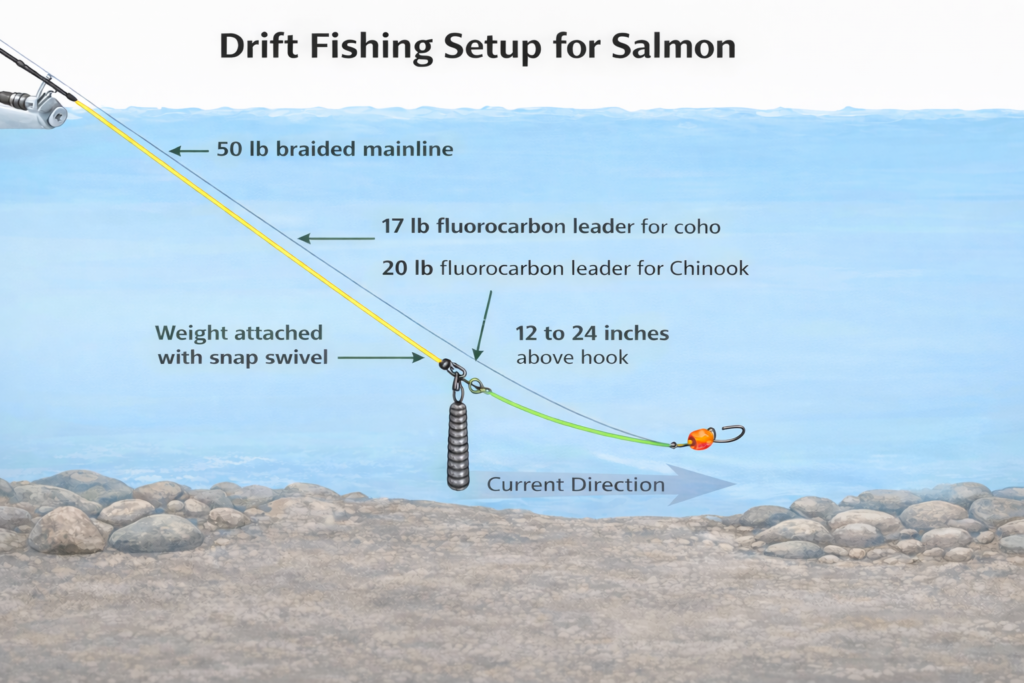
Your setup matters more with drift fishing than people give it credit for. The rod, reel, line, leader, and weight all affect how natural your presentation looks and how well you can feel what is going on.
Rod
I lean toward a medium-heavy to extra-heavy rod depending on the river and the fish. For most salmon drift fishing, something in the 9 to 10 foot range is the sweet spot. That extra length gives you:
- better line control
- more reach during the drift
- stronger hooksets
- more control over big fish in current
Reel
Both spinning reels and casting reels work for drift fishing.
Casting reels usually give you better line control and are a strong choice on bigger rivers. Spinning reels are easier for a lot of anglers to use and work very well on small to mid-sized rivers.
If you are still on the fence about which way to go, this spinning vs casting reel for salmon guide breaks it down based on how and where you fish.
Main Line
I run braid for drift fishing. It is thinner, more sensitive, and lets you track the drift way better than mono. High-vis braid is worth it here because watching your line is a big part of detecting bites.
If you are still dialing in your line choice, this best braided fishing line for Chinook salmon fishing guide covers what i would start with.
Leader
I like to keep my leader setup simple.
- For coho, I would run about 17 lb fluorocarbon
- For Chinook, I would go 20 lb fluorocarbon
I would rather stay a little safer and avoid break-offs than go too light and regret it. You still want your presentation to look natural, but I do not like being undergunned on salmon.
This best leader line for Chinook salmon guide goes deeper on the setup I trust.
Basic Rig
A standard drift fishing setup is simple:
- mainline
- swivel
- leader
- hook and bait
- weight placed above the hook
The weight can sit on a dropper or be rigged to stay near bottom while your bait moves freely.
If you want to see how the whole system fits together, this terminal tackle for salmon fishing guide is worth a read.
Best Bait for Drift Fishing for Salmon
When it comes to drift fishing, bait choice matters.
The most common and effective baits are:
- cured salmon eggs
- sand shrimp
- prawns or shrimp pieces
- soft beads
- plastic worms
Cured eggs are my first choice almost every time. The scent, the texture, the profile — they just flat out produce, especially on Chinook. Sand shrimp and prawns are a close second and sometimes I will run eggs and shrimp together on the same hook.
Soft beads and plastic worms have their place, mainly when fish are pressured or not committing hard to natural bait.
For a breakdown of when I reach for each one, this best bait for Chinook salmon guide goes into more detail.
Best Weight Setup for Drift Fishing
Getting the weight right is probably the single biggest factor in whether your drift actually works.
You need enough weight to get your bait near the bottom. You need little enough that it does not kill the drift or turn into a snag magnet. Finding that balance is something you just develop a feel for over time.
Split Shot
Works well in smaller water, lighter current, and shallower runs. Easy to adjust on the fly, which I appreciate.
Go for the fully rounded split shot here as the ones with the pinchable wings tend to make your line spin.
Pencil Lead
A classic for a reason. Works well when you need a little more weight to get down in current. Affordable, easy to swap out, and reliable on a lot of different rivers.
Recommended drift fishing weight option
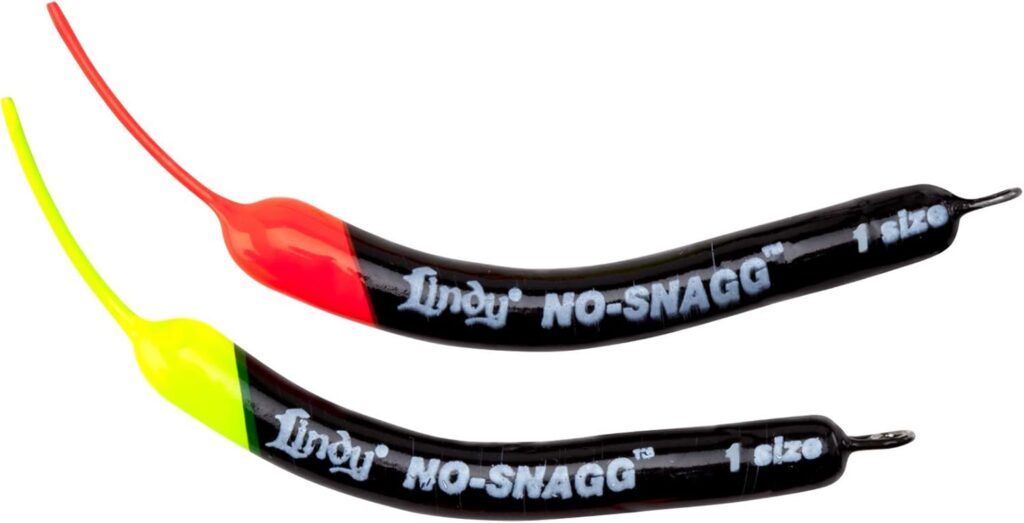
I like drift weights that stay clean in current and do not create unnecessary line twist.
Slinkies
If I had to pick one style of drift weight, slinkies would be it.
They slide over rocks better than most other options and snag less, which makes a real difference when you are fishing through rocky water and do not want to lose your rig every other cast.
They can be harder to find online than in local shops, but they are worth tracking down.
How to Drift Fish for Salmon Step by Step
If you are learning how to drift fish for salmon, this is the basic process.
1. Cast slightly upstream or across current
Do not cast straight downstream. A slight upstream angle or quartering cast gives your bait time to sink and start moving naturally before it gets into the zone.
2. Let your bait sink
After the cast, give it time to get down. If you never feel bottom, you are fishing too high in the water column.
3. Follow the drift with your rod tip
Track the bait with your rod tip as it moves downstream. Keep light contact with the line, you do not want a big bow forming, but you also do not want to drag the bait unnaturally fast.
4. Keep the drift natural
Your bait should be moving at roughly the same speed as the current. If it starts racing, dragging, or hanging awkwardly, something is off and the fish are going to ignore it.
5. Reset and repeat
Once the drift swings out of the zone or loses the right angle, reel up and do it again.
A lot of success with drift fishing just comes from throwing clean drifts through the right water over and over..
How to Detect Bottom When Drift Fishing
If you cannot feel bottom, drift fishing is basically just guessing.
What you want is light, intermittent contact with the riverbed as the weight moves downstream. Little ticks and taps, not constant snagging.
A good drift usually feels like:
- light tapping on bottom
- steady movement with current
- occasional bounce without hanging up
If the line glides through with zero interruption, you are probably not deep enough. If it stops constantly and drags hard, you have too much weight.
Learning the difference between normal bottom contact and an actual bite is honestly the skill that separates the anglers who catch fish from the ones who do not.
How to Know When You Are Getting Bit
This is where a lot of people lose fish and never know it.
A salmon bite on a drift rig is not always a hard slam. Sometimes it is just:
- the drift stopping suddenly
- a soft pull
- extra weight on the line
- a line movement that feels different from bottom
If something changes and it does not feel right, set the hook. Do not wait for confirmation.
When you are learning, it is way better to set too often than to hesitate and miss the fish.
For a deeper look at reading bites across different techniques, this how to know when a salmon bites guide goes further into what I watch for with different techniques.
Where Drift Fishing Works Best
Drift fishing shines wherever salmon are holding deeper or actively moving through current.
The spots I focus on most:
- deep runs
- seams between fast and slow water
- tailouts
- pockets behind structure
- edges of stronger current
If you are still learning how to identify those spots, this how to read a river for salmon guide breaks down what I look for before I ever make a cast.
Common Drift Fishing Mistakes
Using too much weight – Causes snagging, kills the presentation, and drags the bait in a way that does not look natural to fish.
Using too little weight – You never get into the strike zone. The drift looks fine to you on the surface but your bait is riding too high to matter.
Not watching the line – Drift fishing is not passive. Your eyes need to be on the line the whole time.
Waiting too long to set the hook – Salmon bites can be subtle. If you are waiting for a perfect heavy thump every time, you are going to miss a lot of fish.
Fishing bad water too long – A perfect drift in the wrong spot is still a wasted cast. Learn to move.
Drift Fishing Setup I Would Start With
If you want to keep it simple and just get on the water, here is where I would start:
- 9 to 10 foot medium-heavy or extra-heavy rod
- Spinning or casting reel based on your river and preference
- Braided mainline
- 17 lb fluorocarbon for coho, 20 lb for Chinook
- Cured eggs as the first bait choice
- Enough weight to tap bottom without hanging constantly
That setup is going to handle the majority of salmon drift fishing situations you run into.
Final Thoughts
Learning how to drift fish for salmon takes some time on the water, but the fundamentals are not complicated.
Get the bait near the bottom, keep the drift natural, stay focused on your line, and set the hook whenever something feels off.
The anglers who consistently do well with this technique are not doing anything magical, they are just paying attention, adjusting their weight more than the average person, and learning to tell bottom from a bite.
Once that clicks, drift fishing becomes one of the most satisfying and productive ways to chase salmon in a river.
FAQ
How do you drift fish for salmon?
To drift fish for salmon, cast slightly upstream or across current, let your bait sink to the bottom, and follow the drift with your rod tip as it moves downstream. The goal is to keep your bait moving naturally near bottom.
What is the best bait for drift fishing for salmon?
Cured eggs are my top choice for drift fishing for salmon. Sand shrimp, prawns, soft beads, and plastic worms can also work, but cured eggs are usually the first bait I would try.
What line should I use for drift fishing salmon?
Braided mainline is a great choice because it is thin, sensitive, and easier to see. For leaders, I would run around 17 lb fluorocarbon for coho and 20 lb fluorocarbon for Chinook.
How much weight should I use for drift fishing?
Use just enough weight to tap bottom without constantly snagging. Too much weight kills the natural drift, and too little weight keeps you out of the strike zone.
How do you tell the difference between bottom and a bite while drift fishing?
Bottom usually feels like light taps or bounces as the rig moves with the current. A bite often feels like a sudden stop, soft pull, or extra weight that feels different from the normal rhythm of the drift.
Is drift fishing better with a spinning reel or casting reel?
Both work. Casting reels usually give better line control, especially on bigger rivers, while spinning reels are easier to use and work very well on small to mid-sized rivers