Affiliate Disclosure: Some of the links below may be affiliate links. As an Amazon Associate, I may earn from qualifying purchases at no extra cost to you. I only recommend gear that makes sense for this style of fishing and fits the way I would actually approach salmon fishing in Northwest rivers.
Learning how to fish salmon with lures can feel like a lot when you’re first getting into river fishing.
Spinners, spoons, twitching jigs, plugs, beads, soft plastics, and about a hundred color options for each one. Everyone at the shop has a different opinion and half of them contradict each other.
The problem most beginners run into isn’t buying lures. It’s knowing when to use each one and how to actually fish it once it’s on the line.
I see guys throw every lure the same way. Same retrieve speed, same angle, same depth, and just hope a salmon decides to grab it. That can work every once in a while, but it’s not much of a plan.
What changes everything is understanding how to match your lure to the water in front of you. Spinners shine when you’re covering moving travel lanes. Spoons are great for swinging through bigger water. Twitching jigs are deadly when fish are holding in deeper pools and slower edges. Plugs can stay locked in the strike zone for a long time when the current is doing the work for you.
That’s what this guide is about. Not just which lures to buy, but how to actually fish them. If you want a breakdown of specific lure options, I put together a separate guide to the best salmon lures for river fishing. This one is about what you do with them once you’re on the water.
Quick Answer: What Is the Best Way to Fish Salmon with Lures?
Match your lure to the water you’re standing in front of.
Use spinners when salmon are moving through active current and you want vibration and flash on a simple retrieve. Use spoons when you need to cover wider or deeper water with a swinging presentation. Use twitching jigs when fish are holding in slower pools, deeper slots, or soft current edges. Use plugs when you want the river to help hold a lure right in front of the fish.
But here’s the thing most beginners miss. The lure itself is only half of it.
You can tie on a perfect spinner, spoon, or jig, and if it’s riding too high, moving too fast, or drifting through the wrong lane, it’s not going to matter. For most river salmon fishing I want my lure working near the bottom third of the water column. That’s where fish typically are, especially Chinook in bigger, deeper water.
Table of Contents
Quick Picks: Good Salmon Lures to Start With
These aren’t the only salmon lures that catch fish, but they’re solid examples of each style I’d want a beginner to understand first.
Best Beginner Spinner: Blue Fox Vibrax
The Blue Fox Vibrax is one of the easiest salmon spinners to learn on because you can actually feel the blade working through the rod. That feedback matters when you’re starting out. For Chinook I usually think in the #4 to #6 size range, depending on water size, current speed, and how fired up the fish seem to be.
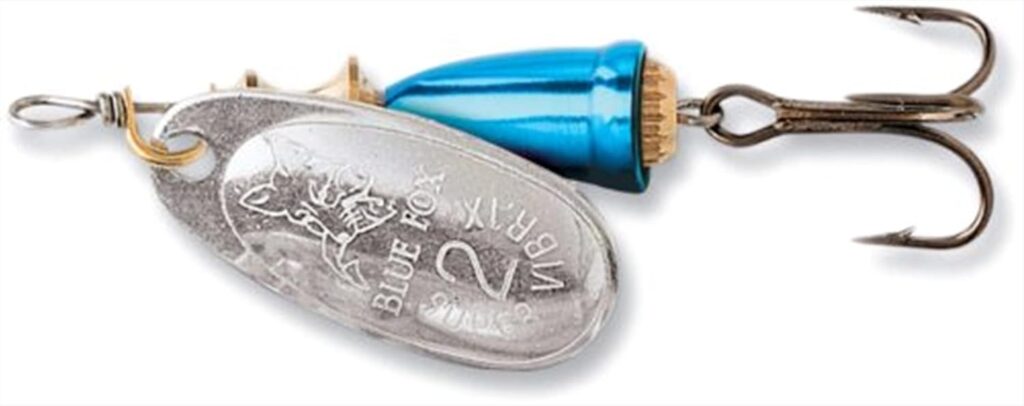
My take: If you want to learn what a properly working salmon spinner feels like in current, this is where I’d start.
Best Spoon: 1 oz Dardevle Spoon
A 1 oz Dardevle is what I’d reach for when I want flash, wobble, and enough weight to get through real river water. The most important thing with a spoon is not burning it back too fast. A spoon should have a clean, lazy wobble, not spin out like a pinwheel.
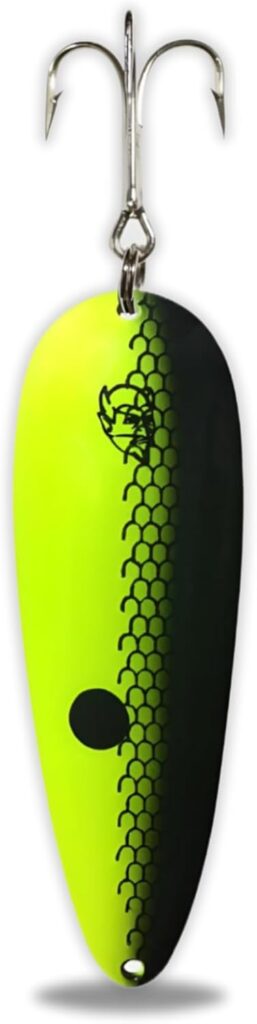
My take: The Dardevle teaches the right lesson about spoon fishing. Slow down, let it wobble, let the current swing it through the lane.
Good Backup Spoon: 1 oz Krocodile Spoon
A 1 oz Krocodile is another metal lure worth having when you want flash and a compact profile. I use it as a backup spoon when I want to cover water quickly without overthinking it.
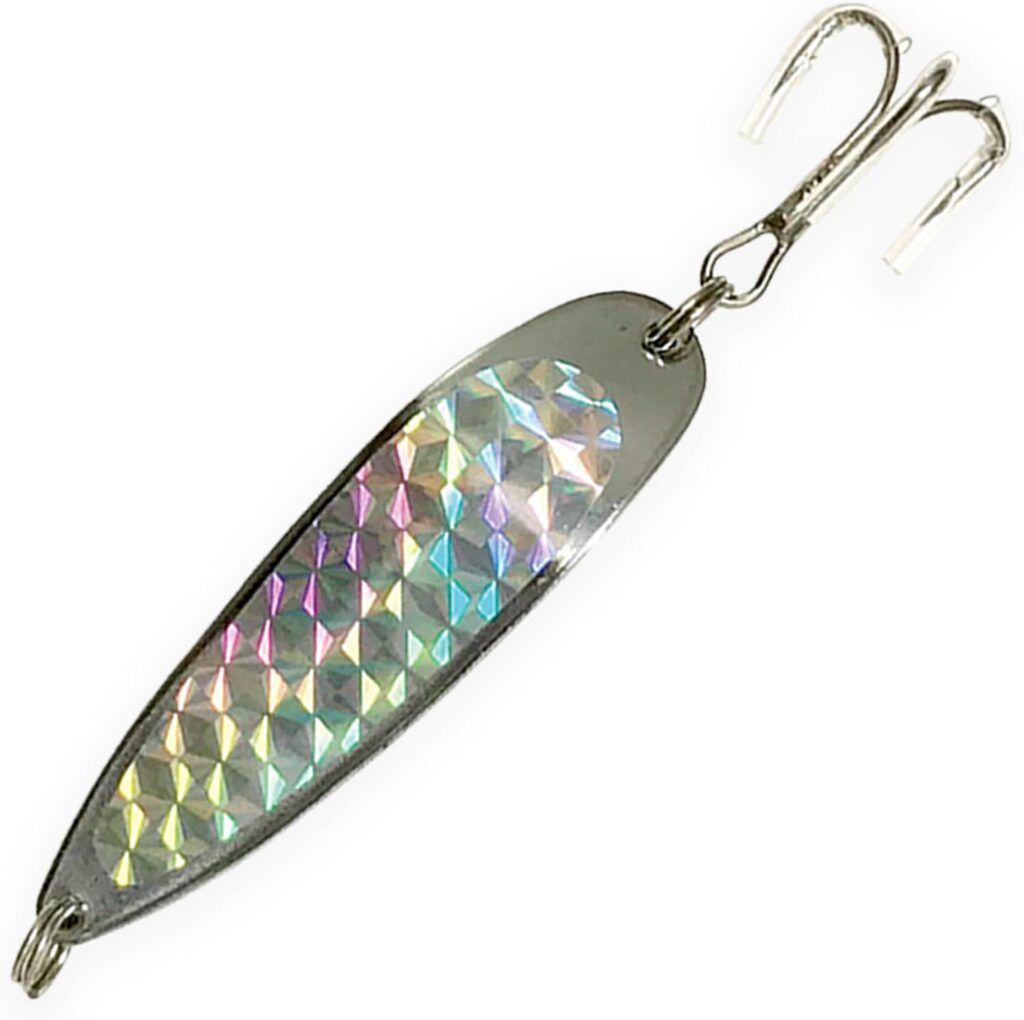
My take: Worth having in the box. Gives you another option without cluttering up your setup.
Best Twitching Jig Example: Mustad Addicted Tailout Twitcher Jig
The Mustad Addicted Tailout Twitcher Jig is exactly what twitching jig fishing is supposed to look like. Cast into deeper holding water, let it fall, pop the rod tip, let it drop again. Bites happen on the fall. If your line is too tight after the pop, you’re killing the action.
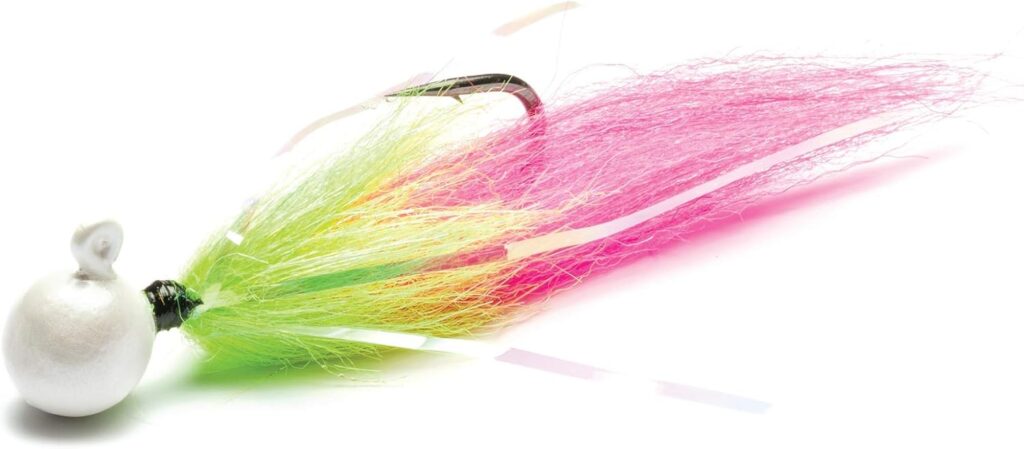
My take: This is the jig I’d reach for when fish are sitting in softer edges, deeper slots, or slower water where a spinner just blows through too fast.
Best Soft Bead Example: BnR Soft Beads
BnR Soft Beads sit somewhere between a traditional lure and an egg-style presentation. They’re not the same as fishing real cured eggs, but they give you that natural egg profile and can be really effective when salmon are keyed in on that look.
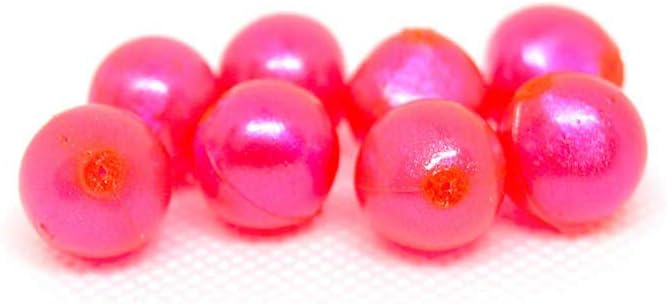
My take: A good option when you want something more subtle than hardware but still want to fish an artificial.
Best Plug Example: Yakima Bait Mag Lip 4.0
The Mag Lip 4.0 is a great example of how plugs are different from everything else. Instead of you working the lure, the current does a lot of the work. The plug digs, wiggles, and holds in the water column. That’s what makes plugs so effective for keeping a lure in front of fish long enough to make one react.
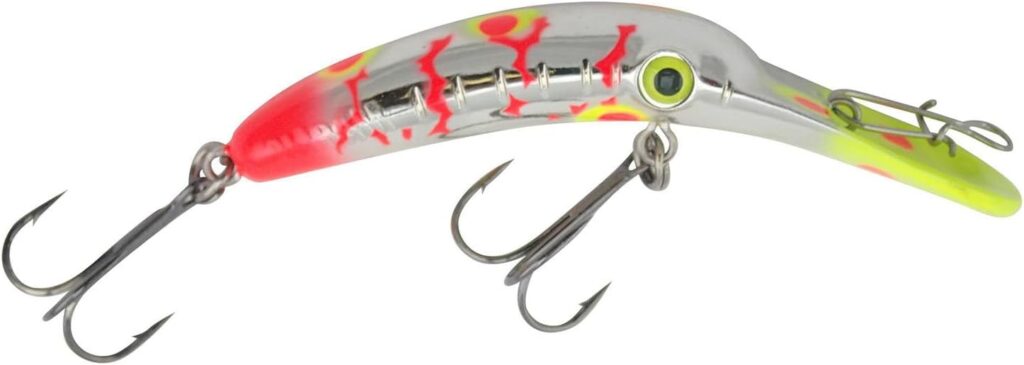
My take: The Mag Lip 4.0 shows you what a plug is really doing. It’s not just passing through. It’s sitting in the zone and making fish uncomfortable until one finally commits.
Why Salmon Hit Lures
One of the first things I’d tell any beginner is this: river salmon aren’t always hitting your lure because they’re hungry.
By the time Chinook are pushing upriver, feeding isn’t really what’s driving them anymore. A lot of bites come from reaction, aggression, curiosity, or just flat-out irritation. The fish sees something flashing through its lane and something in its brain fires.
That’s why depth, placement, and presentation matter so much more than having the “perfect” lure.
Most river salmon aren’t going to cross the river to chase something. You need to get close enough to make them react. That might mean swinging a spinner right through a travel lane, wobbling a spoon across a seam, or dropping a jig in front of a fish that’s been sitting in the same slot all morning.
The lure doesn’t need to be flawless. It needs to get noticed, stay in the zone, and move naturally enough that the fish commits.
The Main Types of Salmon Lures
There are a lot of salmon lures out there, but they really fall into a handful of categories. Once you understand what each type is actually supposed to do, the whole thing gets a lot simpler.
Spinners
Spinners are one of the best lure styles for beginners because you can feel when they’re working.
That blade thump through the rod is real-time feedback. It tells you the lure is doing its job. When you lose that thump, something’s off. You’re either reeling too fast, too slow, or the lure is tangled. That feedback loop is genuinely helpful when you’re still learning.
Spinners are good for moving water, travel lanes, current seams, medium-depth runs, and covering water from the bank. They’re also great when fish are active and willing to commit.
A Blue Fox Vibrax is a solid example of this style. For Chinook, I’m usually in the #4 to #6 range. For coho or smaller water, I’ll size down. The goal isn’t to reel it as fast as you can. You want the blade working, the lure tracking near the bottom, and the spinner swinging naturally through the lane without riding high.
For a deeper breakdown of sizes and styles, see my guide to the best spinners for salmon fishing.
Spoons
Spoons are all about wobble and flash.
They can be excellent when you need a lure that casts well, gets down, and covers a wide lane through bigger river water. And a spoon can be especially good when you want that flash action without the constant vibration of a spinning blade.
Good spoon water includes bigger runs, wider river sections, deeper slots, and anywhere you’re swinging through current from the bank.
A 1 oz Dardevle or 1 oz Krocodile are the kinds of spoons I’d have in my box for salmon water. The most important thing is keeping that wobble clean and controlled. A spoon that’s wobbling correctly is a completely different presentation than one that’s spinning out. The first one catches fish. The second one mostly just wastes your time.
For specific spoon options, check out my guide to the best spoons for salmon fishing.
Twitching Jigs
Twitching jigs are a different animal.
Forget the steady retrieve. You’re working these with a lift-and-drop motion. Cast into holding water, let the jig sink, pop the rod tip, and let it fall again on semi-slack line. That fall is where most of the bites happen.
The biggest mistake beginners make is keeping the line too tight after the pop. You want enough contact to feel the bite, but you also need to let that jig drop naturally. If you’re strangling it on the way down, you’re killing what makes the technique work.
Twitching jigs are great in slower pools, deep slots, current edges, and anywhere hardware is moving through too fast to stay in front of holding fish. They’re especially popular for coho, but don’t sleep on them for Chinook in the right water.
Something like the Mustad Addicted Tailout Twitcher Jig fits this style well.
Plugs
Plugs work differently than everything else on this list.
Instead of you driving the action, the current does a lot of the work. A plug like the Yakima Bait Mag Lip 4.0 digs into the current, wiggles in place, and holds in the strike zone. That’s what makes plugs so effective from a boat. You can backtroll or hold a plug right in front of fish until one finally can’t stand it anymore.
Plugs are great for boat fishing, backtrolling, working a specific piece of holding water, and any situation where staying in the zone longer is more important than covering ground.
I wouldn’t make plugs the first thing a bank angler learns, but they’re absolutely part of the salmon lure toolbox and worth understanding early.
Beads, Soft Beads, and Bait-Style Presentations
Soft beads occupy a different lane than traditional hardware.
They don’t flash like a spoon or thump like a spinner. What they do is imitate an egg profile drifting naturally through current. And there are days when that’s exactly what salmon want. BnR Soft Beads in larger salmon sizes, around 20mm, are a solid option when fish are keyed in on egg-looking presentations but you still want to fish an artificial.
This is also where lure fishing starts to blend into bait fishing. If you want to go all the way down that road, I put together a full guide to the best bait for Chinook salmon.
How to Choose the Right Lure for the Water
Picking the right salmon lure is mostly about reading what’s in front of you.
A lure that absolutely kills it in one run can be completely wrong 50 yards downstream where the current speed and depth have changed. Current speed, depth, clarity, and fish behavior all factor in.
If you’re still working on how to break down river water, my guide on how to read a river for salmon will help give you a framework for that.
Fast Current
In faster water, you need a lure that can actually get down and stay under control without blowing out of the lane.
Good choices include heavier spinners, heavier spoons, and compact lures that don’t get pushed up by the current too fast. A lot of beginners underestimate how quickly moving water lifts a lure. If your spinner is immediately riding toward the surface, you probably need more weight, a different casting angle, or a slower retrieve.
Slow Pools
In slower pools, you usually don’t need as much speed or vibration to trigger a fish.
This is where twitching jigs really earn their place, along with slower spoon presentations and soft beads. In clear, slow water, going subtle with your colors and profile can also make a real difference.
The main advantage in slower water is that you can keep your lure in front of holding fish longer than you can with a fast-moving spinner. Use that to your advantage.
Deep Slots
Deep slots are where beginners consistently struggle. Usually it’s not the lure, it’s the depth.
If you’re casting and immediately starting your retrieve, there’s a good chance your lure is spending most of its time above the fish. Sink time matters. Let the lure get down before you start working it.
Good choices for deep slots include twitching jigs, heavier spoons, and spinners with enough weight to actually reach the zone.
Shallow Riffles and Tailouts
Shallow, clear water calls for more care than people give it.
This isn’t where you throw the biggest, flashiest lure in your box. Salmon in shallow water can spook faster than you’d think. Go smaller, go more natural, and keep your presentation controlled. A subtle swing through a shallow tailout with a smaller spinner or light spoon can surprise you.
How to Fish Spinners for Salmon
The basic approach is simple, but the details matter.
Cast slightly upstream or across the current and give the spinner a moment to sink before you start retrieving. Then reel just fast enough to feel that blade thump through the rod. That’s your signal the lure is fishing.
From there, let the current help swing it through the lane. You don’t want to reel so fast the spinner rides high over the fish, and you don’t want it dragging bottom the whole retrieve either. If I can feel the blade working and I’m occasionally ticking near the bottom, I know I’m in the game.
Good spinner water is seams, current edges, tailouts, and defined travel lanes. Swing it through at the right depth and you’ve got a real shot.
How to Fish Spoons for Salmon
Spoons are all about the wobble, and the biggest mistake is reeling too fast.
When a spoon is fished right, it has a clean side-to-side wobble as it swings through the current. When it’s going too fast, it spins out and looks like nothing a salmon would bother with.
Cast across or slightly downstream, let the spoon sink, then retrieve slowly enough that it wobbles while the current helps swing it through the lane. You’re not cranking it straight back to you. You’re using the water to work it.
Pay attention to the end of the swing too. Salmon will often hit right when the spoon slows down, lifts, or changes direction. That transition is a trigger. Don’t just reel in and recast the moment the swing stops.
How to Fish Twitching Jigs for Salmon
Twitching jigs take a little more feel to get right, but once you dial it in, they’re incredibly effective.
Cast into deeper holding water. Let the jig fall. Pop the rod tip upward. Then let it fall again on semi-slack line. That’s the whole move, and most of the bites happen on the drop, not on the pop.
The tricky part is managing your line. Too tight and you kill the natural fall. Too loose and you won’t feel the bite. You’re looking for that middle ground where you have enough contact to detect a fish but enough slack to let the jig do what it’s supposed to do.
This technique takes some practice, but it’s worth putting time into, especially if you’re fishing coho in slower, deeper water.
How Deep Should You Fish Salmon Lures?
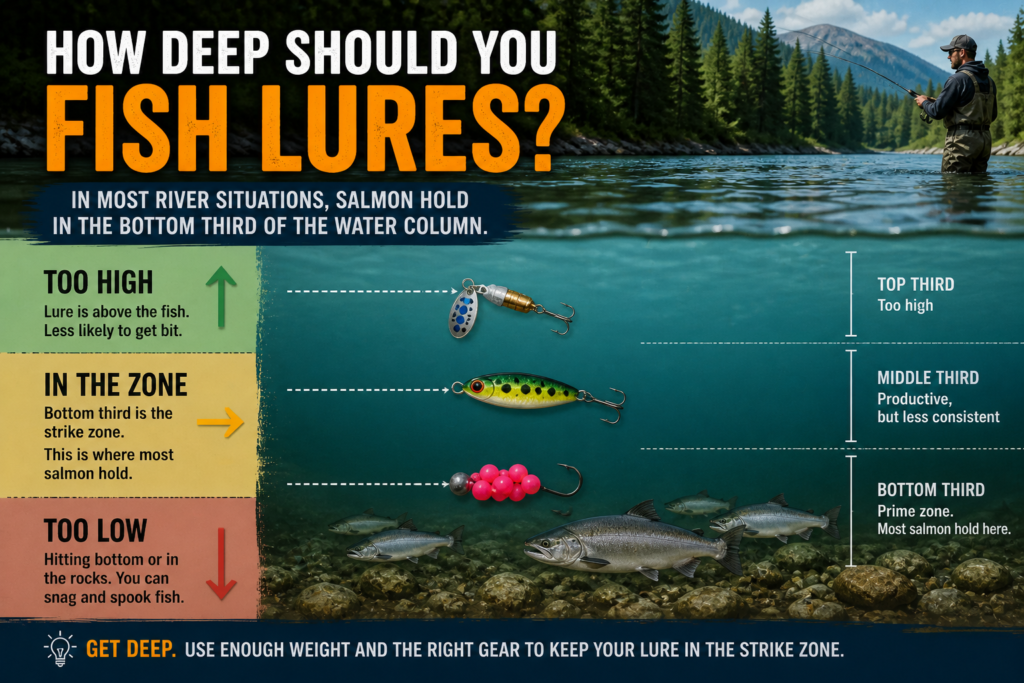
Most beginners fish too high. It’s one of the most common problems I see on the water.
Salmon aren’t usually sitting high in the water column waiting to chase something down. In most river situations, especially deeper slots and heavy current, they’re holding near the bottom. A good general rule is to work the bottom third of the water column.
You can adjust depth by changing lure weight, sink time, retrieve speed, casting angle, line diameter, and rod angle. If you’re constantly snagging, you’re probably too deep or too slow. If you never feel like you’re in the zone, you’re probably running too high.
For a more detailed look at depth control in river presentations, my salmon float fishing depth guide breaks that conversation down pretty thoroughly.
Where to Cast Lures for Salmon in a River
You don’t need to cover every inch of the river. You need to find the lanes salmon are using and run your lure through them at the right speed and depth.
The spots I look for first are seams, current edges, tailouts, inside bends, deep slots, soft water sitting next to faster current, and travel lanes between heavy and slow water.
Seams are usually my starting point. Salmon use current edges to travel without fighting heavy water the whole time. Work those transitions and you’ll find fish.
From the bank, I try to be methodical. I’ll cover the close lane, the middle, and the far lane instead of just bombing casts to the other bank every time. Long casts aren’t always better. A lot of salmon get hooked much closer than people expect.
Best Lure Colors for Salmon
Color matters, but it’s not the first thing I’d worry about.
Depth and presentation are going to affect your results more than color on most days. That said, matching your color to the conditions makes sense.
In clear water I go more natural, darker, and smaller. Too much flash in shallow, clear water can work against you. In stained water, low light, or bigger river sections, brighter colors earn their place. Chartreuse, orange, pink, silver, brass, and glow patterns all have days where they’re the right call.
Simple framework: clear water means natural and subtle, stained water means bright and high contrast, low light means strong silhouette or bright color, and bright sun means metallic flash can help but don’t overdo it in clear conditions.
If I’m not getting bit, I’m adjusting depth, angle, and speed before I start blaming the color.
What Gear Do You Need to Fish Salmon with Lures?
You don’t need a completely different setup for every lure style, but salmon are strong fish and river current adds load fast. Gear that’s too light gets outmatched quickly.
For most salmon lure fishing, you want a medium-heavy to heavy salmon rod, a quality spinning or casting reel, strong braided mainline, a good leader, sharp hooks, pliers, spare leaders, and a small box with a core set of trusted lures.
If you’re building a setup from the ground up, my complete salmon fishing setup for rivers walks through the whole system.
For line specifically, I run braid as my mainline almost always. It casts well, cuts current better than heavy mono, and gives you sensitivity that matters when you’re twitching jigs or feeling for a subtle spinner bite. My guide on what pound line for salmon fishing breaks down braid and leader sizing in more detail. You can also check out my guides to the best braided fishing line for Chinook salmon and best leader line for Chinook salmon if you want specific options.
Common Beginner Mistakes with Salmon Lures
Most lure mistakes come down to fishing too fast, too high, or too randomly. Here’s what I see on the water most often.
Reeling Too Fast
The most common mistake with spinners and spoons. If your spinner is riding high or your spoon is spinning out, slow down. The retrieve speed that feels natural in your hands is usually too fast for the lure to fish properly.
Fishing Too High in the Water
Salmon are lower than you think. If you’re not getting near the lane, you may be fishing right over the top of them the whole time.
Using Lures That Are Too Light
A lure that looks perfect in your hand might never actually fish correctly if the current is pushing it up. Match lure weight to the depth and speed of the water you’re in.
Standing Where the Fish Are
Bank anglers do this constantly. They walk right to the edge, set up in soft inside water, and start casting over fish that were sitting five feet away. Fish the close water before you move into it.
Changing Lures Too Often
Switching every five casts because nothing happened isn’t a strategy. Try adjusting your angle, sink time, retrieve speed, and lane before you pull the lure off.
Ignoring Seams and Travel Lanes
Random casting doesn’t put fish on the bank. Focus your presentations on the water salmon are actually using.
Using Dull Hooks
Salmon have tough mouths. Dull hooks miss fish that should have been yours. Check your points regularly and replace or sharpen when needed.
Not Checking Local Regulations
Before you ever make a cast, check your local fish and wildlife regulations. Barbless hook rules, bait restrictions, seasonal closures, and species-specific gear rules vary by river and season. Don’t assume. Look it up.
When Bait Works Better Than Lures
I’ll be straight with you. For Chinook in rivers, I generally prefer bait.
Cured eggs, shrimp, or an egg-and-shrimp combo under a float gives me a slower, scent-based presentation that I have a lot of confidence in. When Chinook are holding deep, moving slow, or just not reacting to hardware, bait is often hard to beat.
That said, bait isn’t always the answer. There are days when fish won’t touch it, the water calls for covering more ground, or you just need to show them something different. That’s when I grab a spinner, spoon, jig, or plug and start working through the run.
It also comes down to personal preference. Some guys would rather throw hardware all day and only go to bait when they’re desperate. Others like me usually start with bait and use lures as a changeup. Neither approach is wrong. The important thing is knowing when to adjust instead of forcing one method all day.
If you lean toward bait fishing, I put together a full guide to the best bait for Chinook salmon. And if you want to fish eggs or shrimp under a float, my salmon float rig setup and how to rig salmon eggs guides will help you dial that in.
My Simple Beginner Lure Plan
If I were teaching someone how to fish salmon with lures from the bank, I’d keep it simple.
I wouldn’t tell them to buy 40 different lures. I’d start with a small, focused group: a couple of spinners, a couple of spoons, a few twitching jigs, a plug or two if the water calls for it, and some soft beads if they want an egg-style artificial option.
Then I’d focus almost entirely on water reading and presentation.
Start with a spinner in medium-speed travel water. If the water is wider or deeper, go to a spoon. If fish are sitting in slower pools or soft edges, try a twitching jig. If the current setup is right for it, run a plug. If fish seem locked in on eggs but you don’t want to deal with real bait, tie on a soft bead.
More than anything, pay attention to depth.
If your lure is riding above the fish, it almost doesn’t matter what it looks like. If it’s in the right lane, working at the right speed, and staying near the bottom of the water column long enough to trigger a reaction, you’ve got a genuine shot.
Final Thoughts
Learning how to fish salmon with lures isn’t about stocking every possible option in a giant tackle bag.
It’s about understanding what each lure type does, where it belongs, and how to keep it in front of fish long enough to force a reaction. Spinners for covering moving water. Spoons for flash and bigger runs. Twitching jigs for holding water and slower pools. Plugs when the current can do the work. Soft beads when you want an egg-style option without dealing with real bait.
Start simple. Learn how each lure feels when it’s working right. Pay close attention to depth, current speed, and casting angle. Those three things will do more for your catch rate than anything else.
For specific lure recommendations, head over to my full guide to the best salmon lures for river fishing.
FAQ
What is the best lure for salmon fishing in rivers?
Spinners, spoons, twitching jigs, and plugs are all good salmon lures for rivers. Spinners are the easiest for most beginners to learn, spoons work well in bigger water, twitching jigs are strong in deeper holding water, and plugs can stay in the strike zone when the current helps work them.
What is the best salmon spinner for beginners?
A Blue Fox Vibrax is a good beginner salmon spinner because the blade vibration is easy to feel through the rod. For Chinook, sizes #4 to #6 are common depending on water depth, current speed, and fish size.
Are spinners or spoons better for salmon?
Spinners are usually easier for beginners because the blade feedback tells you the lure is working. Spoons can be better in wider or deeper water where you want a slower swing, more flash, and less blade vibration.
Should salmon lures be fished near the bottom?
In most river situations, yes. Salmon usually hold near the bottom third of the water column, especially in deeper slots, seams, and travel lanes with stronger current. If your lure is too high, you may be fishing above the fish.
What color lure is best for salmon?
Bright colors like chartreuse, orange, pink, silver, brass, and glow can work well in stained water or low light. In clear water, smaller, darker, or more natural colors usually make more sense. Presentation and depth usually matter more than color.
Can you catch Chinook salmon on lures?
Yes, Chinook salmon can be caught on spinners, spoons, plugs, and twitching jigs. The key is getting the lure deep enough and putting it through the right travel lane so the fish sees it and has a reason to react.
Are lures better than bait for salmon?
Lures are better when you need to cover water, trigger reaction bites, or show fish something different. Bait is often better when Chinook are holding deep, moving slowly, or responding to scent. I usually start with bait for Chinook and use lures as a changeup.
When should I use bait instead of lures for salmon?
Use bait when salmon are holding deep, not reacting to hardware, or the water calls for a slower scent-based presentation. Cured eggs, shrimp, and egg-and-shrimp combos under a float are common bait options for Chinook in Northwest rivers.